
EmotionTracker: Bridging the Gap Between Mobile Latency and Cloud Intelligence
EmotionTracker: A Mobile Real-time Facial Expression Tracking System with the Assistant of Public AI-as-a-Service
EmotionTracker is a mobile real-time facial expression tracking system that achieves 30 FPS by combining local auxiliary computing with public AI-as-a-Service (AIaaS). It utilizes sparse optical flow and a lightweight neural network for local tracking, offloading intensive recognition tasks to the cloud only when necessary.
TL;DR
EmotionTracker is a breakthrough mobile system that achieves true 30 FPS facial expression tracking by rethinking the relationship between mobile devices and the cloud. Instead of struggling to run heavy deep learning models locally or suffering from slow cloud responses, it uses local auxiliary tracking (3ms) and smart offloading to maintain real-time performance while outsourcing heavy lifting to AI-as-a-Service (AIaaS).
Background Positioning
Published at ACM Multimedia (MM '20), this work addresses the "latency vs. accuracy" trade-off in mobile AI. It moves away from the trend of aggressive model compression, focusing instead on a system-level optimization that treats cloud latency as a manageable variable rather than a roadblock.
Problem & Motivation: The Real-Time Dilemma
Mobile facial expression recognition (FER) has long been stuck between a rock and a hard place:
- Local Constraints: Running State-of-the-Art (SOTA) FER models on a phone drains the battery and frequently fails to hit real-time frame rates.
- Cloud Latency: Offloading the task to a powerful server (AIaaS) seems ideal, but network round-trip times (often >100ms) result in a "stuttering" experience that is useless for real-time feedback.
The authors observed that while expressions change, they don't change randomly. This temporal redundancy is the key insight: if we know the expression in Frame A, we can estimate it in Frame B using motion data without asking the cloud again immediately.
Methodology: Hybrid Tracking & Smart Offloading
1. The Tracking-Recognition Loop
Instead of recognizing every frame, EmotionTracker uses a Facial Expression Tracking module.
- How it works: It treats expression changes as a derivative problem. By using sparse optical flow and a lightweight neural network, it calculates the "displacement" of facial features to update the current emotion status locally.
- Efficiency: This reduces the per-frame processing time to a staggering 3ms.
2. Intelligent Task Offloading
Local tracking isn't perfect; errors accumulate over time (drift). The system's "brain" is the Task Offloading Module.
- Dynamic Decision: Rather than offloading every frames, it uses a neural network to estimate the absolute error of the current track.
- Optimization: It triggers a cloud request (AIaaS) only when the predicted error exceeds a threshold, balancing accuracy with API cost and bandwidth.
 Figure 1: The EmotionTracker Architecture showing the interplay between local tracking and AIaaS offloading.
Experiments & Results
The authors demonstrated the system in a real-world environment, providing a visualization of the underlying metrics.
- Speed: Local tracking consistently hit 3ms/frame, enabling a smooth 30 FPS camera preview.
- Latency Handling: Even when the AIaaS offloading experienced a 141ms delay, the user interface remained responsive because the local tracker "filled the gaps" until the fresh cloud result arrived.
- Cost Reduction: By dynamically deciding when to offload, the system significantly reduced the number of expensive API calls to cloud providers like Baidu AI without sacrificing long-term tracking accuracy.
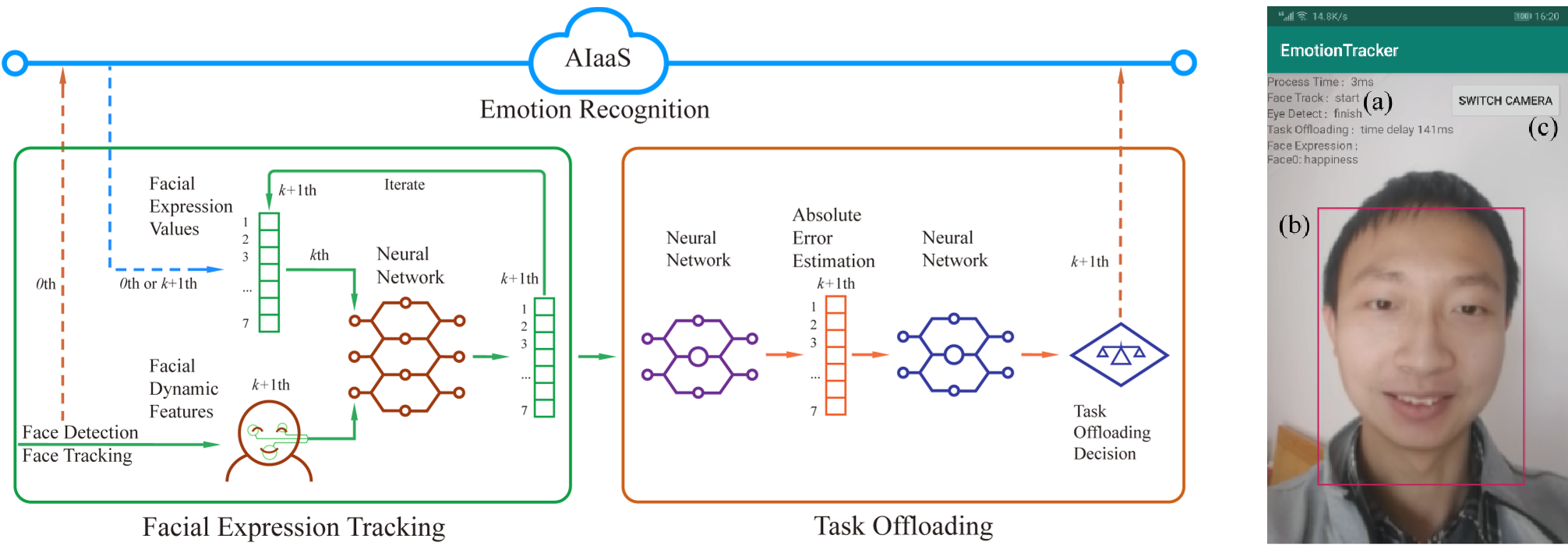 Figure 2: Real-time visualization showing a 141ms cloud delay successfully masked by 3ms local tracking.
Critical Analysis & Conclusion
Takeaway
EmotionTracker serves as a blueprint for Latency-Aware AI. It proves that we don't need to wait for "perfectly fast" chips or "zero-latency" 5G to deliver high-quality AI experiences. By using local computing to handle continuity and cloud computing to handle complexity, we get the best of both worlds.
Limitations & Future Work
- Robustness: The reliance on optical flow suggests the system might struggle in extreme lighting conditions or with rapid head movements (motion blur).
- Privacy: While the system minimizes offloading, it still sends facial data to the cloud. Future iterations could explore On-device Differential Privacy or Federated Learning to further secure the data loop.
In conclusion, EmotionTracker is a pragmatic and highly effective solution for bringing sophisticated facial analysis to the hardware we carry in our pockets today.