
Optimizing the Spanish Air Force: A Data-Driven Leap in Performance Evaluation
Employee Performance Evaluation Within the Economic Management System of the Spanish Air Force: Development of a Methodology and an Optimization Model
The paper introduces a dynamic, interdisciplinary methodology and optimization model for employee performance evaluation and workload measurement within the Spanish Air Force (SAF). By integrating SIDAE database metrics with qualitative surveys, the system enables data-driven personnel reallocation and organizational culture improvement.
TL;DR
The Spanish Air Force (SAF) faced a paradox: a shrinking workforce (down by 4,000 personnel) but rising operational complexity. To bridge this gap, Manuel A. Fernández-Villacañas Marín developed a dynamic performance evaluation model that shifts away from static "boss vs. employee" reviews toward a real-time, interdisciplinary system. By mining the SIDAE economic management database and blending it with organizational behavior metrics, the SAF can now precisely measure workload and reallocate personnel for maximum efficiency.
Background: The Scarcity Crisis
In recent years, the SAF has moved into a "scarce resource" environment. With a mandate to defend airspace and support international humanitarian missions, the administration couldn't afford a bloated or inefficient procurement system. Traditional evaluation methods—often criticized for being slow, manual, and psychologically subjective—were no longer sufficient for a modern military force requiring rapid decision-making.
The Strategy: Dynamic Systemic Analysis
The genius of this new methodology lies in its interdisciplinary nature. Instead of looking at performance through a single lens, the author integrated three high-level goals:
- Efficiency: How much work is actually being done compared to the resources allocated?
- Economicity: Are internal controls and management activities performing within "normality" parameters?
- Effectiveness: Is the "client" (the operational units) actually satisfied with the service?
Methodology: The Hybrid Approach
The model uses a Bottom-Up approach (technical effort based on 21 KPIs extracted via SQL from the Ministry of Defence’s SIDAE system) and a Top-Down approach (integrating the cognitive and documentary effort reported by managers).
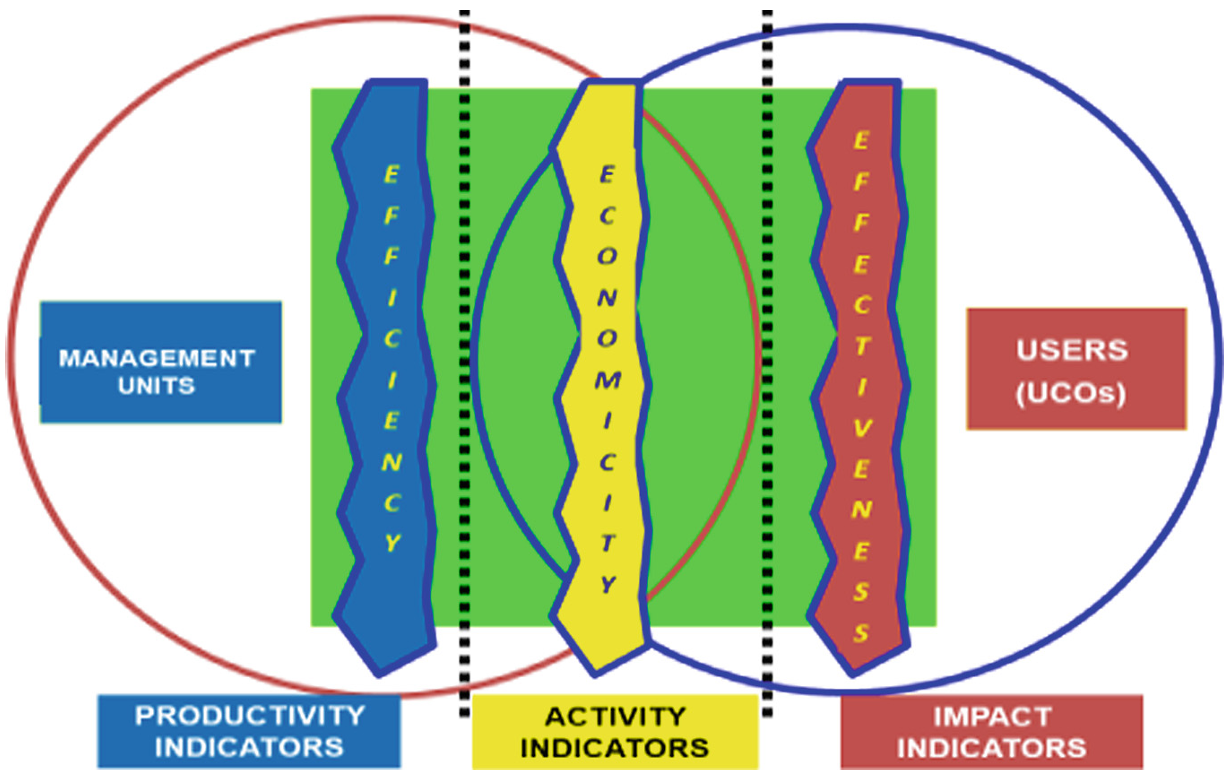 Figure 1: Performance evaluation logic integrating functional areas (Contracting, Accounting, etc.) with the pillars of Efficiency, Economicity, and Effectiveness.
The Core Results
The study yielded eye-opening insights during its pilot phase across 14 Economic-Administrative Sections (SEAs):
- Workload Divergence: The data confirmed that workload was "very unbalanced" across different units. Some employees were significantly overtaxed while others had excess capacity, validating the need for the model's reallocation algorithm.
- The Paradox of Satisfaction: While user satisfaction was high (over 4 out of 5), the internal qualitative audit found that 80% of employees identified a lack of specific training.
- Automation Success: By using SQL and VBA macros, the SAF created a "strategic intelligence monitor" that requires minimal human maintenance compared to traditional audit reports.
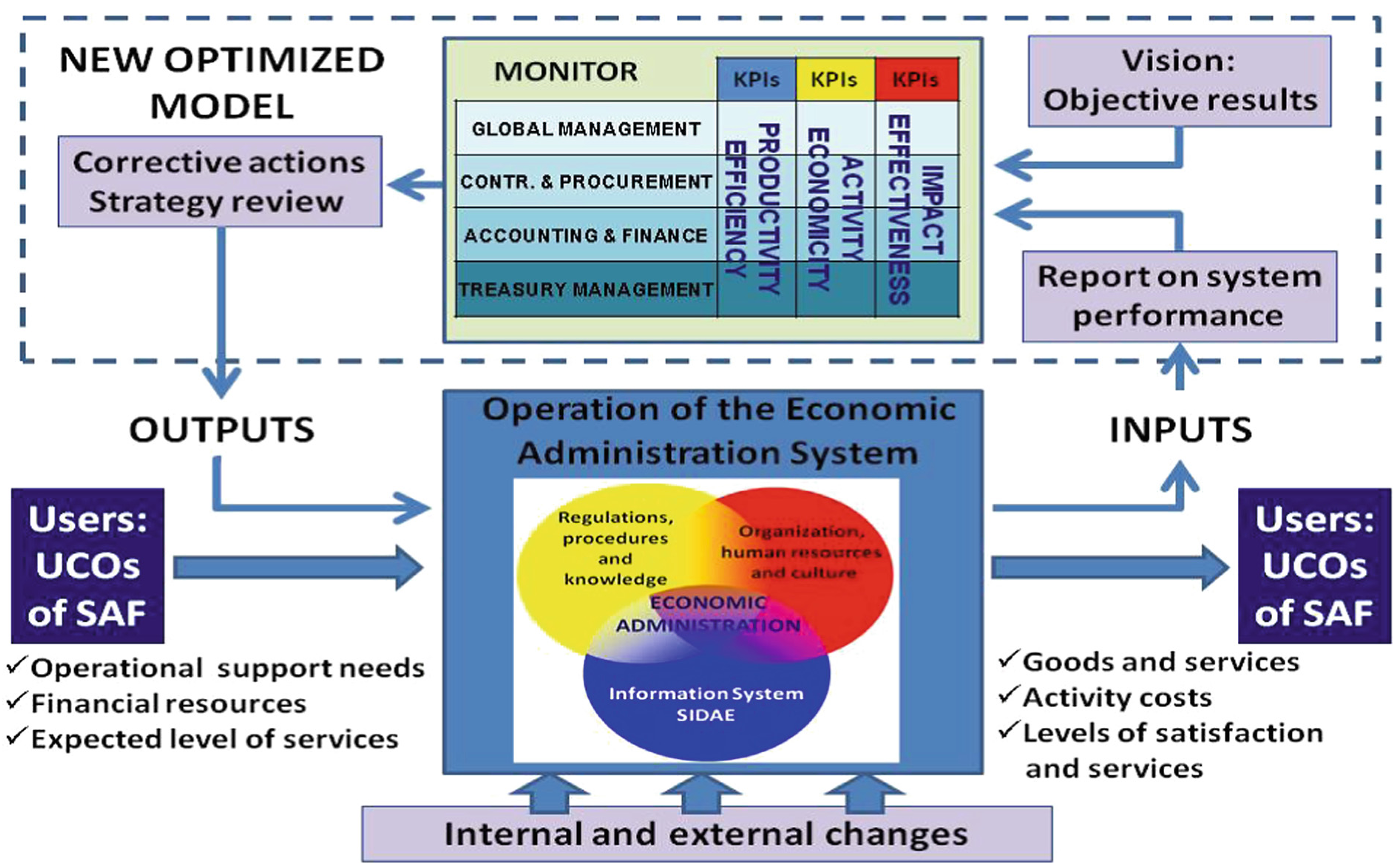 Figure 2: Synthesis of the developed model, showing the flow from SIDAE data extraction to management decision-making.
Critical Analysis & Professional Insight
The implementation of this model highlights a major shift in public sector management: the move from evaluation to promotion.
In the past, evaluation was a "policing" tool. This new model treats it as a continuous dialogue and a workload balancing act. By identifying that 80% of staff feel undertrained, the SAF moved the conversation from "who is failing?" to "how can we better equip our team?"
Limitations & Future Work
While the model is robust for economic management, its reliance on specific database triggers (SIDAE) means it requires customization before it can be exported to other departments like Training or Logistics. Additionally, the reliance on Likert scales for qualitative attributes still introduces a degree of human bias, though the study mitigated this with large, statistically representative samples.
Takeaway for the Industry
Whether in a military or a corporate environment, effective performance management is now a data-engineering problem. By quantifying the "invisible" cognitive work of administration and comparing it against objective database outputs, organizations can move from "gut feeling" management to scientific human resource optimization.