
Employee Readiness: The Human Barrier to AI in Sri Lankan Banking
Employee Readiness towards Artificial Intelligence in Sri Lankan Banking Context
This study investigates the "People Readiness" of employees in the Sri Lankan banking sector regarding Artificial Intelligence (AI) adoption. Using a mixed-method approach, it defines a conceptual framework centered on AI mindset, skills, and job roles to assess workforce preparedeness in a developing economy.
TL;DR
Artificial Intelligence is no longer a futuristic concept for the financial sector; it is a necessity for processing vast amounts of data and meeting modern customer demands. However, technology is only as effective as the people who operate it. This study explores the "People Readiness" of the Sri Lankan banking workforce, revealing a paradox: while employees are technically aware and eager to innovate, a deep-seated fear of job displacement threatens the speed of adoption.
Contextual Positioning
In the global landscape, Sri Lankan banks are currently at a "foundational level" of AI integration. Unlike established markets where AI is deeply embedded in credit underwriting and fraud detection, Sri Lankan institutions are navigating the transition from traditional labor-intensive processes to digital-first strategies. This paper acts as a critical pulse check for organizational leaders in developing regions.
Motivation: The Workforce Paradox
The primary driver behind this research is the realization that human capabilities are reaching their peak in handling the volume and complexity of modern banking data. The authors argue that while AI can replace administrative roles (data entry, tellers), it requires a "Mindset Shift" among employees. The problem isn't just the technology—it's the 15 million jobs predicted to be lost globally and the resulting anxiety that stymies organizational progress.
Methodology: Mapping "People Readiness"
The study utilizes a conceptual framework that breaks down "Readiness" into three distinct pillars:
- AI Mindset: Are employees aware of AI? Do they welcome change?
- Skills: Do they possess the digital and analytical literacy to work alongside machines?
- Job Roles: How do they perceive the impact of automation on their personal security?
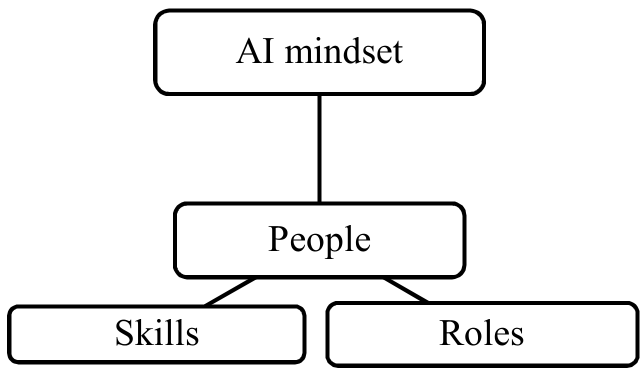
The methodology combined qualitative secondary research with a quantitative survey of 115 professionals. The research design aims to quantify the "soft factors" that determine the success of "hard technology" deployment.
Key Findings: Ready but Resentful?
The results present a complex picture of the modern bank employee:
- Cultural Alignment: An overwhelming 92% support an innovative culture.
- Awareness: 87% of employees are aware of AI, yet many (78%) still confuse it with simple automation rather than cognitive machine learning.
- The Security Gap: While 46% are comfortable with role changes, 36% explicitly feel insecure about their jobs post-implementation.
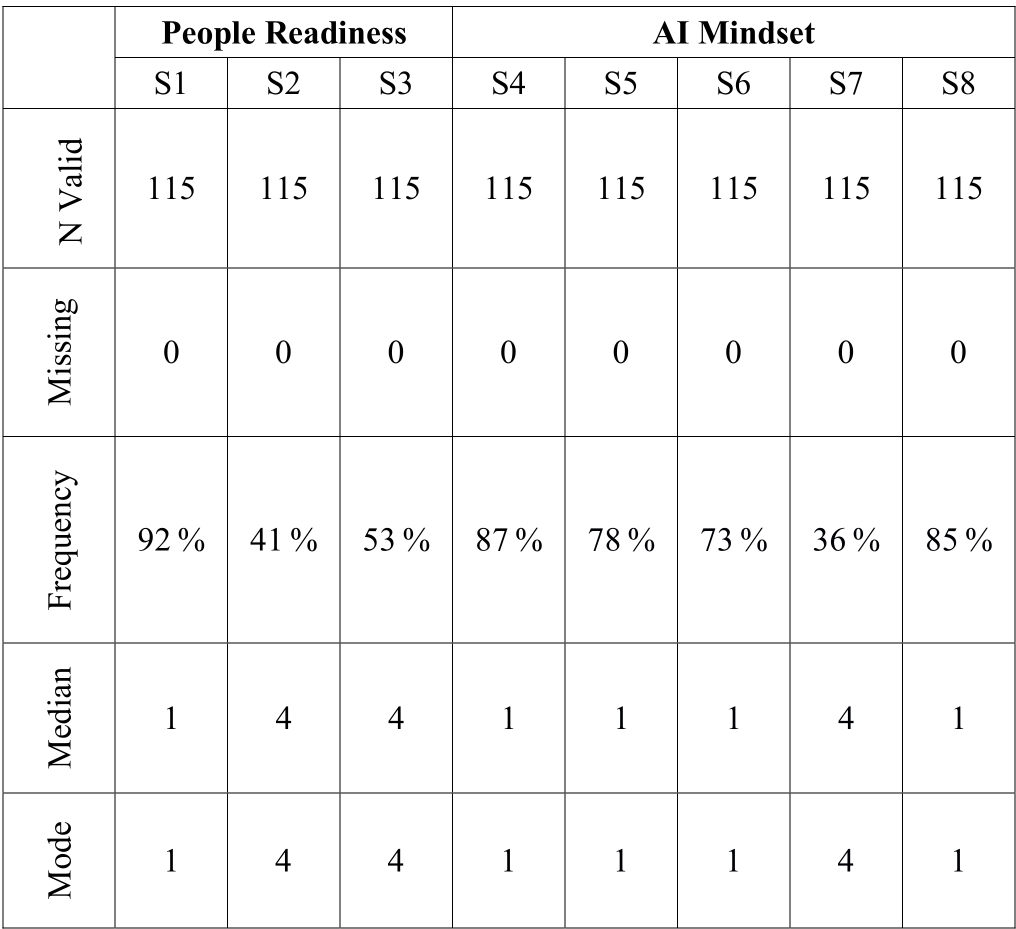
The data suggests that while "Skill Readiness" is high (with 96% willing to learn new skills), the "Emotional Readiness" is lagging due to a lack of transparent change management.
Critical Insight: Avoiding the Displacement Trap
The study highlights a crucial distinction between the displacement effect (job loss) and the income/productivity effect (new job creation). As machines take over 30% of current tasks, roles like Data Analysts and AI Specialists will rise. The paper suggests that for Sri Lankan banks to reach SOTA (State-of-the-art) efficiency, they must initiate "prior training" to move employees from "White Collar" repetitive tasks to "Strategic thinking" roles.
Conclusion & Future Outlook
The takeaway for the industry is clear: AI implementation is a human resources challenge as much as a technical one. The banks that succeed will be those that provide clear pathways for skill repositioning.
Limitations: The study's focus is limited to the "People" factor. Future research is needed to integrate this with Infrastructure, Ethics, and Data Strategy to form a holistic AI adoption roadmap for the region.