
emteqPRO: Beyond the Camera—The Future of Emotional Intelligence in VR
emteqPRO: Face-mounted Mask for Emotion Recognition and Affective Computing
The paper introduces emteqPRO, a multi-sensor face-mounted mask designed for real-time affective computing and emotion recognition. By integrating f-EMG, PPG, and IMU sensors, the system achieves high-fidelity tracking of facial expressions and physiological states, compatible with both standalone use and Virtual Reality (VR) platforms.
TL;DR
The emteqPRO is a medical-grade, multi-sensor mask that bridges the gap between human emotion and digital perception. By combining facial muscle activity (f-EMG), heart rate (PPG), and motion (IMU), it provides a real-time "biometric signature" of a user’s emotional state, bypassing the limitations of traditional camera-based tracking.
Background & Positioning
In the landscape of Affective Computing, we are moving away from "looking" at users to "sensing" them. While vision-based AI is the standard, it is often brittle in varying lighting conditions and fails to capture the physiological nuances of human emotion. The emteqPRO positions itself as a specialized hardware-software suite that targets high-stakes research and immersive experience design.
The Core Problem: The Failure of Sight
Why do we need a mask when we already have powerful computer vision? The authors highlight two critical gaps:
- Subtlety: Many emotions are "mild" and do not result in overt facial movements reachable by a camera.
- Scientific Validity: Citing Barrett et al., the paper notes that facial movements (what a camera sees) are not always indicative of an emotional state. f-EMG, however, measures the electrical activation of muscles, providing a more direct link to the nervous system.
Methodology: The Multimodal "Emotion Engine"
The strength of emteqPRO lies in its integration. It doesn't just look at one signal; it fuses three distinct modalities:
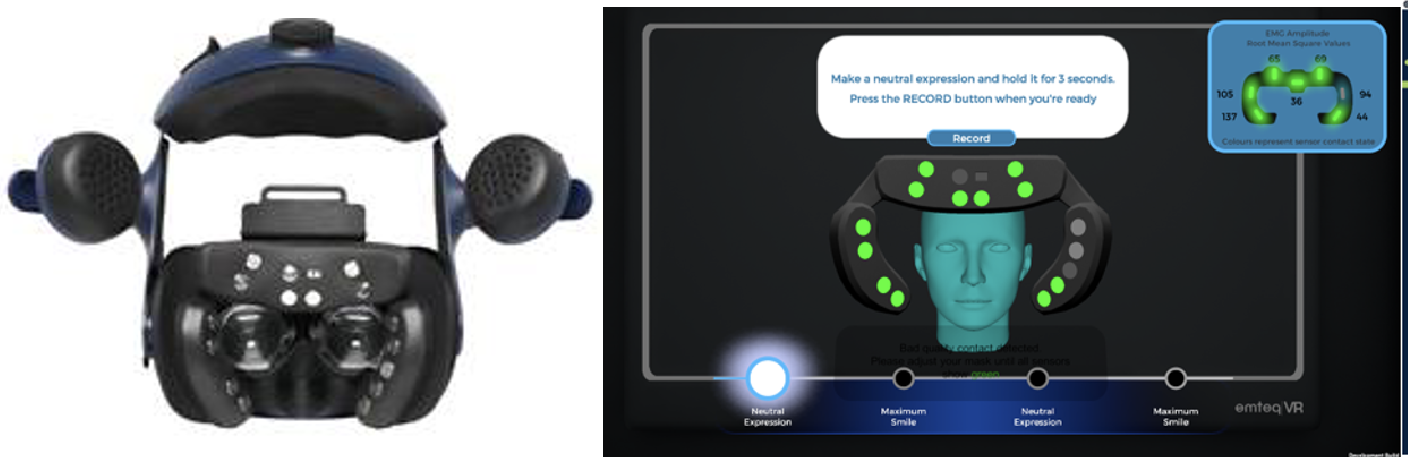
1. The Hardware Architecture
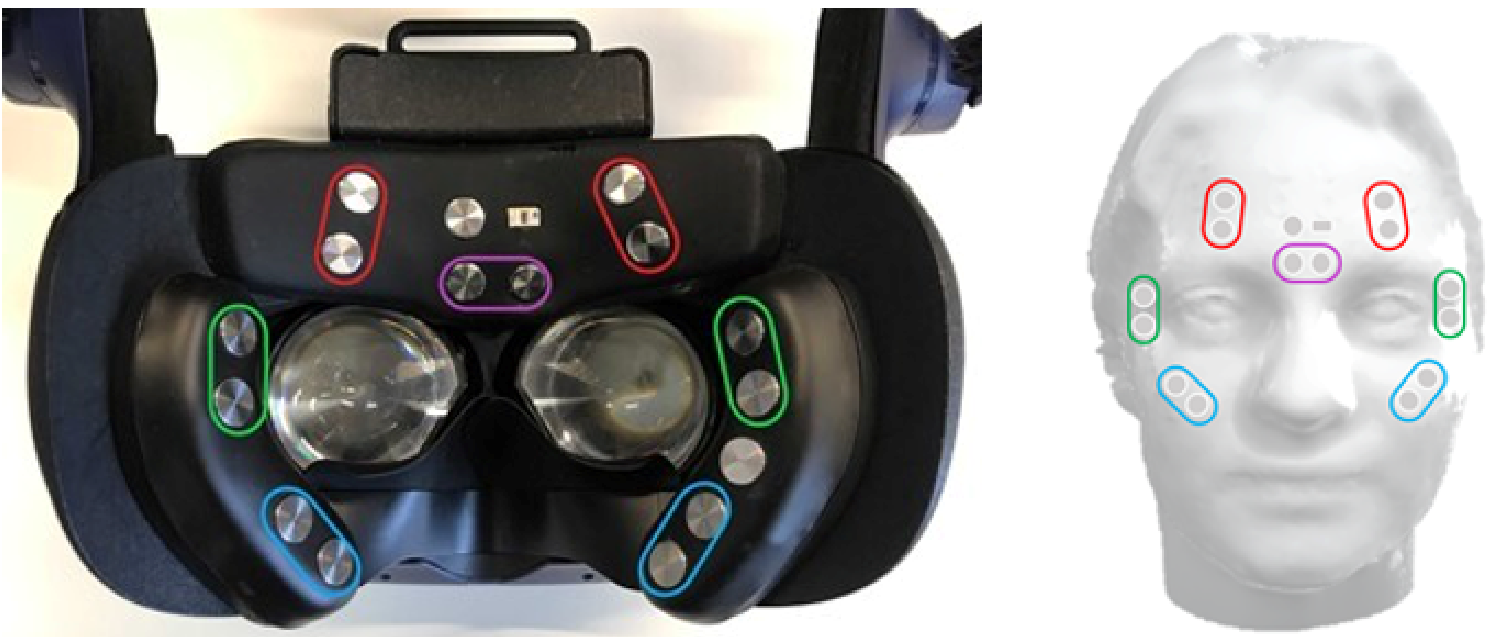
The mask utilizes 7 localized f-EMG sensors targeting specific muscle groups:
- Frontalis: Forehead (Surprise/Concentration)
- Corrugator: Brow (Frown/Anger)
- Orbicularis: Eye area (Genuine smiles)
- Zygomaticus: Cheeks (Smiling)
2. The AI Emotion Engine
The raw data is processed through four specialized modules:
- HRV Module: Extracts dozen of features from the PPG signal to determine internal stress.
- Arousal Model: Fuses HRV and IMU (motion) data to determine the "intensity" of a feeling.
- Valence Model: Primarily uses EMG to determine if the feeling is "positive" or "negative."
- Expression Model: Maps EMG signals directly to recognizable expressions (Smile, Frown, Surprise).
Applications & Results
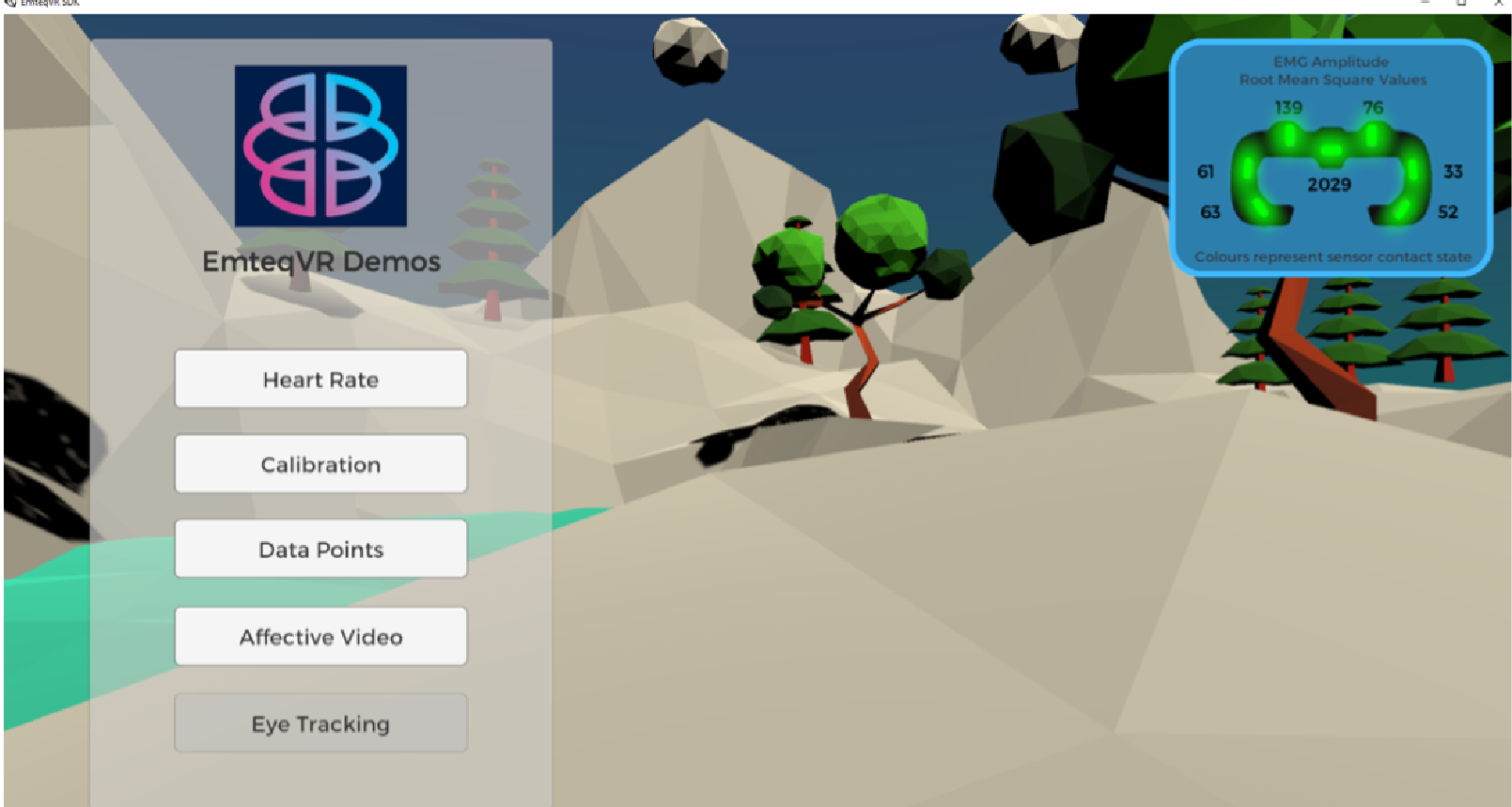
The emteqPRO is not just a sensor; it's a platform. It supports a SuperVision Application for real-time monitoring and an SDK for Unity 3D, allowing developers to create "emotionally reactive" software.
- Gaming: Games that change difficulty or narrative based on the player's actual stress levels.
- Architecture: Testing how patients feel in a virtual hospital design before a single brick is laid.
- Research: Precise, lab-grade emotional data collection in controlled virtual environments.
Critical Insight & Conclusion
The emteqPRO represents a paradigm shift from external observation to internal sensing. By embedding sensors directly into a mask (or VR gasket), the researchers have solved the "occlusion problem" where VR headsets normally block a camera's view of the eyes and forehead.
Takeaway: As we move toward the Metaverse and more immersive digital twins, emotional grounding via physiological sensors like the emteqPRO will be essential for creating truly empathetic AI and human-centric digital experiences. The next step for this technology will likely be the miniaturization of these sensors into standard consumer eyewear.