
SPHERE: Revolutionizing Healthcare with a Robust "In-the-Wild" IoT Network
13307_Enabling Healthcare in Smart Homes The SPHERE IoT Network Infrastructure.
The SPHERE project presents a multi-modal IoT network infrastructure designed for long-term residential healthcare monitoring. By integrating IEEE 802.15.4 (6LoWPAN/TSCH) and BLE, the system achieves a 99.97% packet delivery rate (PDR) across initial home deployments for activity recognition and health assessment.
TL;DR
The SPHERE project (Sensing Platform for HEalthcare in a Residential Environment) introduces a production-ready IoT infrastructure for smart homes. By fusing 6LoWPAN mesh networking with BLE wearables, the system solves the critical challenges of reliability and data throughput in real-world settings, achieving an impressive 99.97% packet delivery rate in unsupervised environments.
Context: Why Smart Homes Usually Fail
Most smart home health research is conducted in "living labs"—highly controlled environments that don't account for the messiness of real life. In the wild, systems face:
- WiFi Interference: Residential areas are saturated with 2.4GHz signals that drown out low-power sensors.
- Maintenance Fatigue: Devices that require daily charging or frequent technical intervention are quickly abandoned by participants.
- Data Silos: Using isolated sensors (just video or just wearables) provides an incomplete picture of patient health.
SPHERE moves beyond these limitations by creating a multipurpose platform that captures long-term, quantitative behavioral data through a unified, dependable network.
Methodology: The Architecture of Dependability
The core of SPHERE's success lies in its heterogeneous networking stack.
1. Hybrid Wireless Approach
The system utilizes two distinct radios based on the Texas Instruments CC2650 SoC:
- 6LoWPAN over IEEE 802.15.4 TSCH: Used for static environmental sensors. TSCH (Time Slotted Channel Hopping) is the "secret sauce" here, providing precise time synchronization and frequency hopping to dodge WiFi interference.
- Bluetooth Low Energy (BLE): Used for wearables. Instead of power-hungry connections, wearables broadcast "non-connectable advertisements" containing raw accelerometer data, which are picked up by network forwarders.
2. The Dual-Role Forwarder
To bridge these protocols, the authors designed "SPHERE Forwarders." These devices act as both 6LoWPAN mesh nodes and BLE observers, effectively funneling mobile wearable data into the stable mesh backbone.
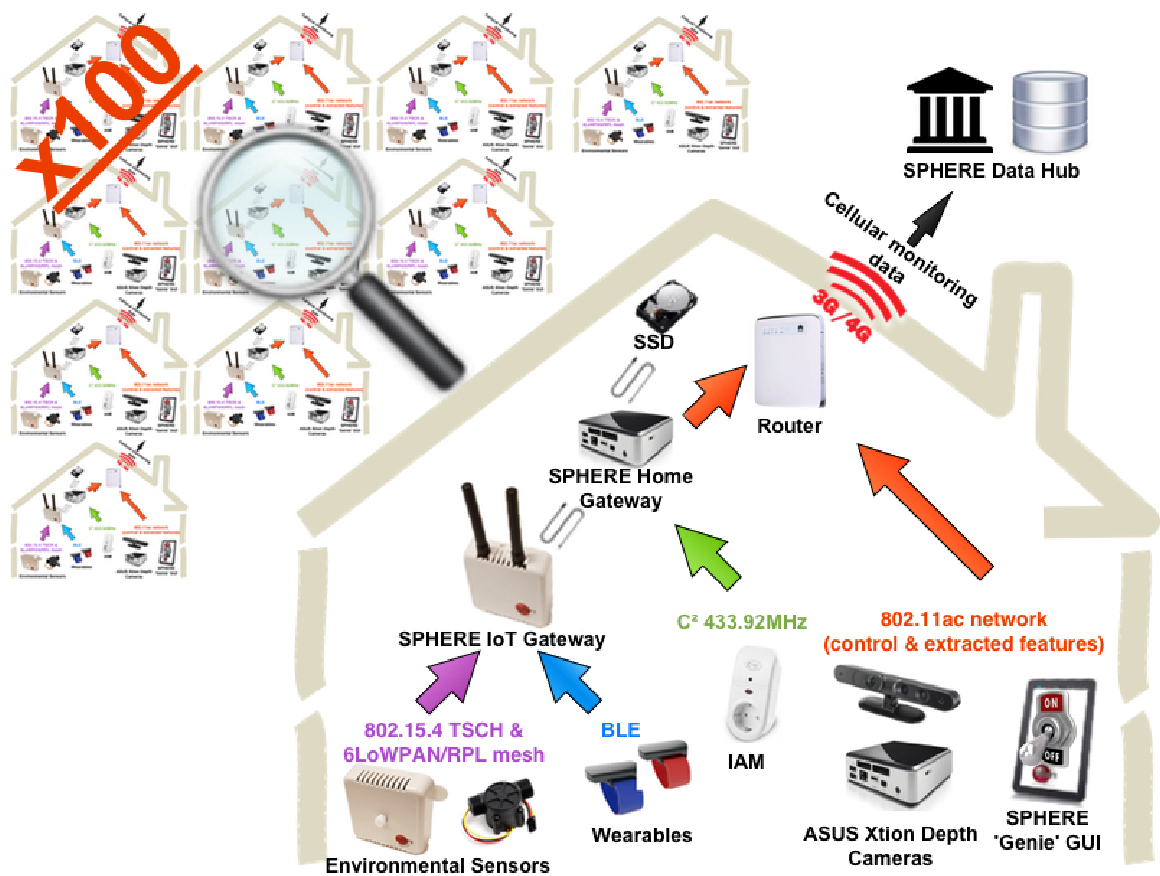 Figure 1: The multi-layered SPHERE architecture showing the interplay between wearables, environmental sensors, and the home gateway.
Overcoming Throughput Bottlenecks
Standard IoT protocols are often too slow for high-resolution medical data. SPHERE addresses this through:
- Adaptive Channel Selection: The system monitors noise levels on all 16 channels and dynamically avoids those with heavy WiFi activity.
- Custom TSCH Scheduling: By over-allocating time slots and using shared slots, the network can handle bursts of accelerometer data from multiple residents simultaneously.
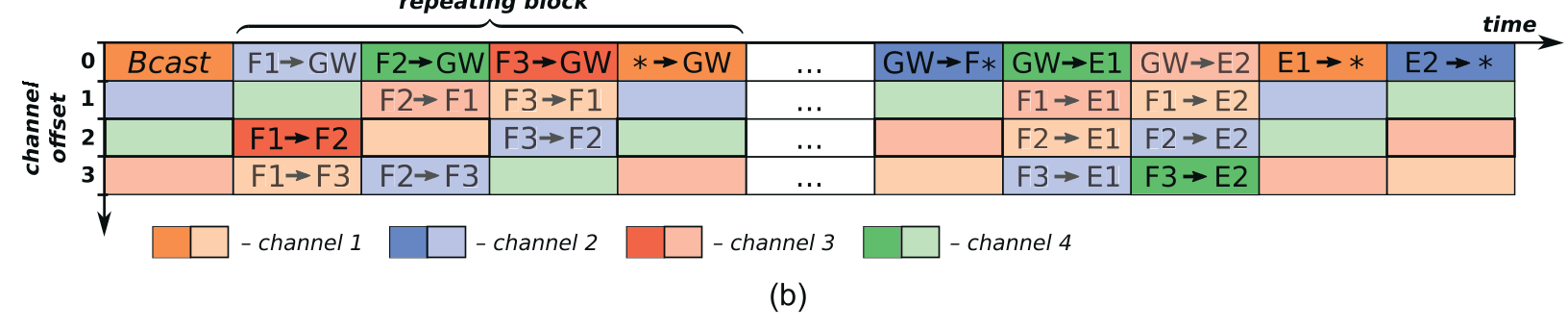 Figure 2: The custom high-data-rate TSCH schedule optimized for SPHERE's unique traffic patterns.
Experimental Results: Rock-Solid Performance
In the first 12 home deployments, the system achieved:
- 99.97% Packet Delivery Rate: This level of reliability is almost unheard of for low-power sensors in uncontrolled environments.
- Month-long Battery Life: Wearables with tiny 100mAh batteries lasted for months while transmitting raw data at 25Hz, thanks to aggressive binary payload optimization and duty cycling.
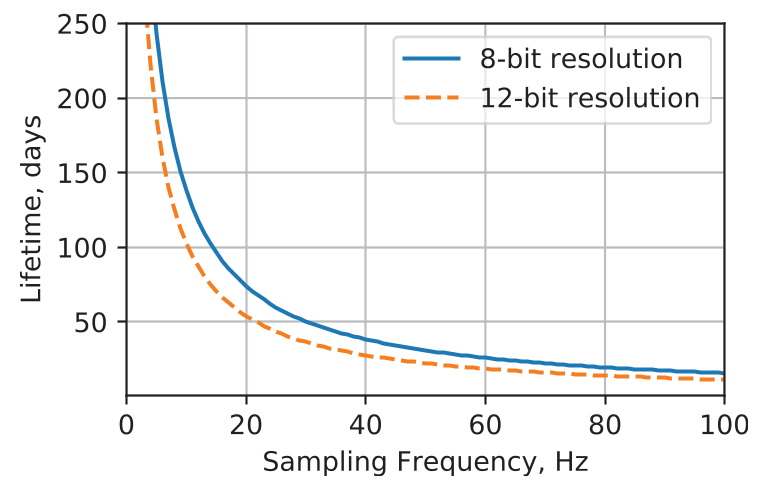 Figure 3: Power consumption and battery life estimates across different sampling rates and payload sizes.
Critical Insight & Conclusion
The SPHERE project proves that the "Internet of Things" for healthcare must be infrastructure-first. By focusing on the reliability of the underlying network (the "How") before jumping into the health analytics (the "What"), the researchers have built a platform that can actually survive 12 months in a volunteer's home without a technician on site.
Limitations: The system currently relies on a private 3G/4G link for monitoring, which adds cost. Furthermore, while health data is kept locally for privacy, this prevents real-time clinical alerts.
Future Outlook: Transitioning to 5G and NB-IoT could eliminate the dependency on local gateways, while edge computing could allow for local "emergency" processing (like fall detection) without compromising the project's rigorous privacy standards.