
The Posting Halo: How Contribution Reshapes User Behavior on Facebook
Changes in Engagement Before and Aer Posting to Facebook
This study investigates behavioral changes in Facebook users surrounding the act of posting content. By analyzing de-identified logs of 2.4 million users, it identifies a unique "engagement spike" characterized by increased site activity and selective social interaction both hours before and after a contribution is made.
TL;DR
Ever wonder why you find yourself refreshing Facebook more often just after you’ve shared a photo? This paper proves it’s not just you—and it’s not just the notifications. By analyzing 2.4 million users, researchers from Cornell Tech and Meta found that posting content triggers a "high-engagement" state that begins hours before the post and lingers for nearly a day after, characterized by a sharp increase in selectivity and social reciprocity.
Problem & Motivation: Beyond Self-Reporting
Why do we post? Sociology often points to "relationship maintenance" or "status seeking." However, most of these insights come from surveys where users tell researchers what they think they do.
The authors of this study noticed a gap: we didn't know the behavioral reality of the "Poster's High." Does the act of contribution distract us from others' content, or does it make us more hungry for interaction? By using massive-scale log data, the team moved beyond "why" people post to "how" their behavior changes when they do.
Methodology: The "Feedback" Baseline
Comparing a "poster" to a "non-poster" is unfair because active users are different from passive ones. To solve this, the researchers used a within-subject design. They compared the same person at two different times:
- Condition C (Contribution): Around the time they posted a status or photo.
- Condition F (Feedback): Around the time they simply liked or commented on someone else's post.
By using Difference in Differences (DID), they could isolate the specific "bump" in activity caused by posting compared to just being "active" on the site.
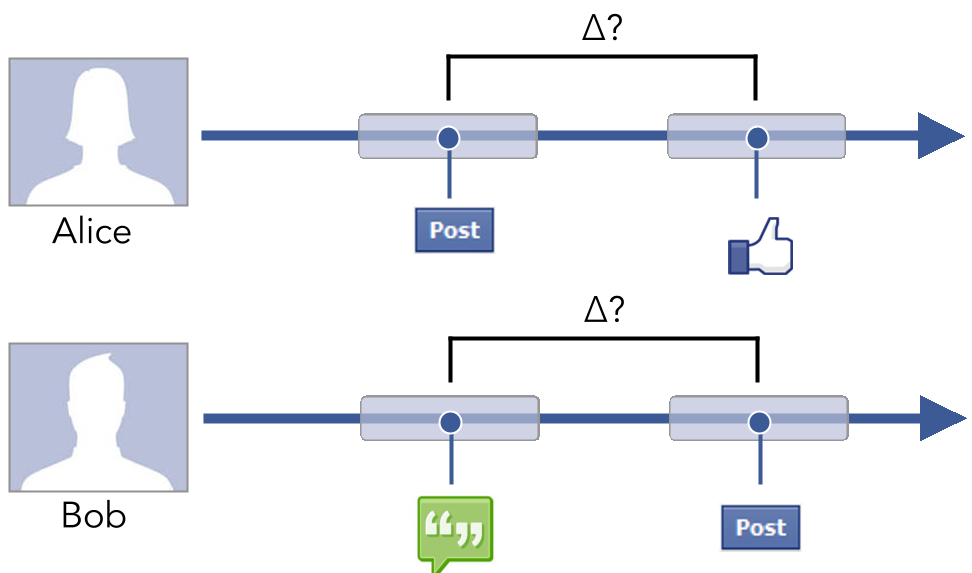 Figure 1: The study compares Alice and Bob's behavior 24h before/after posting vs. giving feedback.
Methodology & Findings: The 18-Hour Engagement Window
The most striking discovery is that contribution isn't a point-in-time event; it's a "halo."
- Pre-Post Excitement: Users become significantly more active on Facebook up to 6 hours before they actually hit "Post." This suggests that a state of high social arousal or "free time" leads to posting, rather than posting being a spontaneous spark.
- The Post-Post Spike: Activity remains elevated for 12+ hours after.
- Self-Motivated Visits: Even when notifications were turned off, users visited the site 2.6% more often after posting. This suggests an internal "feedback-seeking" drive.
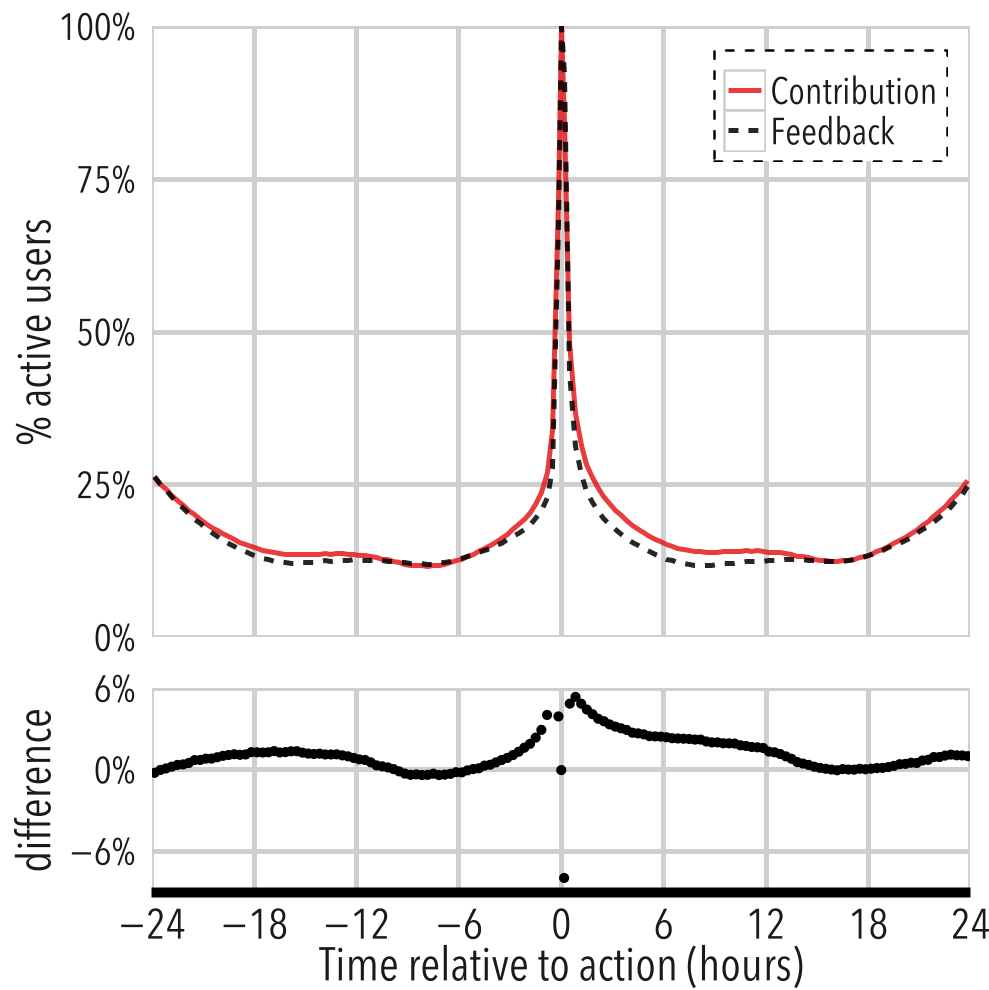 Figure 2: The red line (Posting) consistently stays above the black line (Feedback) for hours.
The Reciprocity Machine
The paper provides a deep dive into Reciprocity. When you post, you aren't just looking for likes; you’re entering a social contract.
- Selective Attention: After posting, users read more stories from friends, but their interest in "Pages" (brands/public figures) remains flat.
- Indebtedness: Using Propensity Score Matching, the authors found that if a friend likes your post, you are 40% more likely to comment on their content in return. This is "direct reciprocity" in action—we feel a social debt to those who validate us.
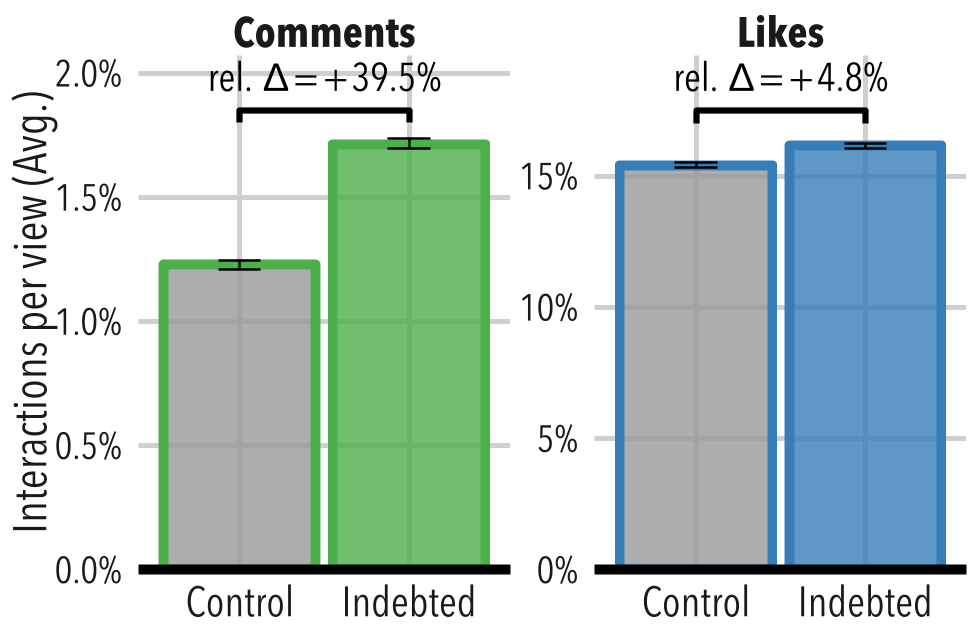 Figure 3: Commenting rates soar for "indebted" friends (those who responded to the user's post).
Critical Analysis & Takeaways
This research refutes the "Fixed-Quota" theory (the idea that we only have so much social energy to spend). Instead, it supports an Arousal Model: contributing content puts us in a heightened state of social vigilance.
Limitations:
- Causality: While the "halo" is clear, the study is observational. We don't know if "feeling social" causes the post, or the post causes the "feeling social."
- Desktop Focus: The data is from 2015 desktop users. Modern mobile-only "doom-scrolling" patterns might yield different "halo" durations.
Conclusion: For designers and researchers, this means the "window" after a user posts is the most valuable time to show them high-quality content from friends. The user is primed, alert, and ready to reciprocate. In the economy of attention, the act of giving (posting) actually makes the user more ready to consume.