
Bridging the Trust Gap: Can AI Feedback Outperform Human Experts in Gesture Learning?
Engendering Trust in Automated Feedback: A Two Step Comparison of Feedbacks in Gesture Based Learning
The paper presents a comparative study of automated and manual expert feedback in Gesture-Based Learning (GBL) for American Sign Language (ASL). Using a system called ASLHelp, the researchers employ a two-step "blind" evaluation process to demonstrate that fine-grained, explainable AI feedback can achieve high levels of appropriateness compared to human experts.
Executive Summary
TL;DR: Researchers at Arizona State University have developed a two-step validation framework to prove that automated gesture feedback can be as trustworthy and effective as human experts. By breaking down American Sign Language (ASL) into "grammatical concepts," their system, ASLHelp, provides explainable feedback that experts found appropriate nearly 41% of the time in blind comparisons.
Context: This work transitions AI from a simple "Correct/Incorrect" classifier to a pedagogical tool. In the landscape of computer-aided learning, it bridges the gap between Gesture Recognition (what is happening) and Gesture-Based Learning (how to improve what is happening).
The "Black Box" Problem in ASL Learning
Traditional learning relies on the "human touch." In ASL, a teacher doesn't just say "that's wrong"; they point out that your hand shape was correct, but your wrist movement was too wide. Automated systems often fail because:
- Lack of Transparency: Users don't know why the machine failed them.
- Subjectivity: Human experts have different margins of error, while machines are often seen as "too rigid" or "clumsy."
The authors argue that to engender trust, the AI must speak the language of the expert by providing fine-grained, concept-level feedback.
Methodology: The Grammar of Movement
The core innovation lies in treating a gesture not as a single video clip, but as a Grammar Expression (GE).
1. Concept-Level Decomposition
ASLHelp decomposes every sign into three "Stokoe" modalities:
- Location: Where the hand starts and ends.
- Movement: The trajectory of the palm.
- Handshape: The specific configuration of fingers.
Using a Context-Free Grammar (CFG), the system generates feedback like: "Location is correct, Handshape is correct, Movement of the right hand is incorrect."
2. The Two-Step "Blind" Evaluation
To scientifically prove reliability, the authors used:
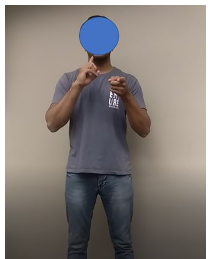
- Step 1 (Direct Comparison): They recorded 154 novice videos and generated feedback from both ASLHelp and 3 human experts.
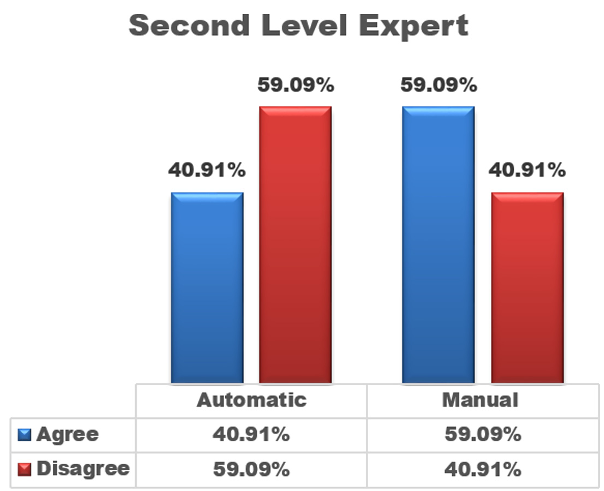
- Step 2 (The Taste Test): A fourth expert—unaware of the experiment's goal—was shown a video and two feedback options (one human, one AI). They had to pick the most "appropriate" one.
Experiments & Results
The results challenged the assumption that human feedback is always superior.
- Consistency: In 78.87% of cases, the AI and human experts agreed on at least 2 out of 3 components.
- The Precision Edge: While human experts agreed with other human experts 59% of the time, they chose the Automated Feedback 40.91% of the time.
The "Handshape" Hurdle
The data revealed a specific weakness: Handshape Recognition. While Location and Movement had high match rates (~79%), Handshape only saw a 59.74% match. The reason? Real-world "noise." Students record videos in messy dorm rooms with poor lighting, whereas expert models are trained on clean, studio-grade footage.
Critical Insight: The "Mercy" of Human Feedback
An interesting takeaway from the paper is that human experts are more "forgiving." They often label "near-misses" as correct, whereas ASLHelp is mathematically precise. This precision is a double-edged sword: it can lead to frustration if the margin of error is too tight, but it offers a level of corrective detail that humans might overlook.
Future Outlook
This research provides a blueprint for expanding AI feedback into:
- Rehabilitation: Monitoring Parkinson’s or Alzheimer’s patients.
- Technical Training: Training heavy equipment operators or military personnel.
- Performance Arts: Coaching dance or athletic posture.
By moving from "Static Grading" to "Explanatory Coaching," ASLHelp proves that trust in AI isn't built on 100% accuracy, but on 100% clarity.
Conclusion
The study successfully demonstrates that explainable, concept-based AI can effectively mimic—and sometimes refine—expert human intuition. The path forward involves calibrating these systems to be "context-aware," adjusting the margin of error based on the learner's skill level, and improving computer vision robustness in "in-the-wild" environments.