
Predicting Customer Satisfaction: Bridging the Gap Between Online Reviews and Product Design
Engineering Applications of Artificial Intelligence
The Customer Satisfaction Prediction Framework (CSPF) is a novel machine learning approach designed to predict product performance and quality by mining sentiment from online customer reviews. By integrating hybrid ensemble Genetic Programming (GP) with time-series data, it achieves a significant reduction in prediction error compared to traditional linear and fuzzy regression models.
In the hyper-competitive landscape of consumer electronics, a 90% failure rate for new products is a sobering reality. Traditional methods for gauging customer satisfaction (CS), like questionnaires and interviews, are simply too slow for the digital age. By the time a manufacturer processes survey data, consumer sentiment has often shifted.
A new paper by Chan et al. proposes a solution that turns the vast ocean of online reviews into a precise engineering tool. Their Customer Satisfaction Prediction Framework (CSPF) uses Genetic Programming and a clever ensemble strategy to predict how product design choices will impact customer sentiment in the future.
The Problem: The Latency of "The Voice of the Customer"
For decades, engineers used the House of Quality (HOQ) to map customer requirements to technical specifications. While effective, it relies on subjective human judgment and slow data collection.
The authors argue that:
- Surveys lack representativeness: Sample sizes are often too small.
- Surveys lack timeliness: They reflect the past, not the immediate "now."
- Models lack transparency: While Neural Networks are accurate, they are "black boxes." Designers need to see the mathematical relationship between, say, a hair dryer's wattage and its perceived quality.
Methodology: Evolving the "Perfect" Prediction
The researchers developed a multi-stage pipeline that begins with Web Scrapping (e.g., from Amazon.com) and Opinion Mining to convert text into numerical sentiment scores.
1. Symbolic Regression via Genetic Programming (GP)
Unlike a standard regression that assumes a linear relationship, GP evolves a mathematical formula. Starting with basic operators (+, -, ×) and design attributes (variables), it creates a "tree" that represents a polynomial equation.
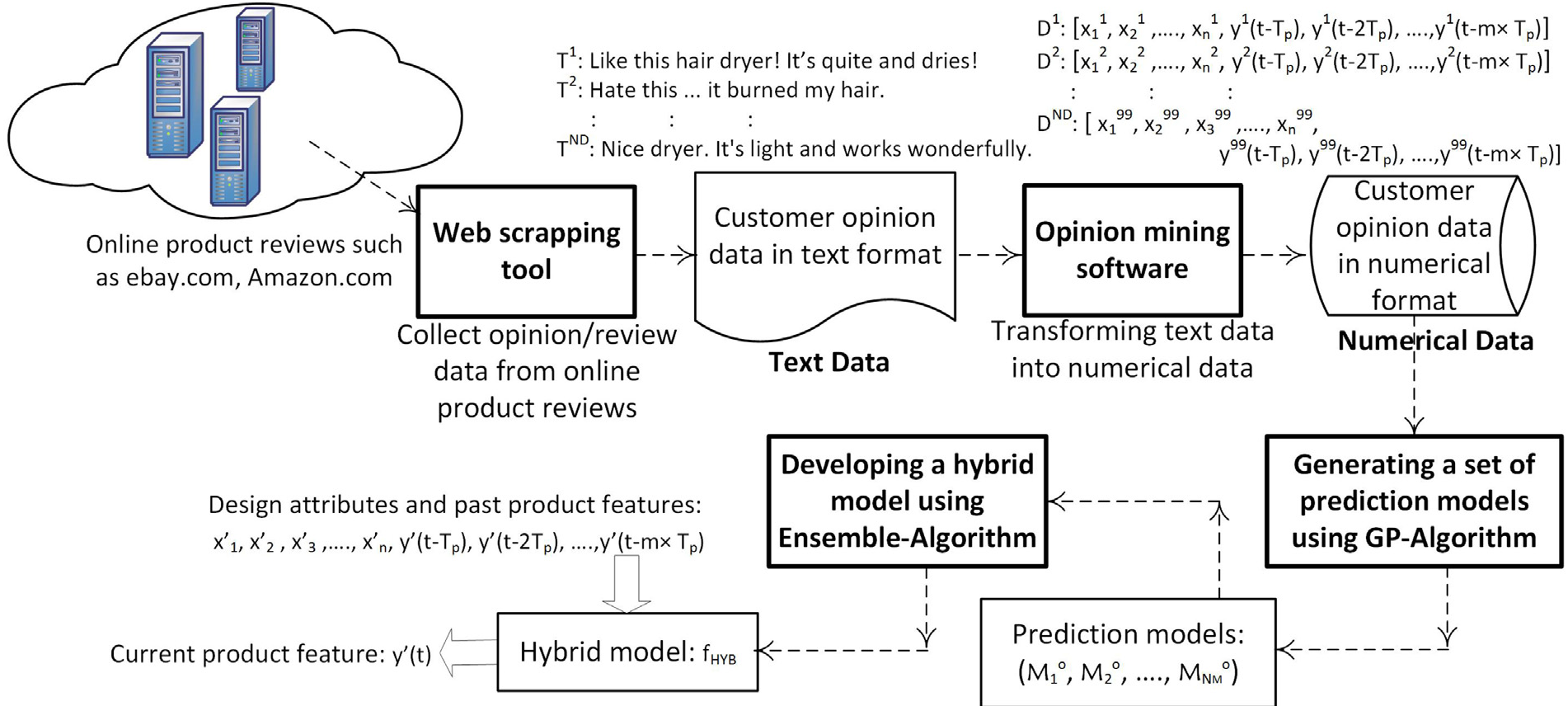 Figure 1: The CSPF Workflow showing the transition from raw reviews to a hybrid model.
2. The Power of the "Committee" (Ensemble-Algorithm)
GP is inherently stochastic; running it twice yields two different models. Usually, researchers pick the one with the lowest training error. However, this paper argues that the "best" model on training data often overfits.
Instead, they propose a Committee Member Selection approach. They generate multiple models and create a Hybrid Model where each member's prediction is weighted. The weight is decided by how much a model’s prediction correlates with others—if a model is an "outlier," its influence is reduced.
Experimental Validation: The Hair Dryer Case Study
The team tested their framework on 10 popular electric hair dryers using two years of Amazon reviews (nearly 4,600 individual data points). They tracked design attributes like weight, power, heat settings, and speed settings.
Key Findings:
- Time Series Matter: Models that included "past sentiment" (how people felt about the brand/category last year) were significantly more accurate at predicting future satisfaction than those that ignored temporal data.
- Hybrid beats "Best": The ensemble hybrid model consistently outperformed the single "best" GP model. In one trial (Dryer 1), the hybrid model reduced error to ~8.5%, while the best single model sat at ~10.5%.
 Table 5: Quantitative comparison showing the CSPF (Hybrid-model) significantly outperforming Linear and Fuzzy regressions.
Critical Insight: Transparency for Designers
One of the most valuable aspects of this approach is the interpretability of the results. Because the GP outputs a polynomial equation, designers can look at the formula and realize, for instance, that "Power (Wattage)" might have less impact on satisfaction than "Heat Settings" for specific consumer segments.
Conclusion and Future Outlook
The study proves that machine learning can bridge the gap between qualitative customer feedback and quantitative engineering specs. By using a "committee" of models, the researchers solved the common GP problem of instability.
Wait, what about the outliers? The authors acknowledge that some reviews are "uncertain" or low-quality. Their next step is to develop a metric to filter "review uncertainty," which could further sharpen the accuracy of these predictive models.
For product managers and industrial engineers, this framework suggests that the next generation of products won't just be designed in a lab—they'll be designed by listening to the digital pulse of the marketplace.