
Predictive Design: Building Better Products with Online Reviews and Genetic Programming
Engineering Applications of Artificial Intelligence
The paper introduces the Customer Satisfaction Prediction Framework (CSPF), which utilizes online reviews and a Hybrid Ensemble Genetic Programming (HEGP) algorithm to predict dimensions of customer satisfaction. By integrating time-series sentiment data and ensemble learning, it achieves state-of-the-art performance in relating product design attributes to customer sentiment.
TL;DR
Determining the right features for a new product is often a gamble. This paper introduces the Customer Satisfaction Prediction Framework (CSPF), a system that scrapes Amazon reviews, converts them into sentiment scores, and uses an advanced version of Genetic Programming to predict what customers will want next. By combining multiple models into a "Committee," the authors achieved significantly higher accuracy than traditional statistical methods while keeping the results transparent for product designers.
Background: Tuning the Success of a Product
Why do 90% of new products fail? Often, it is a mismatch between design attributes (like the weight of a laptop) and customer satisfaction (like "portability"). Traditionally, companies used Quality Function Deployment (QFD) and surveys to bridge this gap. However, surveys are slow and often reflect what people felt months ago. In today’s fast-paced market, relying on a survey is like trying to drive by looking only in the rearview mirror.
The Core Insight: From Text to Math
The researchers recognized two major opportunities:
- Online Reviews as a Treasure Trove: Sites like Amazon provide real-time, longitudinal data on what customers love and hate.
- Genetic Programming (GP) for Transparency: Unlike "Black Box" AI (like Neural Networks), GP generates explicit mathematical equations (polynomials). This allows designers to see exactly how much "Weight" or "Power" affects "Satisfaction."
Methodology: The CSPF Workflow
The framework follows a four-step journey from raw data to actionable prediction:
- Web Scrapping & Opinion Mining: Extracting reviews and using NLP (NLTK, K-means clustering) to turn "I love how fast this dries!" into a numerical sentiment score (0.752).
- GP-Algorithm: Using evolutionary principles (crossover, mutation) to find the best mathematical structure to represent the relationship between product specs and satisfaction.
- Time-Series Integration: Crucially, the model doesn't just look at specs; it looks at past satisfaction scores to predict current ones.
- Committee Member Selection (Ensemble): Instead of just picking the one "best" model, the authors create a hybrid.
Architecture of the Framework
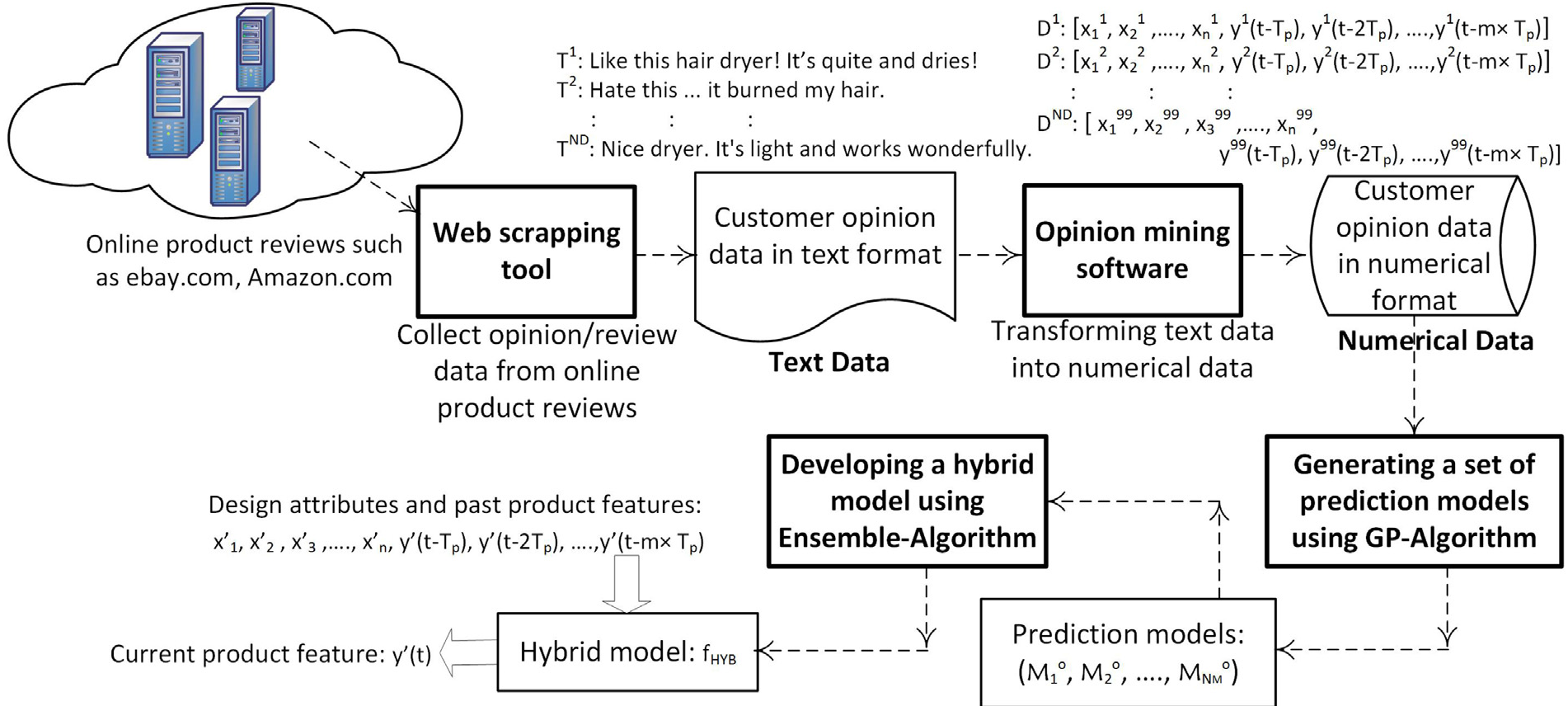 Figure 1: The flow from online reviews to the final hybrid prediction model.
Why the "Committee" Matters
Genetic Programming involves randomness. If you run it five times, you get five different models. Usually, researchers pick the one with the lowest training error. However, this paper proves that the "best" training model often overfits and performs poorly on new data (see Table 9). By weighting the models based on how much they agree with each other (correlation), the Ensemble-Algorithm creates a much more robust "Hybrid Model."
Experiments: The Hair Dryer Case Study
The researchers applied this to 10 popular hair dryers using 4,594 Amazon reviews. They focused on four attributes: Weight, Power, Heat Setting, and Speed Setting.
Performance Results
The hybrid approach crushed traditional methods:
- Baseline (Linear Regression): ~37% error.
- Stand-alone GP (Best Model): ~29% error.
- Proposed Hybrid GP: ~11% error.
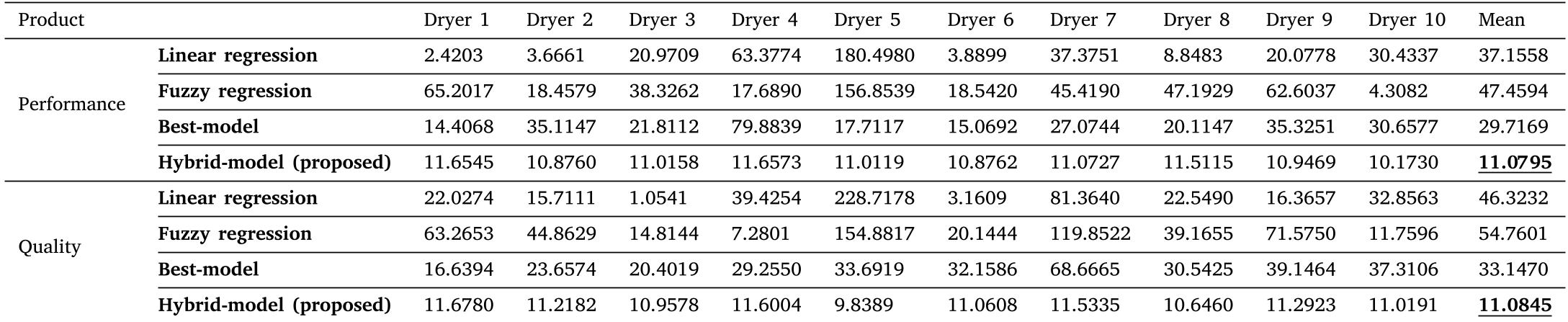 Table 5: Comparison of the proposed hybrid model against state-of-the-art methods.
A key finding was that adding time-series data (past sentiment) consistently lowered errors compared to models that ignored the history of customer satisfaction.
Deep Insight: Beyond the "Black Box"
Perhaps the most valuable output for a manager is the Transparency. In Table 9 and 10, the GP output identifies that "Wattage" (X1) actually didn't appear in most of the high-performing models. This suggests that for these hair dryers, increasing power didn't significantly move the needle on satisfaction compared to heat and speed settings—a vital insight for an engineering team looking to cut costs or reduce weight.
Conclusion
The CSPF framework offers a powerful bridge between data science and industrial design. By turning "messy" online text into structured, transparent polynomial models, it allows companies to respond to market shifts in weeks rather than months. While the ensemble approach requires more computational power (executing 5 models instead of 1), the 50ms execution time is negligible compared to the massive gains in accuracy.
Future Outlook: The next step in this research involves handling "uncertainty"—calculating not just what the satisfaction will be, but how confident the AI is in that prediction.