
Enhanced Broad Siamese Network: Redefining Emotional Intelligence for Resource-Constrained Robots
Enhanced Broad Siamese Network for Facial Emotion Recognition in Human–Robot Interaction
The paper introduces an Enhanced Broad Siamese Network (EBSN) for Facial Emotion Recognition (FER) tailored for human-robot interaction. It combines the efficiency of the Broad Learning System (BLS) with the few-shot learning capabilities of Siamese networks, achieving state-of-the-art performance on datasets like CK+, JAFFE, and Oulu-CASIA.
TL;DR
Researchers have developed an Enhanced Broad Siamese Network (EBSN) that allows robots to recognize human emotions with high accuracy without the massive computational overhead of typical deep learning. By integrating the Broad Learning System (BLS) into a Siamese framework, the model achieves over 98% accuracy on CK+ while slashing training time and memory usage by over 70-90%.
Background: The Latency Gap in Robotics
In Human-Robot Interaction (HRI), a robot must perceive and react to human emotions in real-time. While Deep Learning (DL) has set benchmarks in accuracy, its "black-box" depth introduces significant inference latency and requires high-end GPUs. For a mobile robot with a limited battery and onboard CPU, these deep models are often too "heavy."
The authors identify a secondary pain point: Siamese Networks, though great for few-shot learning, usually require a quadratic number of sample pairs for training, leading to a "combinatorial explosion" in preprocessing time.
Methodology: The Power of Breadth Over Depth
1. Broad Learning System (BLS) as the Backbone
Unlike deep networks that stack layers vertically, BLS expands horizontally. It maps input data into feature nodes and subsequently into enhancement nodes via random weights. These are then connected to the output layer through a single-step pseudoinverse calculation (Ridge Regression), bypassing the need for time-consuming backpropagation.
2. Eliminating Pairwise Training
The EBSN utilizes a clever "Feature Mapping" strategy. Instead of training the network to distinguish pairs, they use one-hot encoding during training to ensure that the subnetworks inherently map samples of the same class to similar vector spaces. This effectively reduces complexity to .
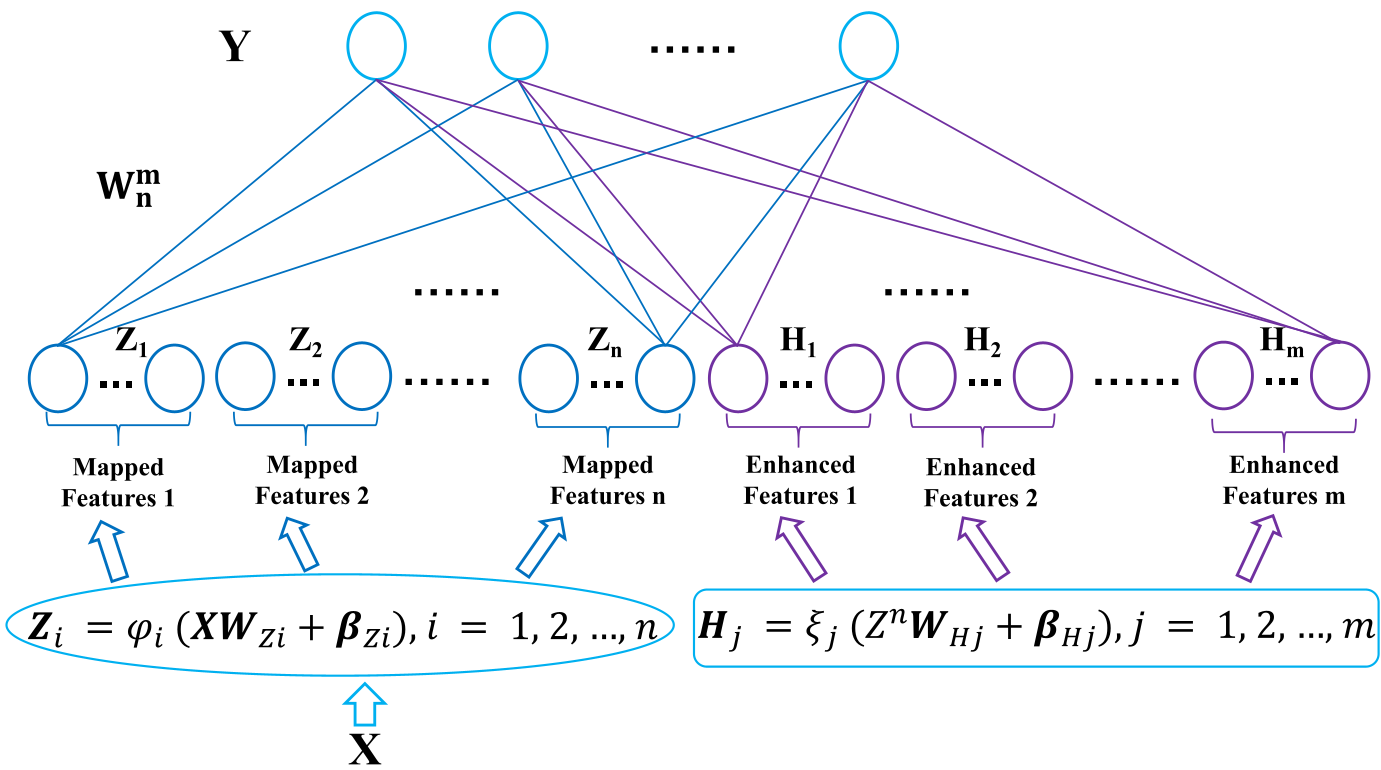 Figure 1: Traditional Siamese Structure (for reference). EBSN replaces the deep subnetworks with the BLS flat structure shown in the paper's Fig. 6.
3. A Robust Similarity Metric
Traditional Euclidean distance is sensitive to outliers. The authors propose a metric that focuses on the highest and second-highest probability nodes in the mapping result:
- If the predicted classes match, it averages the two largest values to calculate a "balanced" similarity.
- This approach provides a more nuanced comparison than a simple "winner-takes-all" classification.
Experimental Battleground: EBSN vs. Deep Learning
The model was tested against a Fully Connected Siamese Network (FCN-SN) across three major datasets: CK+, JAFFE, and Oulu-CASIA.
| Dataset | EBSN Accuracy | FCN-SN Accuracy | EBSN Time (s) | FCN-SN Time (s) |
|---|---|---|---|---|
| CK+ | 98.35% | 94.80% | 41.1s | 130.7s |
| JAFFE | 93.20% | 89.12% | 22.7s | 124.0s |
| Oulu-CASIA | 99.43% | 92.74% | 57.3s | 411.8s |
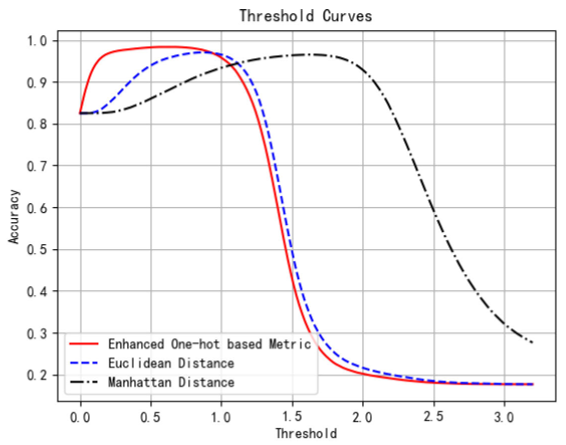 Figure 2: ROC Curves showing the superior discriminative power of the Enhanced Broad Siamese Network.
Key Insights:
- Memory Efficiency: In the Oulu-CASIA test, the memory footprint dropped from 23.7GB (DL) to just 5.9GB (EBSN).
- Ablation Study: The proposed similarity metric consistently outperformed standard Euclidean and Manhattan distances, proving that focusing on the top-2 activation nodes provides a better "feature fingerprint" for emotions.
Critical Analysis & Conclusion
The Enhanced Broad Siamese Network represents a significant shift toward "Green AI" in robotics. By leveraging the Broad Learning System, the authors prove that we don't always need more layers to achieve higher intelligence; sometimes, we just need a wider perspective and a more efficient way to solve the weights.
Limitations: While the model excels at facial expressions, its performance on dynamic Video-based Emotion Recognition or multimodal (Audio + Video) data remains to be seen.
Future Outlook: The success of EBSN suggests that shallow networks are not obsolete. For edge devices, they are the future, offering a path to low-latency, empathetic AI that can run on the hardware of today, not the supercomputers of tomorrow.