
EPI Algorithm: Safeguarding CPS Against Stealthy Sensor Attacks with Historical Wisdom
Enhanced Resilient Sensor Attack Detection Using Fusion Interval and Measurement History
The paper introduces EPI (Enhanced Pairwise Inconsistency), a novel sensor attack detection and identification algorithm for Cyber-Physical Systems (CPS). By integrating historical measurement mapping with virtual sensors and fusion intervals, the method achieves over 92% improvement in detecting sophisticated stealth attacks compared to state-of-the-art baselines.
Executive Summary
TL;DR: The EPI (Enhanced Pairwise Inconsistency) algorithm is a breakthrough in Cyber-Physical System (CPS) security, designed to identify malicious sensor tampering even when it mimics benign transient faults. By combining system dynamics with a "virtual sensor" representing historical truth, it detects stealth attacks with over 90% accuracy—a task where previous SOTA methods failed entirely.
Positioning: This work bridges the gap between traditional fault-tolerant sensor fusion (like Marzullo's algorithm) and modern cybersecurity, moving from simple thresholding to a history-aware inconsistency analysis.
The "Invisible" Threat: Why Current Detectors Fail
In modern CPS, redundancy is common. Multiple sensors measure the same physical variable to ensure reliability. However, this creates a dilemma: how do we distinguish between a transient fault (a momentary glitch or signal loss) and a stealth attack (a calculated effort to slightly drift the data)?
Prior works often treated these two identically or were too conservative, allowing "Stealth Attacks" to bypass detection by keeping manipulations small enough to hide within the "noise" of transient failures.
Methodology: The Power of Virtual Sensors and Mapping
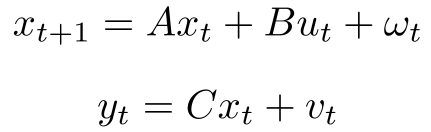
The authors' core "Insight" is that physical systems must follow the laws of physics—represented here by a discrete-time linear system model:
1. The Virtual Sensor ()
Instead of just comparing current sensor readings against each other, the EPI algorithm introduces a Virtual Sensor. This sensor's "measurement" is derived from the previous state mapping. If the physical sensors do not align with where the system should be based on its dynamics, an inconsistency is flagged.
2. From Weak to Strong Inconsistency
- Weak Inconsistency (WI): Occurs when two sensor intervals do not intersect. This could just be a glitch.
- Strong Inconsistency (SI): If WI occurs frequently over a specific window () exceeding a threshold (), the relationship is upgraded to SI. This is the smoking gun for an attack.
Experimental Validation: Real-World Robot Testing
The team tested EPI on a LEGO EV3 ground vehicle equipped with angle and ultrasonic sensors. They compared their method against the standard PI (Pairwise Inconsistency) detector across three attack types: Bias, Random, and the dreaded Stealth attack.
Performance Highlights
The results were conclusive. As the window size () increases, EPI's ability to filter out noise and pinpoint attacks becomes nearly perfect.
| Attack Type | Baseline (PI) | EPI (Ours) | Improvement |
|---|---|---|---|
| Bias Attack | 81.83% | 99.79% | +~18% |
| Random Attack | 65.98% | 99.58% | +~34% |
| Stealth Attack | 0% | 95.09% | Massive Breakthrough |
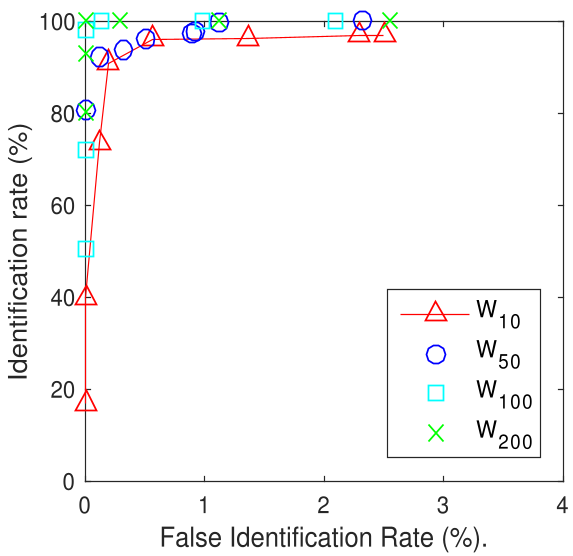 Fig 1: Using ROC curves to find the optimal threshold to maximize detection while minimizing false alarms.
Critical Insight & Conclusion
Takeaway
The genius of EPI lies in its use of temporal redundancy. While spatial redundancy (multiple sensors) can be fooled if an attacker compromises enough nodes, temporal redundancy (using the system's own momentum and history) is much harder to forge without being physically obvious.
Limitations & Future Work
- False Alarms: EPI shows slightly higher false alarm rates in very small windows because it is more sensitive.
- Computational Cost: Mapping and pairwise comparison across measurements increases complexity.
- Future Path: The next frontier is applying this to non-linear systems and high-dimensional data like LiDAR clouds in autonomous vehicles.
Successful CPS security isn't just about better sensors; it's about better context. EPI proves that the best way to detect a lie today is to remember what was true yesterday.