
Hybrid Social Networks: Solving the Post-Intervention Interest Decay in engineering
Enhancing continuity between gender diversity interventions using hybrid social networks
The paper proposes a "Hybrid Social Network" framework to improve gender diversity in engineering by bridging the gap between isolated in-person interventions. It leverages existing social media platforms to maintain mentor-mentee relationships initiated during physical workshops, addressing the problem of student interest decay.
TL;DR
Isolated interventions like "STEM camps" often see their impact vanish shortly after the final session. This paper introduces a Hybrid Social Network framework—an architectural strategy to maintain engagement by transitioning in-person mentoring relationships into the digital platforms students already use. By targeting the "decay" of interest between events, the authors propose a low-cost, high-continuity model for improving gender diversity in engineering.
The "Post-Event" Problem: Why Good Interventions Fail
Academic literature is full of reports on successful five-day camps or weekend workshops that boost female students' interest in engineering. Yet, the national statistics remain stagnant. Why?
The authors argue that student interest behaves like a decaying signal. At the time of an intervention (), interest spikes above the participation threshold. However, without a "continuity mechanism," this interest decays monotonically. By the time the next intervention () occurs, interest has fallen below the threshold, leading to attrition. This is a classic "Leaky Pipeline" problem visualized as a temporal gap.
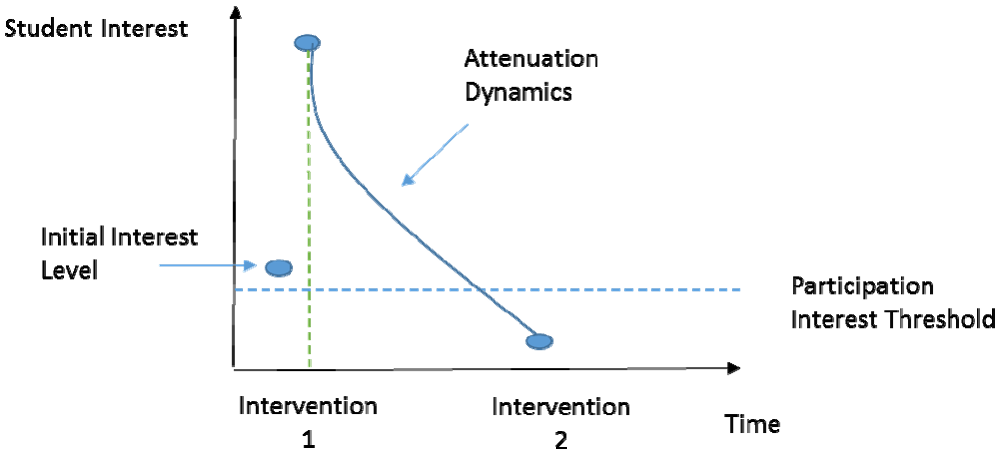 Above: The proposed model illustrating how interest decays between physical intervention events.
Methodology: The Hybrid Social Network Framework
The core insight is that we shouldn't build new, expensive platforms that students have to learn. Instead, we should leverage Existing Social Media.
- Initialization: Use in-person "Occupational Choice Interventions" to establish high-trust human connections between students and STEM mentors.
- Virtual Transition: Transition these relationships to platforms like Instagram, Snapchat, or LinkedIn.
- Hybridization: The network becomes "hybrid"—reinforced by physical memory but maintained by virtual daily interactions, effectively slowing the rate of interest decay.
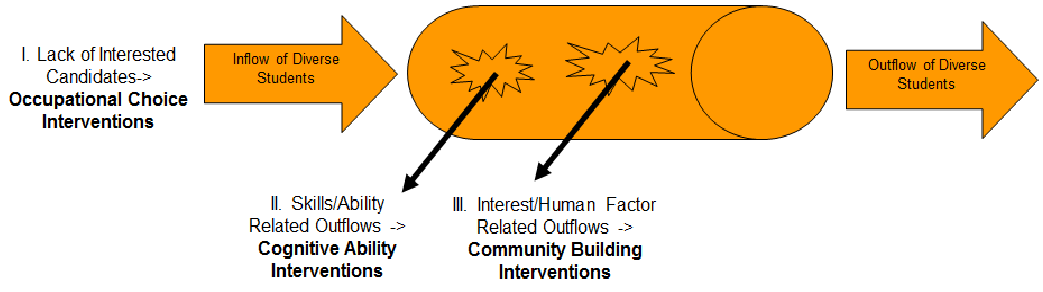 The research maps these efforts within the broader Watson and Froyd "Leaky Pipeline" framework, focusing on Community Building.
Feasibility & Survey Insights
Is it realistic to ask a high schooler to "follow" a professional mentor? The authors surveyed 132 students to test this.
1. Platform Proliferation
The data suggests a moving target. Facebook usage is declining among the youngest cohort, while Instagram and Snapchat usage is nearly universal. This suggests that any coordination effort must be platform-agnostic or follow the "early adopter" trends of the target demographic.
2. The Privacy Paradox
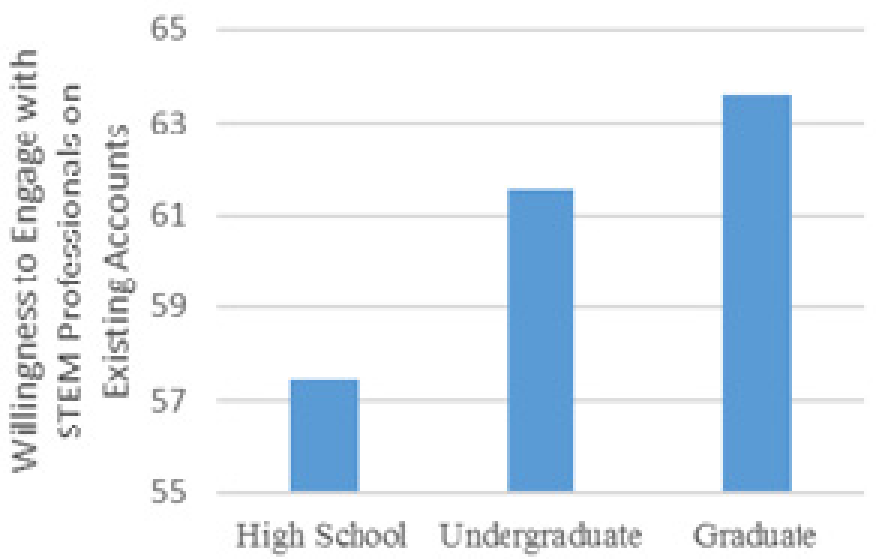
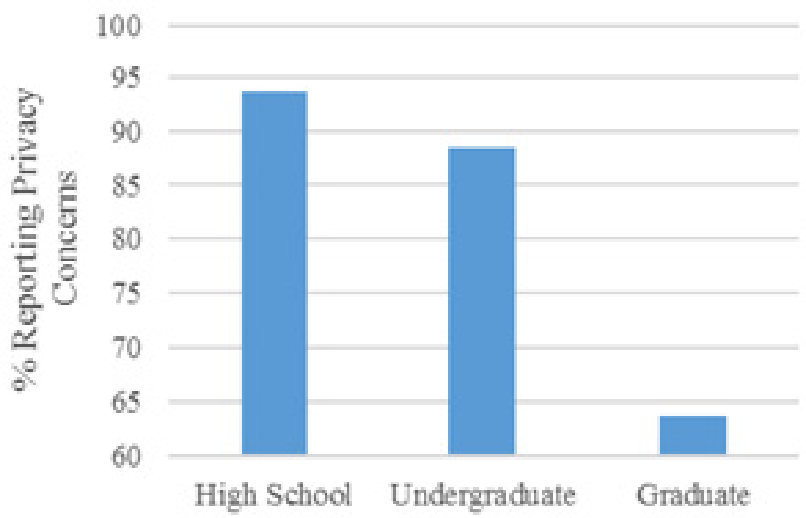
A significant finding was that 78% of students hesitate to add new people due to privacy concerns. However, when specifically asked if they would connect with STEM professionals, the comfort level was much higher, particularly among college-aged students. This indicates that the "professional value" of the connection can override generic privacy concerns.
Critical Analysis & Conclusion
This work shifts the focus from what we teach in diversity interventions to how we maintain the connection after the intervention ends.
Takeaway: The biggest barrier to diversity isn't necessarily the lack of talent or interest at the start, but the lack of an infrastructure of continuity. By treating social media as a professional bridge rather than just a social distraction, engineering programs can drastically reduce the "marginal cost" of maintaining their pipelines.
Limitations: The study relies on self-reported data. As the authors admit, "willingness to connect" in a survey doesn't always translate to "engagement" in practice. Future work must track actual retention rates when these hybrid networks are deployed in the real world.