
Beyond the Core: Leveraging Ad Hoc Transient Communities to Boost Social Capital
Enhancing the Social Capital of Learning Communities by Using an Ad Hoc Transient Communities Service
This paper introduces a learner support service designed to enhance the social capital of online learning communities using Ad Hoc Transient Communities (AHTCs). By algorithmically matching peers for time-bound, goal-oriented collaboration, the method aims to decentralize social networks and foster a stronger sense of belonging.
TL;DR
Online learning communities are often fragile, relying on a few "super-users" while newcomers feel isolated. This paper proposes a structural remedy: Ad Hoc Transient Communities (AHTCs). By creating goal-specific, short-lived peer groups through an automated matching service, the researchers aim to decentralize the social network, lower the barrier for participation, and ultimately increase the "Social Capital" of the entire community.
The "Centralization Trap" in Online Learning
In many digital learning environments, a common pathology emerges: Hyper-centralization. A small core group handles the majority of requests, leading to two major issues:
- Information Overload: Core participants become exhausted and drop out.
- Isolation: Newcomers feel they have nothing to contribute and remain on the periphery, leading to detachment and high attrition.
The authors argue that for a community to be healthy, its Social Capital—defined by its network structure, the sense of belonging of its members, and the reciprocity of support—must be actively managed.
Methodology: The AHTC Service Architecture
The proposed solution is a "Learner Support Service" that orchestrates AHTCs. The intuition is simple: instead of a public forum where only the "loudest" respond, the system intervenes to create private, temporary micro-communities.
1. The Operational Flow
- Request: A learner submits a specific content-related problem.
- Matching: The system calculates a "matching score" based on peers' competencies and current availability.
- Environment: Two peers are invited into a private Wiki or Forum.
- Transience: Once the goal is met, the AHTC dissolves, and any valuable output is moved to a public FAQ.
2. Physical Intuition: The Power of Weak Ties
By forcing interactions between different members (rather than just the core), the system creates "weak ties." In social network theory, these are essential for information flow and preventing the network from collapsing if a central node leaves.
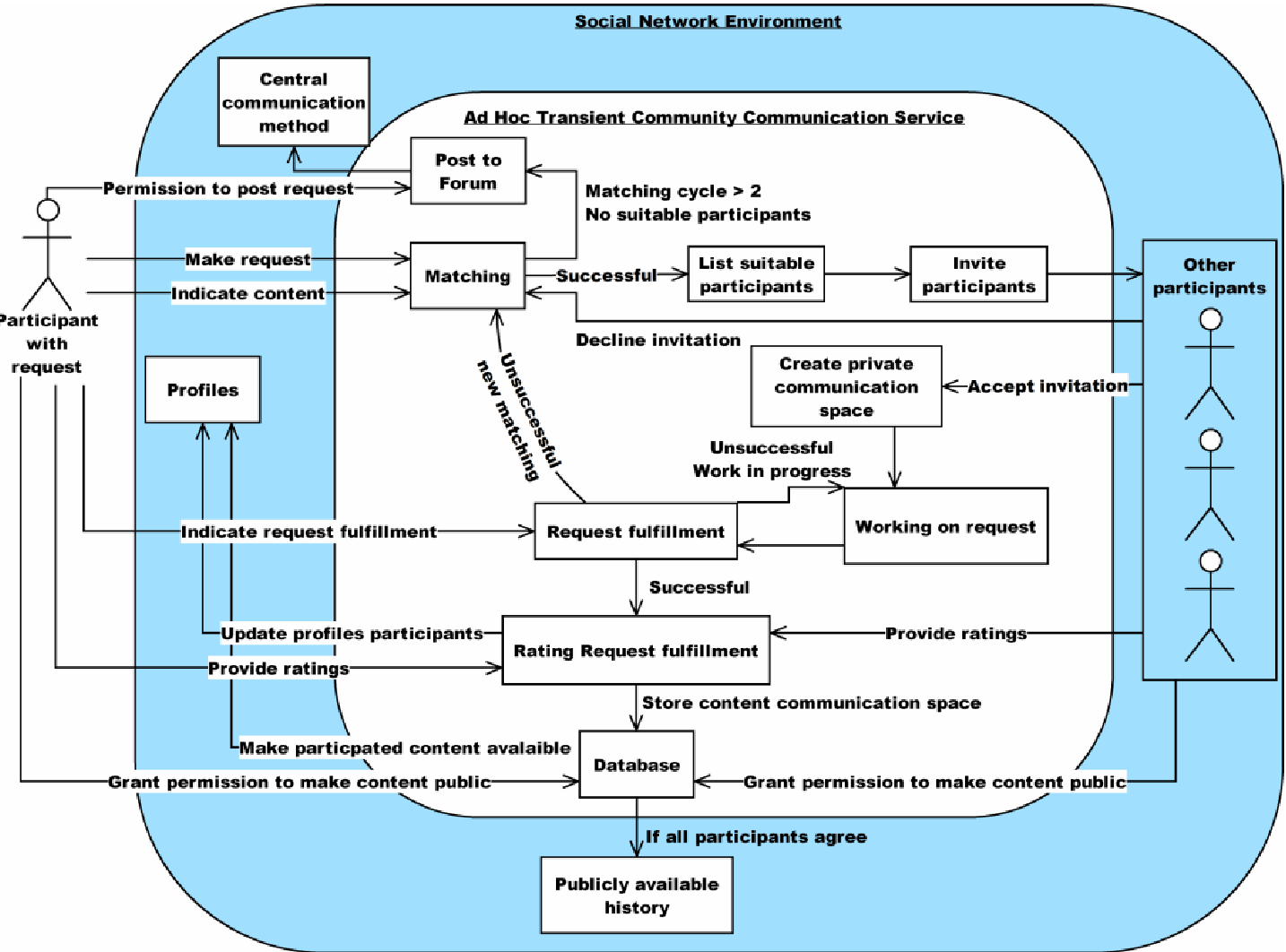 Figure 1: Overview of the AHTC learner support service, illustrating the path from request to fulfillment and storage.
Why it Works: Enhancing Social Capital
The paper breaks down the benefits into three pillars:
- Network Decentralization: By spreading requests via matching, the "load" is distributed. No single point of failure exists.
- Sense of Belonging: Participants are "invoked" to help. This immediate inclusion reduces the feeling of being an outsider.
- Informal Currency: Providing support validates a member's competence and creates a culture of reciprocity.
Critical Insight & Future Outlook
The brilliance of the AHTC concept lies in its transience. In a world of "engagement fatigue," asking a user to join a permanent committee is a high-ask. Asking them to help two peers solve a single wiki-based task for 48 hours is a low-ask.
Limitations & Challenges
- Cold Start: The matching mechanism relies on known "content competency" values. How does the system evaluate a brand-new user?
- Incentives: While peer-tutoring is beneficial, the paper does not deeply explore the long-term motivation for "tutors" to keep accepting invitations without tangible rewards.
Conclusion
This work shifts the focus from "how to build long-term groups" to "how to facilitate short-term interactions that build long-term value." By engineering "Ad Hoc" moments, we can create more resilient and inclusive learning environments. The next phase of this research involves longitudinal experiments to see if the "Swift Trust" formed in AHTCs translates into long-term community loyalty.