
Hybrid Intelligence in CAD Diagnosis: Fusing Domain Knowledge with Ensemble Learning
15660_An Ensemble Feature Selection Methodology That Incorporates Domain Knowledge for Cardiovascular Disease Diagnosis.
This paper introduces a novel ensemble feature selection methodology that integrates clinical domain knowledge with seven computational algorithms to improve Coronary Artery Disease (CAD) diagnosis. By optimizing feature subsets for various machine learning models on the UCI Cleveland dataset, the authors achieve a peak accuracy of 85.47% using a Multilayer Perceptron (MLP) with 9 selected features.
TL;DR
Coronary Artery Disease (CAD) remains a leading cause of global mortality, yet its diagnosis is often prohibitively expensive. This research presents a methodological breakthrough by combining Domain Knowledge (DK) from medical experts with an Ensemble of 7 Feature Selection algorithms. The study demonstrates that a refined subset of 9 clinical features, processed through a Multilayer Perceptron (MLP), can achieve high diagnostic performance, providing a cost-effective pathway for clinical screening.
Problem & Motivation: The Gap in Global Diagnostics
In high-income nations, CAD is managed with advanced imaging; however, in developing regions, the lack of early diagnosis leads to high premature death rates. While Machine Learning (ML) offers a solution by analyzing physical and biochemical markers (like cholesterol and heart rate), existing models often struggle with:
- High Dimensionality: Irrelevant features (noise) that degrade model accuracy.
- Overfitting: Predicting well on training data but failing in real clinical settings.
- Algorithmic Bias: Different feature selection methods (e.g., Chi-Square vs. IG) yield conflicting results.
The authors argue that a "single-best-method" approach is insufficient. Instead, they leverage the collective intelligence of multiple algorithms plus human medical expertise.
Methodology: The Power of Ensemble Selection
The core innovation lies in the Ensemble Feature Selection (EFS) framework. The authors don't just pick one algorithm; they use eight:
- Statistical/Information-based: Chi-Square (CS), Gain Ratio (GR), Information Gain (IG), ReliefF (RF), CMIM.
- Model-based: SVM, Bee Search (BS).
- Expert-based: Domain Knowledge (DK), where features are weighted by clinical significance.
The system tests 255 possible combinations of these selection methods across seven different classifiers (kNN, MLP, Random Forest, etc.) using 10-fold cross-validation.
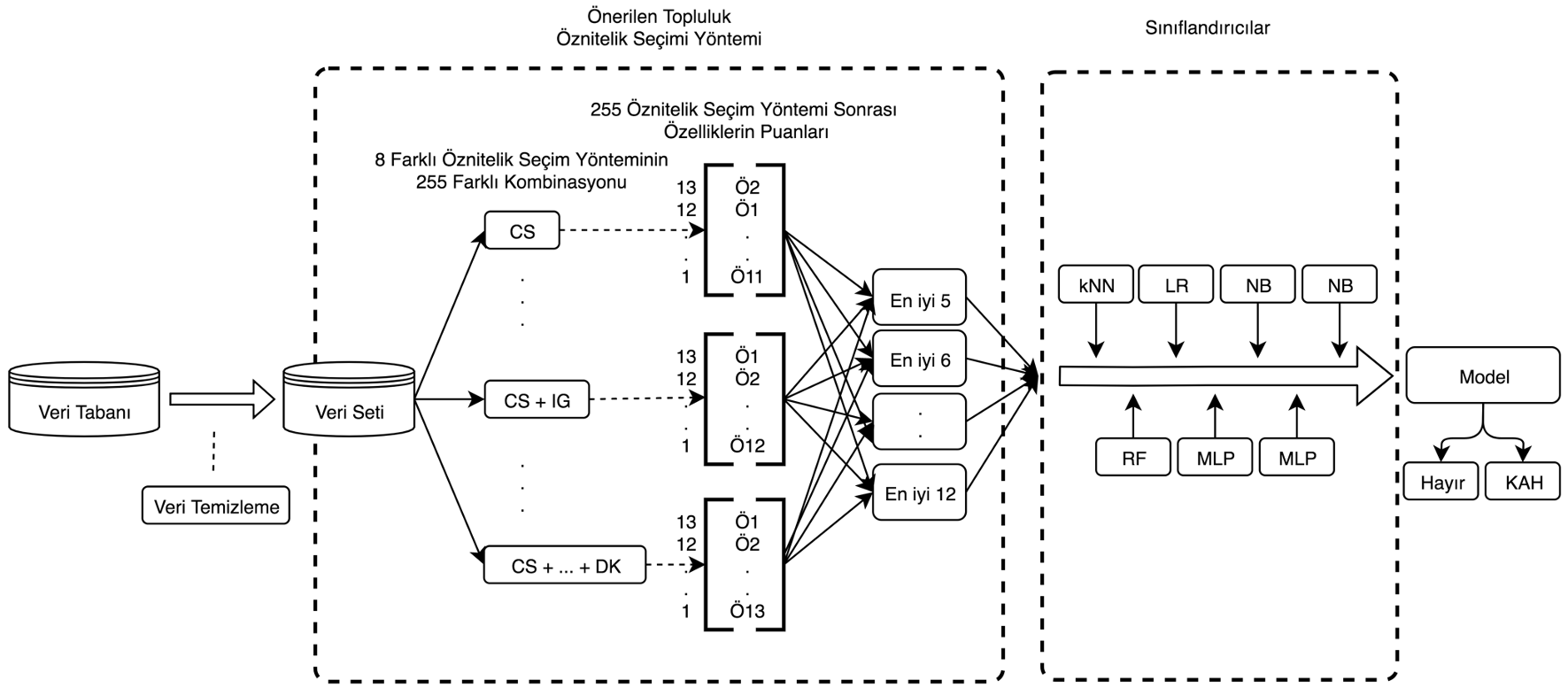 Figure 1: The proposed ensemble feature selection and classification workflow.
Experimental Results & Insights
The study identifies the Multilayer Perceptron (MLP) as the superior architecture for this specific task.
Key Performance Metrics:
- Best Model: MLP + CMIM Selection (9 features).
- Accuracy: 85.47%
- F-Measure: 0.839
- AUC (Area Under Curve): 0.911
Interestingly, while no single feature selection method dominated the "top 1000" best-performing models (see Figure 2 in the paper), the MLP classifier consistently appeared in the most accurate configurations. This suggests that the choice of the classifier architecture is just as critical as the feature selection process itself.
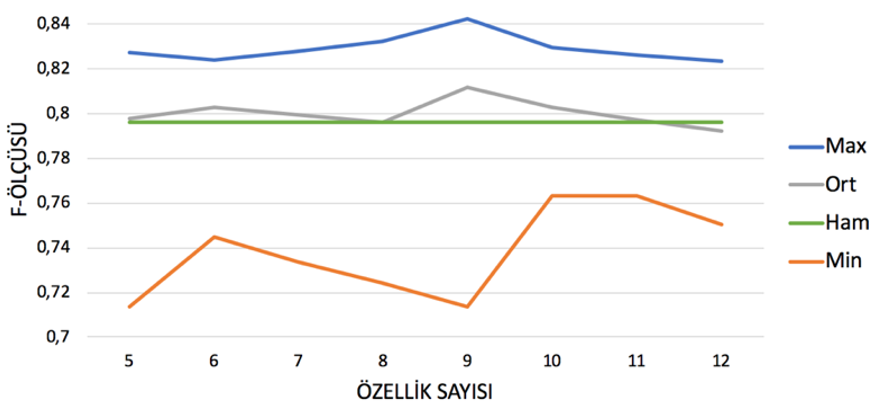 Figure 2: Performance comparison of MLP with raw features vs. Ensemble Selection. The ensemble approach significantly pushes the "Max" F-Measure ceiling.
Critical Analysis & Future Outlook
The study effectively highlights that feature reduction does not necessarily mean info-loss; rather, it improves clarity. By reducing the feature set from 13 to 9, the authors maintained (and in some cases improved) diagnostic power while lowering computational costs.
Takeaway for the Industry: The integration of Domain Knowledge is the "secret sauce." Algorithms are excellent at finding mathematical correlations, but medical experts can provide a "sanity check" (Inductive Bias) that prevents the model from picking up on spurious correlations in small datasets.
Limitations: The Cleveland dataset, while a gold standard, is relatively small (303 samples). The authors acknowledge this and aim to validate this ensemble approach on real-time hospital data and diverse ethnic populations—specifically focusing on a Turkish population dataset in future work.
Conclusion
This work moves us closer to a future where CAD can be screened using routine clinical data rather than exclusively relying on expensive, invasive procedures. By combining the "how" of algorithms with the "why" of medical doctors, the ensemble approach offers a robust framework for medical AI.