
Integrating Environmental Sustainability into the Innovation Loop: A System Dynamics Approach
Enterprise innovation model considering environmental costs
This paper presents an extended Enterprise Innovation Model based on System Dynamics, specifically integrating environmental costs into the classical Chain-Loop innovation framework. By leveraging Vensim software, the study simulates the impact of environmental factors on corporate financial performance and knowledge accumulation using historical data from Sony Corporation.
TL;DR
This research redefines the "Chain-Loop Model" of innovation by incorporating environmental costs as a critical feedback variable. Using System Dynamics and historical data from Sony Corporation, the study demonstrates that environmental factors are not just externalities but core components that dictate the financial viability and knowledge-building capacity of modern enterprises.
Problem & Motivation: The Hidden Cost of Innovation
Since Schumpeter first defined innovation as a "new combination of production functions" in 1912, models have evolved from simple linear chains to complex interactions. However, two major gaps persist in traditional frameworks:
- Static Logic: Most models ignore the time-delayed feedback loops between knowledge creation and actual market benefit.
- Environmental Blindness: Traditional R&D models treat "Environmental Cost" as a peripheral concern rather than a fundamental operating expense.
With the rise of "Green Trade Barriers" and global environmental management systems (ISO 14001, etc.), ignoring these factors leads to inaccurate financial forecasting and strategic failures.
Methodology: The System Dynamics Engine
The authors transition from a simple causality graph to a vigorous Stock-Flow Model. The core of this model is the interaction between three subsystems: Benefit, Research, and Knowledge.
1. The Knowledge Refinement Pipeline
Unlike previous models that treat knowledge as a monolith, this methodology breaks it down into three distinct phases with inherent delays:
- Creation: Initial R&D output.
- Designation: Transforming theory into actionable design.
- Refinement: Perfecting the product for market readiness.
2. The Environmental Feedback Loop
The "Expense" equation is modified to include an Environment Accumulation Fraction. This reflects a reality where every unit of sales benefit carries a mandatory environmental tax or mitigation cost.
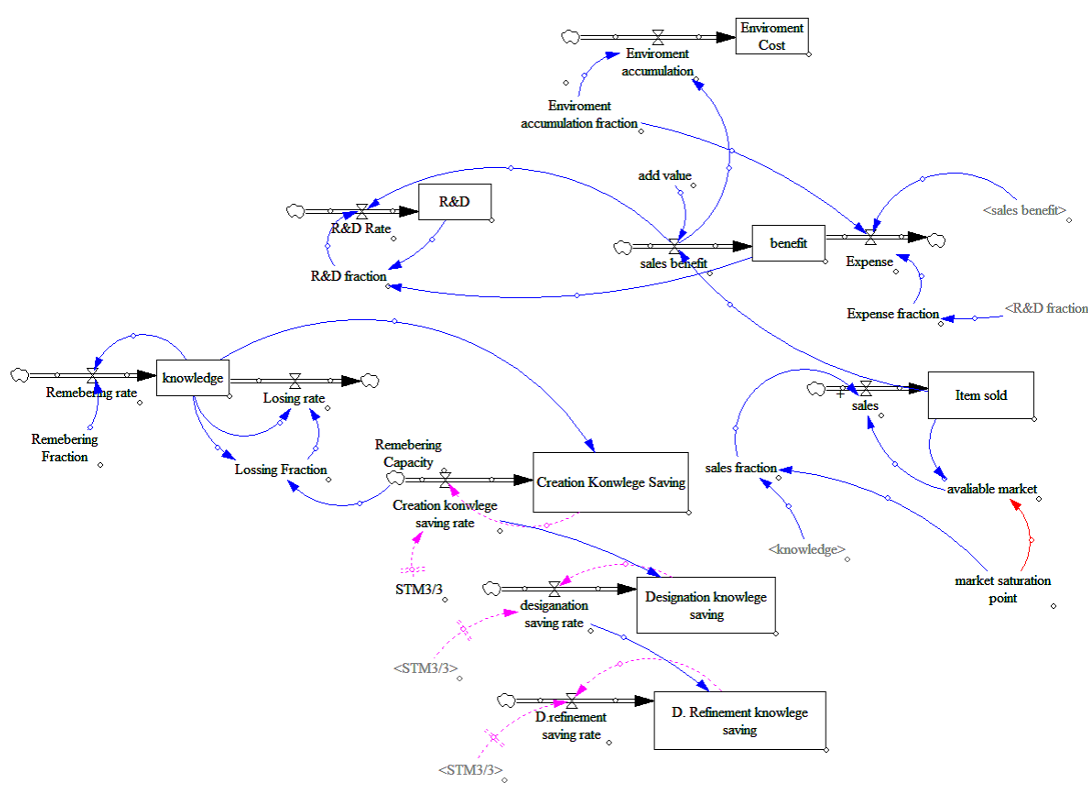 Figure 1: The proposed stock-flow architecture integrating environmental costs and knowledge delays.
Experiments & Results: The Sony Case Study
To validate the model, the authors performed a Reality Check using a decade of financial data (1998–2007) from Sony Corporation.
Reality Check
The simulation results closely mirrored actual Sales Benefits and R&D expenditures. While some fluctuations in "Benefit" showed an error rate (reaching ~29% in 2006 due to volatile market conditions), the overall trend for "Sales Benefit" was remarkably accurate (Error Rate ~0.01% for 2007).
Sensitivity Analysis
A crucial insight emerged from the sensitivity check. When the Environment Accumulation Fraction was increased from a baseline to 0.5%, the Benefit curve showed an "impressive decreasing" trend. This quantification helps managers visualize the direct trade-off between environmental investment and short-term profit margins.
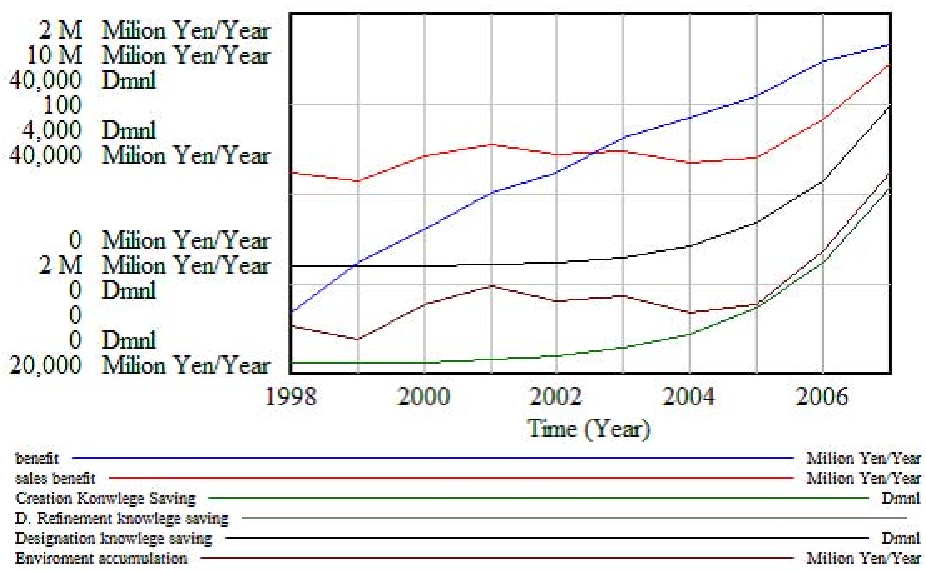 Figure 2: Impact of varying environmental cost fractions on corporate benefit.
Critical Insight & Conclusion
The study underscores that innovation is a "shifting production function" that must now account for ecological limits.
Takeaways for Industry:
- Knowledge takes time: Don't expect immediate ROI from R&D; the three-stage delay (Creation -> Designation -> Refinement) is a physical constraint of the enterprise system.
- Environment is a Variable, not a Footnote: Environmental costs act as a "Negative Power" in the System Dynamics framework, directly competing with R&D fractions for the same pool of sales benefits.
Future Outlook: The authors suggest that the next frontier is modeling the relationship between Environmental Cost and Brand Image. While green initiatives increase costs today, do they enhance brand equity enough to offset the expense via higher "Market Drawing" power? This remains the trillion-dollar question for sustainable enterprise innovation.