
OpenPaaS: Reimagining Enterprise Social Networks as Automated Collaboration Hubs
Towards an Enterprise Social Network to Support Inter-organizational Collaborations
This paper introduces OpenPaaS, an open-source Enterprise Social Network (ESN) designed to facilitate inter-organizational collaboration. It integrates traditional social tools with a knowledge-based system that automatically generates collaborative business processes using an Ant Colony Optimization (ACO) algorithm.
TL;DR
OpenPaaS is an innovative open-source platform that moves beyond simple "corporate Facebook" functionality to solve the complex problem of inter-organizational collaboration. By combining social networking with an ontology-driven automated process engine, it can automatically find business partners and design the workflow to work with them.
Background: Beyond the Silos
While Enterprise Social Networks (ESNs) like Yammer or Slack have revolutionized internal communication, they often hit a "firewall" when it comes to working across different companies. Traditional proprietary solutions are often closed ecosystems, making the "transverse" collaboration required in modern supply chains and project coalitions difficult to manage.
The Core Innovation: Automated Coalition Formation
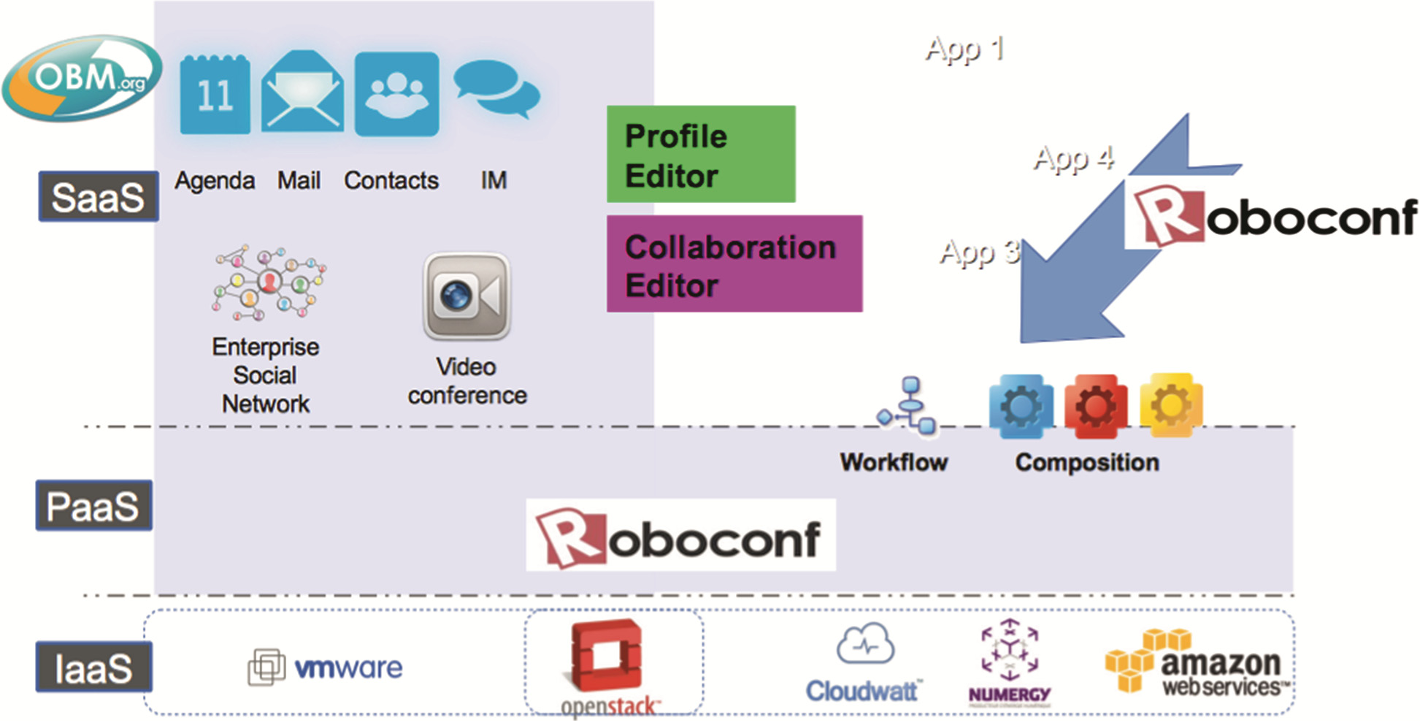
The true breakthrough of this paper is not just adding video calls or file sharing, but its Knowledge-Based System for creating new collaborations.
1. The Three Modelers
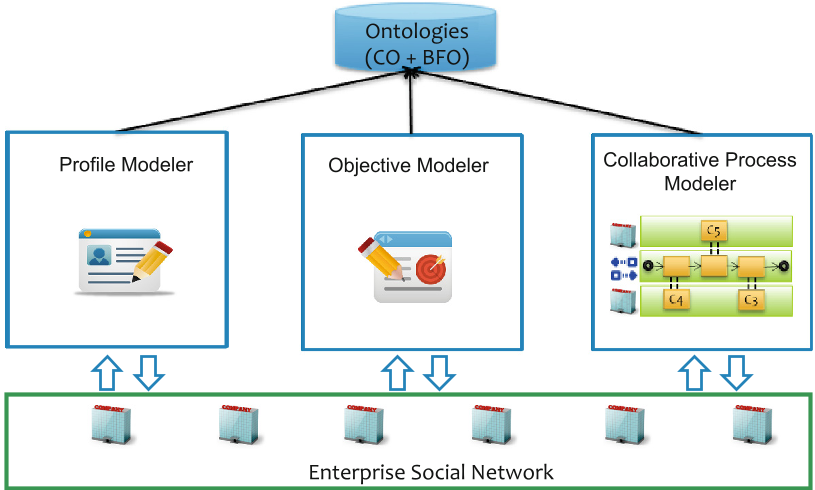
The system breaks down a business opportunity into three manageable phases:
- Profile Modeler: Where companies define "What we can do" (Capabilities).
- Objective Modeler: Where a company defines "What we need" (Goals).
- Collaborative Process Modeler: Where the system proposes the "How to do it" (The resulting workflow).
2. The Logic Engine: Ontologies and ACO
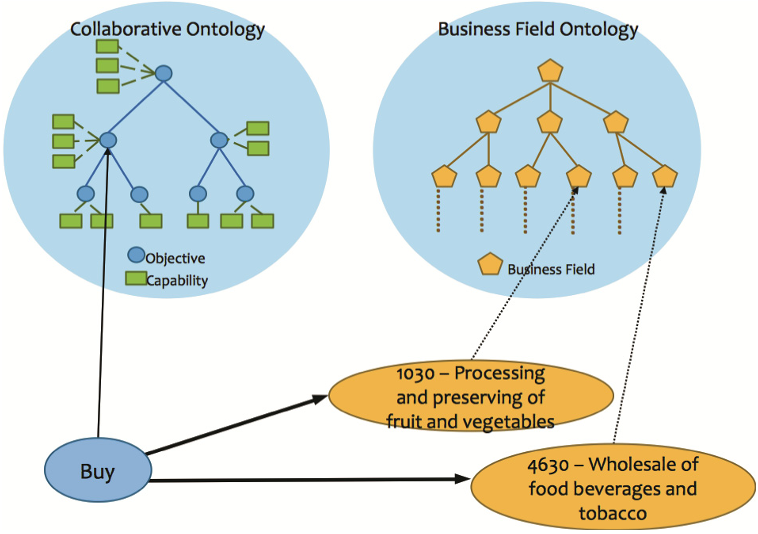
To bridge the gap between "buying fruit" and the technical steps involved, OpenPaaS uses two ontologies:
- Collaborative Ontology (CO): Defines the generic structure of "Buying," "Selling," or "Producing."
- Business Field Ontology (BFO): Provides the specific domain labels (e.g., "Wholesale of tobacco" vs "Processing of fruits").
The system runs an Ant Colony Optimization (ACO) algorithm to scan all available profiles in the network and select the most efficient partners (based on cost, quality, or speed) to fulfill the objective.
Deep Dive: How Processes are Deduced
The deduction mechanism is particularly elegant. It uses a right-to-left matching process:
- It identifies a capability whose output matches the final objective.
- It then looks for a preceding capability whose output matches the input required by the previously identified step.
- This chain continues until a complete, executable business process is formed, which users can then refine manually.
Real-World Validation: The SuperCookie Case
The authors validated the platform through a scenario involving "SuperCookie," a company needing fruit supplies. By simply entering their objective into the Modeler, the platform:
- Identified "FruitCompany" as the optimal partner.
- Generated a BPMN-style process flow.
- Established a secure "Community" for the two companies to exchange files and conduct WebRTC video conferences.
Conclusion & Future Outlook
OpenPaaS represents a significant leap toward the "Social Enterprise." While it currently excels at finding partners and structuring initial workflows, the authors acknowledge that the next frontier is real-time collaborative editing (documents and spreadsheets) within the ESN.
By open-sourcing this architecture, the researchers provide a blueprint for a more transparent, automated, and agile global marketplace where alliances are formed algorithmically rather than through tedious manual negotiation.