
Enterprise Social Networks: Beyond Marketing to the Heart of Internal Collaboration
Enterprise Social Networks for Internal Communication and Collaboration Results of an Empirical Study
This empirical study explores the adoption of Enterprise Social Networks (ESNs) for internal communication and collaboration within 132 German companies. The research identifies critical success factors such as employee acceptance and corporate culture, highlighting that experienced firms view ESNs more optimistically than non-users.
TL;DR
Is your company's internal social network a "megaphone" for innovation or a recipe for digital burnout? This empirical study by the Fraunhofer Institute analyzes 132 German companies to reveal the cultural and operational mechanics of Enterprise Social Networks (ESNs). The key finding: companies that actually use ESNs see them as powerful tools for cooperation, while those on the sidelines remain paralyzed by the fear of "unprofessional implementation" and blurred work-life boundaries.
Problem & Motivation: The Fear of the Digital Watercooler
For years, social media was siloed into two boxes: private life or external marketing. However, as organizations grow more complex, traditional communication (email, top-down memos) is failing to foster real-time knowledge exchange.
The core friction lies in Perception vs. Reality. Many executives fear that introducing an ESN will lead to uncontrollable internal processes and a loss of focus. The authors set out to investigate whether these fears are justified or if ESNs provide a "Social Business" advantage that outweighs the risks.
Methodology: A Tale of Two Corporate Mindsets
The researchers surveyed a representative cross-section of the German economy, dividing respondents into two critical groups:
- Group 1: Companies already using ESNs for internal purposes.
- Group 2: Companies with no prior ESN experience.
By comparing these groups, the study uncovers how experience fundamentally changes a company's risk appetite and success criteria.
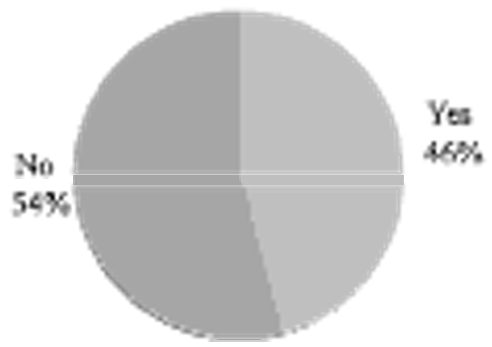 Fig 1. Adoption rates show a clear lead for large enterprises (58%) compared to SMEs (28%).
Core Insights: Opportunities vs. Risks
One of the most striking findings is the Skepticism Gap.
- The Skeptics (Non-users): Rated risks (like "mixing work and private life" at 3.8/5) significantly higher than the potential for improved cooperation.
- The Practitioners (Users): Flipped the script. They rated "improvement of cooperation" (3.7/5) as their highest value, while their perceived risks were consistently lower across all categories (mean of 3.2).
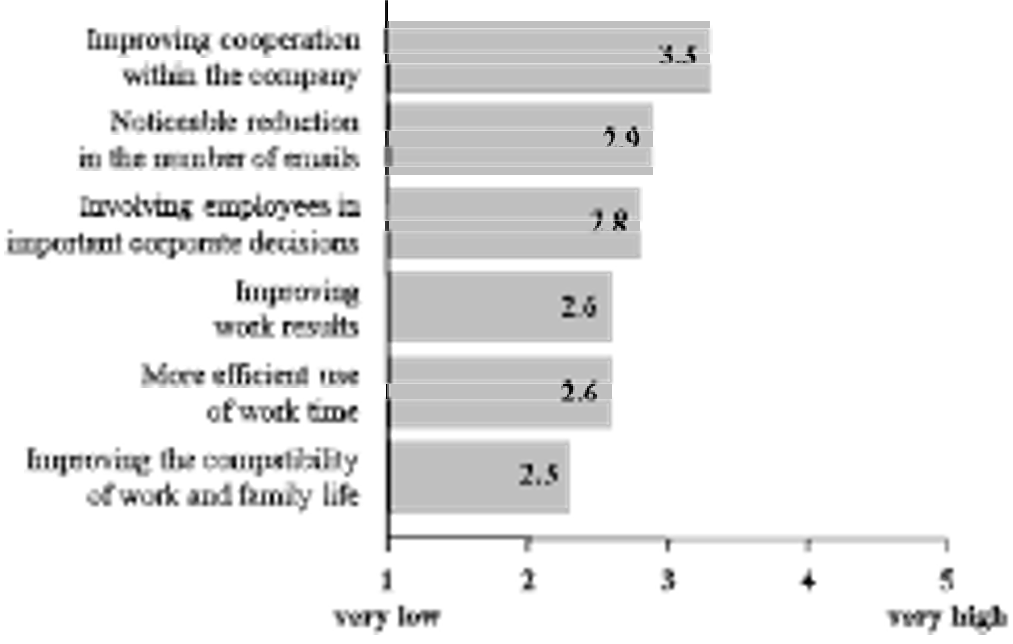 Fig 2. The data suggests that once the platform is deployed, the benefits to internal cooperation become the most visible success metric.
Why ESNs Fail: It’s Not the Software
The study identifies that the biggest hurdle is not the lack of content or technical resources, but rather unprofessional implementation (61%).
For companies that have used ESNs, the "human factor" is the dealbreaker:
- Employee Acceptance (4.6/5): The single most important success factor for experienced users.
- Management Support: In experienced firms, "under-support by managers" was cited by 59% as a primary cause of failure.
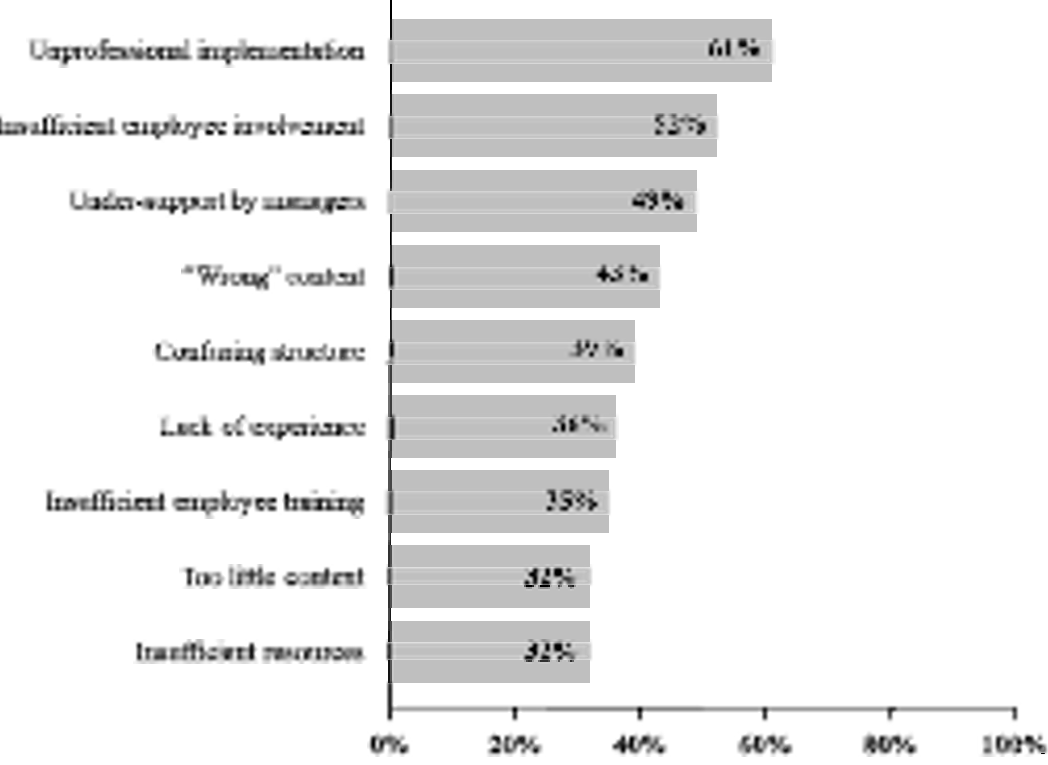 Fig 3. Unprofessional implementation and lack of employee involvement are the primary killers of ESN projects.
Critical Analysis & Conclusion
Takeaway
The study proves that ESNs are a sociotechnical system. You cannot simply "install" collaboration; you must cultivate it. The shift from a "command and control" communication style to an open ESN requires a parallel shift in Corporate Culture (rated 4.4/5 in importance by experienced users).
Limitations
The study focuses on German companies, which may have specific cultural attitudes toward privacy and hierarchical structures. Furthermore, the response rate (132 out of 3,000) suggests that the topic might still be niche or sensitive for many firms.
Future Outlook
As the workforce becomes more distributed, ESNs will transition from "nice-to-have" tools to essential digital infrastructure. The companies that will thrive are those that stop viewing ESNs as a risk to be managed and start viewing them as a "megaphone" for their most valuable asset: employee knowledge.