
Enterprise Social Networks: Mapping the Research Frontier of the Connected Workplace
Enterprise Social Networks: Status Quo of Current Research and Future Research Directions
This paper provides a comprehensive literature review of Enterprise Social Networks (ESN), defining them as technologies that create business value by connecting organizational members through social features. It identifies seven critical research clusters—ranging from user behavior to system architecture—to establish a structured research agenda for the "Enterprise 2.0" era.
TL;DR
The landscape of Enterprise Social Networks (ESN) has evolved from a novel "Web 2.0" experiment into a core component of modern Computer Supported Cooperative Work (CSCW). This paper analyzes 86 scholarly works to categorize the ESN research domain into seven pillars, highlighting a transition from mere adoption studies to the complex task of quantifying business value and navigating the "Ideology of Openness."
The "Enterprise 2.0" Paradox
Organizations introduce ESNs like Yammer, Slack, or internal social hubs with the promise of breaking silos and fostering "Green IT" by reducing travel. However, the academic community has struggled to move past the initial hype. The core problem is that ESNs are "malleable end-user software"—they are not used according to a rigid script, making their impact on productivity and hierarchy difficult to trace.
Methodology: The Seven Pillars of ESN Research
The authors distilled the current state of the field into a structured framework. By analyzing the proximity of content across nearly 90 papers, they identified the following research nodes:
- User Behavior: Moving beyond simple adoption to understand the "whys" of usage across age and gender.
- Effects of Usage: Balancing the "openness" of communication with the risks of "hidden behaviors" and dialectic tensions.
- Management & Governance: How to lead without stifling the organic nature of social platforms.
- Value Assessment: The "Holy Grail"—connecting social interactions to cold, hard productivity metrics.
- Cultural Effects: Understanding how regional and organizational cultures (e.g., rigid hierarchies) clash with social transparency.
- Architecture & Design: The technical scalability of distributed social environments.
- Theories & Methods: The need for longitudinal studies and semantic analysis over "one-off" surveys.
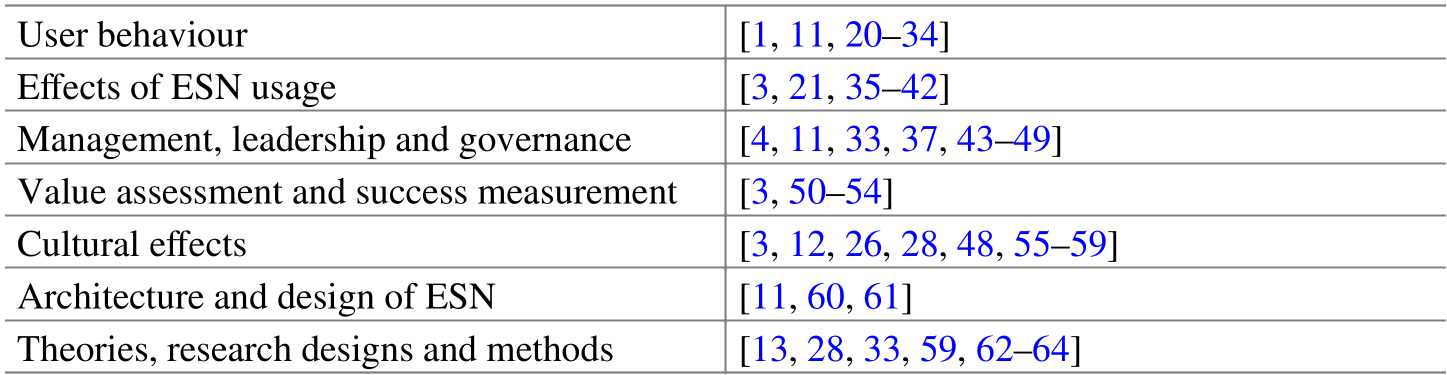 Figure 1: Distribution of research focus across the seven identified categories. Note the dominance of User Behavior studies.
Key Insights: Why "Social" Doesn't Always Mean "Productive"
The paper identifies several nuanced tensions that define the field:
- The Anti-Hierarchy Factor: ESNs challenge formal hierarchies, which can be a catalyst for innovation but also a source of management friction.
- The Knowledge Sharing Gap: Technology alone doesn't trigger knowledge flow; the paper calls for deeper research into interpersonal trust as a prerequisite for sharing via ESN.
- Measurement Barriers: While ESNs generate "digital traces," researchers are still perfecting the methods to turn these traces into a "Success Measurement" model.
Critical Analysis & Future Outlook
While the paper provides an excellent "map" of the terrain, it highlights a significant deficit in Architecture and Design research. Most scholars are treating ESN as a "black box" and focusing on the social output, rather than investigating how the design of the software interface influences social dynamics (the "Social Affordances").
Future Research Directions:
- Longitudinal Studies: We need to see how ESN usage matures over years, not months.
- Dark Side of ESN: Exploring negative effects such as information overload, "social loafing," and data privacy risks.
- Interdisciplinary Methods: Combining ethnographic research with big data "Semantic Analysis" to capture the true pulse of the digital workplace.
Final Takeaway
The success of an ESN is not determined by its features, but by its alignment with organizational culture and its ability to turn "social noise" into "business signal." For practitioners, the message is clear: focus less on the adoption strategy and more on the governance of openness.