
EpistAid: Bridging the Gap Between AI and Human Expertise in Medical Evidence Synthesis
EpistAid: An Interactive Intelligent System for Evidence-based Health Care
EpistAid is an interactive intelligent system designed to accelerate Evidence-Based Health Care (EBHC) by streamlining the creation of evidence matrices. It integrates the Rocchio algorithm for relevance feedback with a 2D visualization interface to help clinicians filter and discover primary studies and systematic reviews more efficiently than manual methods.
TL;DR
Answering clinical questions through Evidence-Based Health Care (EBHC) is a life-saving but grueling process that can take years. EpistAid is an intelligent user interface (IUI) proposal that uses machine learning and interactive visualization to help physicians curate evidence matrices faster. By moving away from "black-box" automation toward a controllable, transparent system, it aims to maintain the 100% recall required for clinical safety while drastically reducing human effort.
The "Wait Time" Crisis in Medicine
Evidence-Based Health Care is the backbone of modern medicine, ensuring treatments are backed by scientific data. However, the current workflow is broken. A typical clinician must search for related studies, screen thousands of citations, and synthesize conclusions—a cycle that often lasts 1 to 3 years. Meanwhile, patients need decisions in under 6 months.
The central challenge is Recall. In medicine, missing a single relevant study can lead to incorrect clinical guidelines. Therefore, automation cannot simply replace the human; it must empower them. Existing systems either lack transparency or fail to involve the physician's intuition in the filtering loop.
Methodology: Human-in-the-Loop Intelligence
EpistAid tackles this by transforming the filtering process into an interactive dialogue between the doctor and the algorithm.
1. The Evidence Matrix
The system operates on an "Evidence Matrix," where rows represent systematic reviews (SR) and columns represent primary studies (PS).
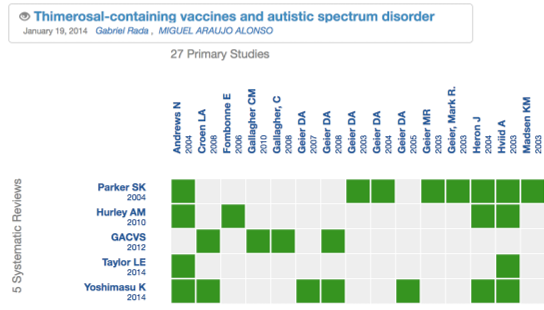 Figure 1: The graph-based process for generating an initial evidence matrix (M0) using Breadth-First Search.
2. Controllable Filtering (The Rocchio Algorithm)
Unlike static classifiers, EpistAid uses the Rocchio algorithm. This allows for incremental updates: when a physician marks a paper as "irrelevant," the system doesn't just hide it—it updates the weights of the associated keywords. Crucially, the physician can manually adjust these weights. If the system is over-weighting a specific term, the user can correct the model's "logic" directly.
3. Visual Accountability
To provide a global view of the evidence landscape, EpistAid projects high-dimensional document data into a 2D space using Principal Component Analysis (PCA).
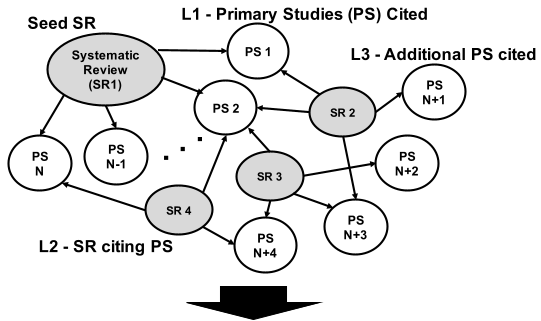 Figure 2: The EpistAid interface. (B) showing 2D document clusters, (E/F) providing word-cloud summaries for rapid semantic verification.
This spatial arrangement utilizes the Inductive Bias that similar papers should cluster together. If a physician identifies a "relevant" paper, they can instantly see its neighbors, promoting a high-recall "berry-picking" search strategy.
Experiments and Expected Impact
The research plan focuses on three critical evaluations:
- Offline Simulation: Testing the Rocchio algorithm against ground-truth evidence matrices to see how many "steps" it saves.
- Formative Expert Studies: Ensuring the interface doesn't overwhelm clinicians.
- User Study with Interns: Comparing the speed and accuracy of EpistAid against the standard Epistemonikos interface.
Currently, the "Evidence Matrix" feature in the Epistemonikos database has a massive bottleneck: 2,800 matrices have been started, but only 400 are finished. EpistAid is designed to bridge this 2,400-matrix gap by making the curation process faster and more cognitively manageable.
Critical Insight: The Value of Transparency
The core philosophy behind EpistAid is Accountability. In high-stakes fields like healthcare, "Performance" (Precision/Recall) is not enough. The system must be Controllable and Transparent. By allowing physicians to see why a paper was recommended and enabling them to tweak the feature weights, EpistAid builds the trust necessary for AI adoption in clinical workflows.
Limitations & Future Work
While PCA is effective, it can sometimes produce "crowded" visualizations that are hard to interpret. Future iterations might explore more advanced manifolds like t-SNE or UMAP for better clustering, provided they can remain computationally efficient for real-time interaction. Additionally, the system currently focuses on text; incorporating citation network metadata more deeply into the embedding space could further improve accuracy.
Takeaway
EpistAid represents a shift from "AI-as-a-Service" to "AI-as-a-Tool." For researchers and developers, it highlights that in specialized domains, the user interface is just as important as the underlying model. Improving the "practice of medicine" requires not just better algorithms, but better ways for experts to talk to them.