
ETV Model: Quantifying Trust Through Social Distance and Neural Clustering
Estimating trust value: A social network perspective
This research introduces the Estimated Trust Value (ETV) model, a multidimensional framework for quantifying trust in social networks by integrating user-generated ratings with "social distance." The methodology employs Self-Organizing Maps (SOM) for unsupervised clustering of high-dimensional user data, achieving a more objective metric for trust filtering in online recommendation environments.
TL;DR
To combat the "unfiltered noise" of platforms like Wikipedia or Google, this study proposes the Estimated Trust Value (ETV) model. By leveraging Self-Organizing Maps (SOM) to calculate the "social distance" between users and content creators, the researchers have developed a mathematical way to filter content based on multidimensional trust factors, including temporal relevance and relationship weight.
Motivation: The Cognitive Strain of Information Overload
We are currently in an era of "Information Overload," where the speed of content creation far outpaces our limited cognitive processing capacity. While online reviews are trusted as much as personal recommendations by 72% of consumers, the quality of these reviews is often inconsistent.
The authors argue that existing Collaborative Filtering (CF) algorithms have a major flaw: they assume users trust anyone with similar tastes. In reality, trust is a subjective, multidimensional mental state influenced by how close we are to our peers. The core insight here is that Social Distance—the similarity between two users in a social network—is the missing link in measuring true credibility.
Methodology: The ETV Architecture
The researchers proposed a two-step process to quantify trust:
1. Neural Clustering with SOM
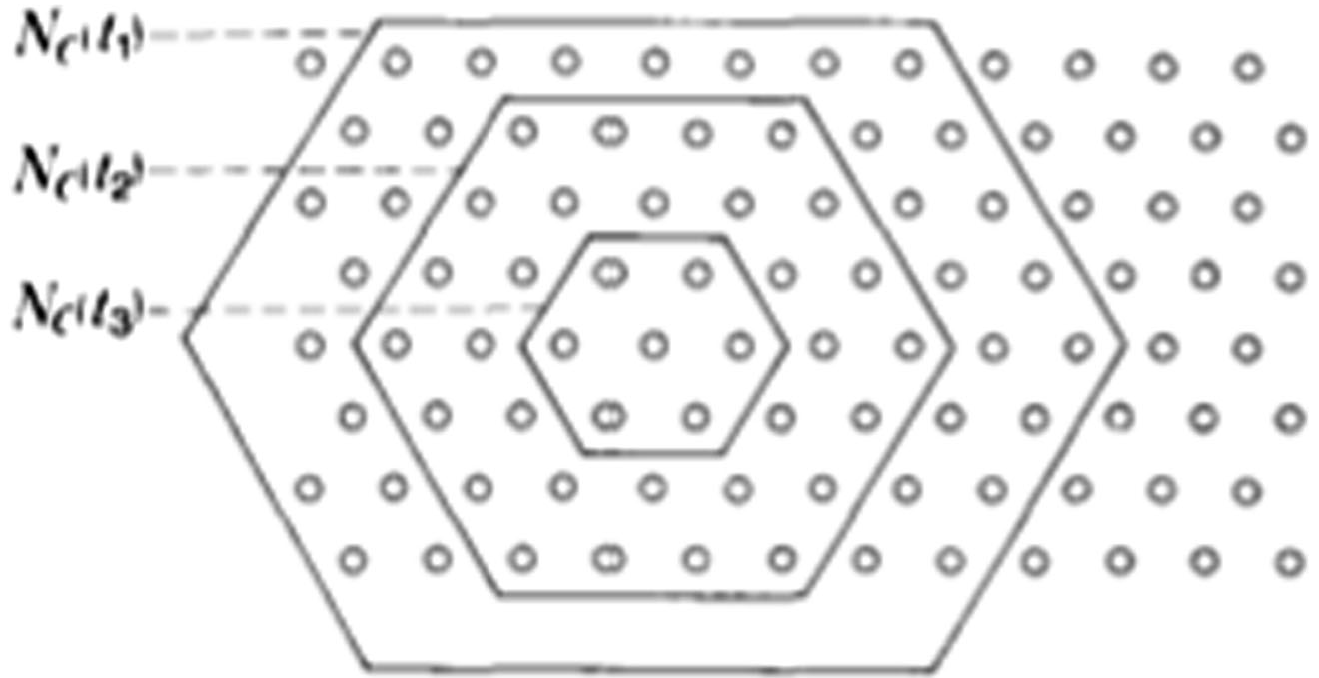
The model uses Self-Organizing Maps, an unsupervised learning approach, to organize high-dimensional user data (age, nationality, major, etc.).
- Competitive Learning: Nodes compete to represent subsets of data.
- Win-Loss Logic: The "Best-Matching Unit" (BMU) is identified via Euclidean distance.
- Physical Intuition: Similar users are pulled together into "neighborhoods," allowing the system to calculate an objective Social Distance ().
2. The Multidimensional Formula
Trust isn't just about distance. The ETV model integrates four critical variables:
- Distance (): How similar/close the rater is to the enquirer.
- Reputation (): The individual rating score of the content creator.
- Weight (): The significance of the relationship (e.g., is the rater an expert on the item?).
- Time (): A decay function ensuring recent reviews carry more weight than two-year-old data.
The final calculation follows the logic: where is the average of .
Experimental Results & Insights
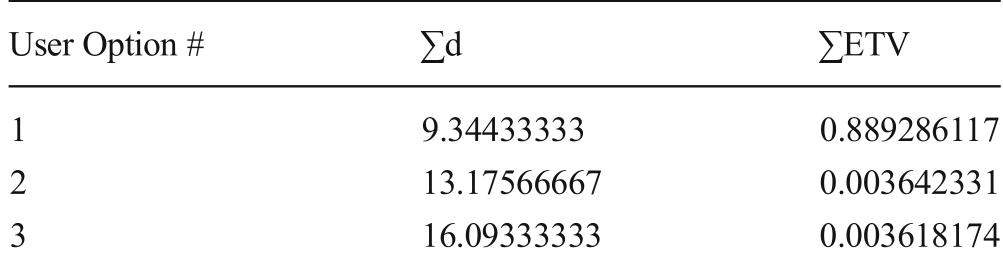
The study simulated three distinct personas: Undergraduate, International, and Graduate students at Tamkang University ( each).
Key Findings:
- Distance as an Anchor: Generally, User Option 1 (shortest average social distance) yielded the highest ETV (0.889), proving that the closer the community, the higher the baseline trust.
- Variable Compensation: Interestingly, in some clusters, a large social distance did not lead to low trust if the review was extremely recent ( was high) and the rater had deep expertise ( was high).
- Temporal Decay: Reviews older than two years were effectively filtered out, reflecting the real-world dynamic where relevance dissipates.
Critical Analysis & Conclusion
Takeaway
The ETV model successfully demonstrates that trust can be quantified objectively. By using SOM to handle the "profile similarity" part of the equation, the model removes human bias in defining who is "close" to whom.
Limitations & Future Work
- Data Dependency: The model relies on comprehensive user profiles, which raises potential privacy concerns and data sparsity issues in real-world deployments.
- Subjectivity: While SOM adds objectivity, the initial ratings () and weights () remain subjective inputs.
- Future Path: The authors suggest applying this to platforms like Yelp or TripAdvisor to move beyond simple star-rating averages and toward personalized "Trust Scores" based on the searcher's own profile.
By shifting from "what is the average rating" to "who do you trust for this specific information," the ETV model provides a robust blueprint for the next generation of Social Recommender Systems.