
Morality as a Function of History: Lessons from Japanese Ethical Education for AI
Does change in ethical education influence core moral values? Towards history- and culture-aware morality model with application in automatic moral reasoning
This study investigates the evolution of moral values in Japan by comparing pre-WWII (1930s) and contemporary (2019) ethical textbooks using an automatic Moral Reasoning Agent (MRA). The research identifies a stable core of moral values despite significant historical shifts, aiming to provide a framework for history- and culture-aware moral reasoning in AI systems.
TL;DR
Can a machine truly understand your "moral compass" if it doesn't understand your history? This paper uses automated moral reasoning to analyze a century of Japanese ethical shifts—from pre-WWII imperial subjects to 21st-century citizens. It discovers that while core values like the "sacredness of life" are timeless, the emotional weight and nationalistic fervor of morality are highly volatile, suggesting AI must treat ethics as a historically-sensitive variable rather than a constant code.
The Problem: The "Static Ethics" Fallacy
In the rush to build "AI Companions," developers often assume morality is a set of universal "Golden Rules." However, human ethics are deeply rooted in socio-cultural shifts. A person born in 1930s Japan was taught morality through the lens of loyalty to the Emperor (Shushin), while a modern student learns via democratic ethics (Dotoku).
The authors argue that if AI is to be truly personalized, it must recognize that what a user deems "right" is influenced by the decade they were born in and the culture they inhabit. The challenge lies in quantifying this evolution: Has the radical post-war reform of Japanese education actually changed how people feel about basic moral questions?
Methodology: Mining the "Wisdom of the Crowd"
The research team employed a Moral Reasoning Agent (MRA), an automated system that analyzes the emotional and social consequences of actions by mining massive text corpora.
The Two Pillars of Data:
- Textbooks: They digitized Shushin kyojuroku (1930s) and Watashitachi no dotoku (2014) to extract ethical teachings.
- Corpora: To simulate public "conscience," they used YACIS (5.6 billion words from modern Japanese blogs) and Aozora Bunko (pre-1946 literature) to represent the mindset of the past.
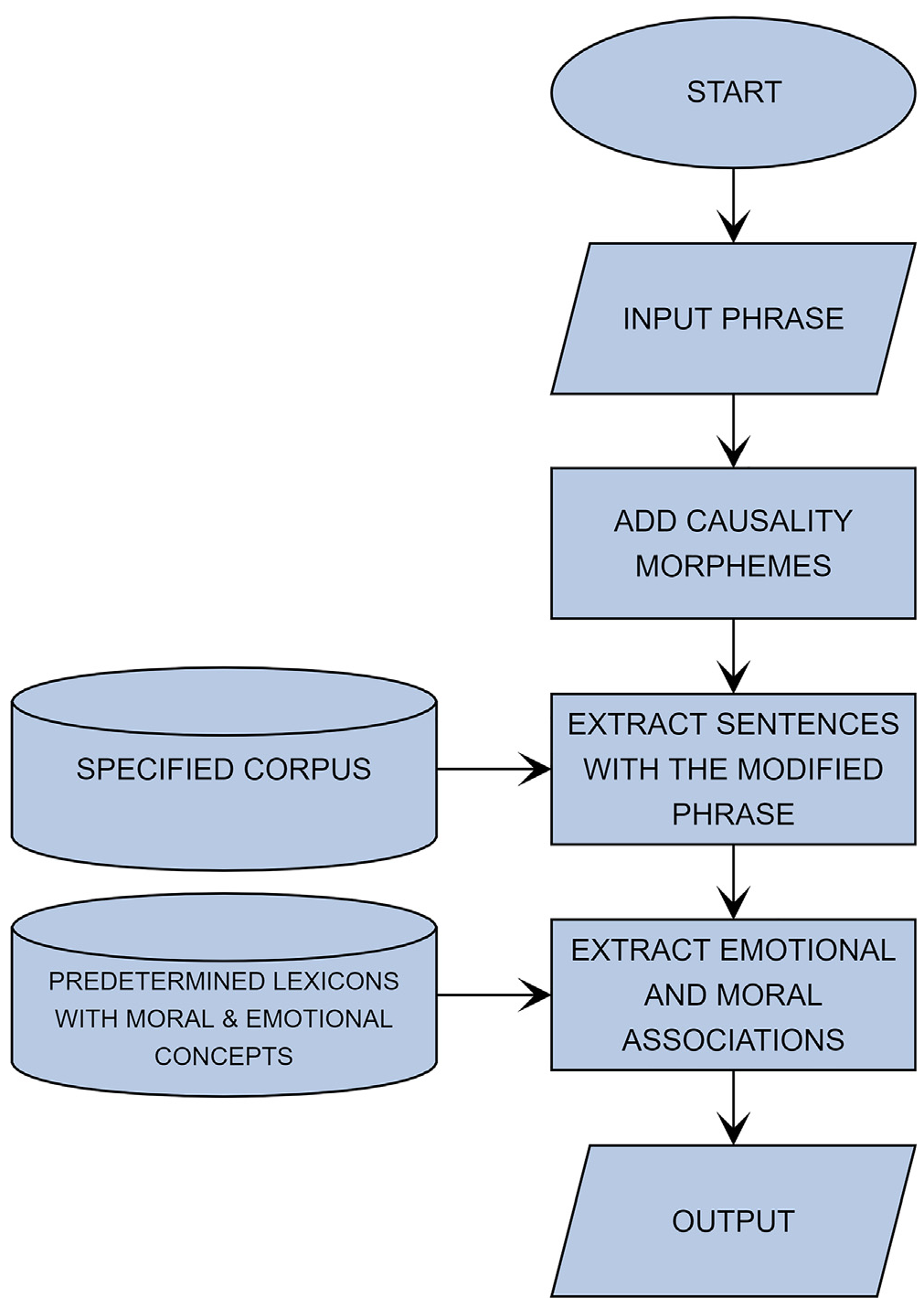 Figure 1: The process of the Moral Reasoning Agent extracting causal and emotional associations from the web.
The agent doesn't just look for "good" or "bad." It breaks consequences into Social Impact (is this beneficial for society?) and Emotional Impact (how does the individual feel?).
Key Insights: Social Duty vs. Personal Pain
The experiment revealed a fascinating "Emotivistic" gap. Across both historical and modern data, actions like "saving a life" are viewed as 100% positive for society. However, the emotional consequence for the individual is often ambivalent or negative.
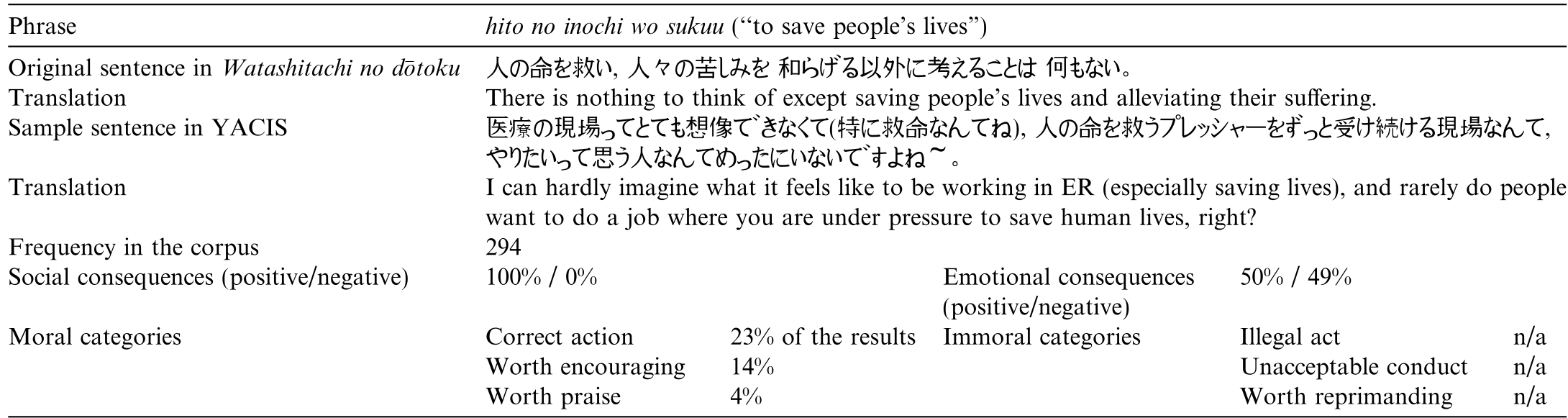 Table 1: Analysis of "To save people's lives"—High social approval vs. conflicted emotional reality.
The "Disappearing" Nationalism
Perhaps the most striking finding was regarding nationalistic terms like Kokudo (Motherland). While these terms were central to pre-war education and still appear in modern textbooks, they have virtually vanished from the modern "conscience" (blog corpus). This suggests that while governments can mandate what is taught, the broader society may quietly "shake off" state-sponsored ethics that no longer align with current life.
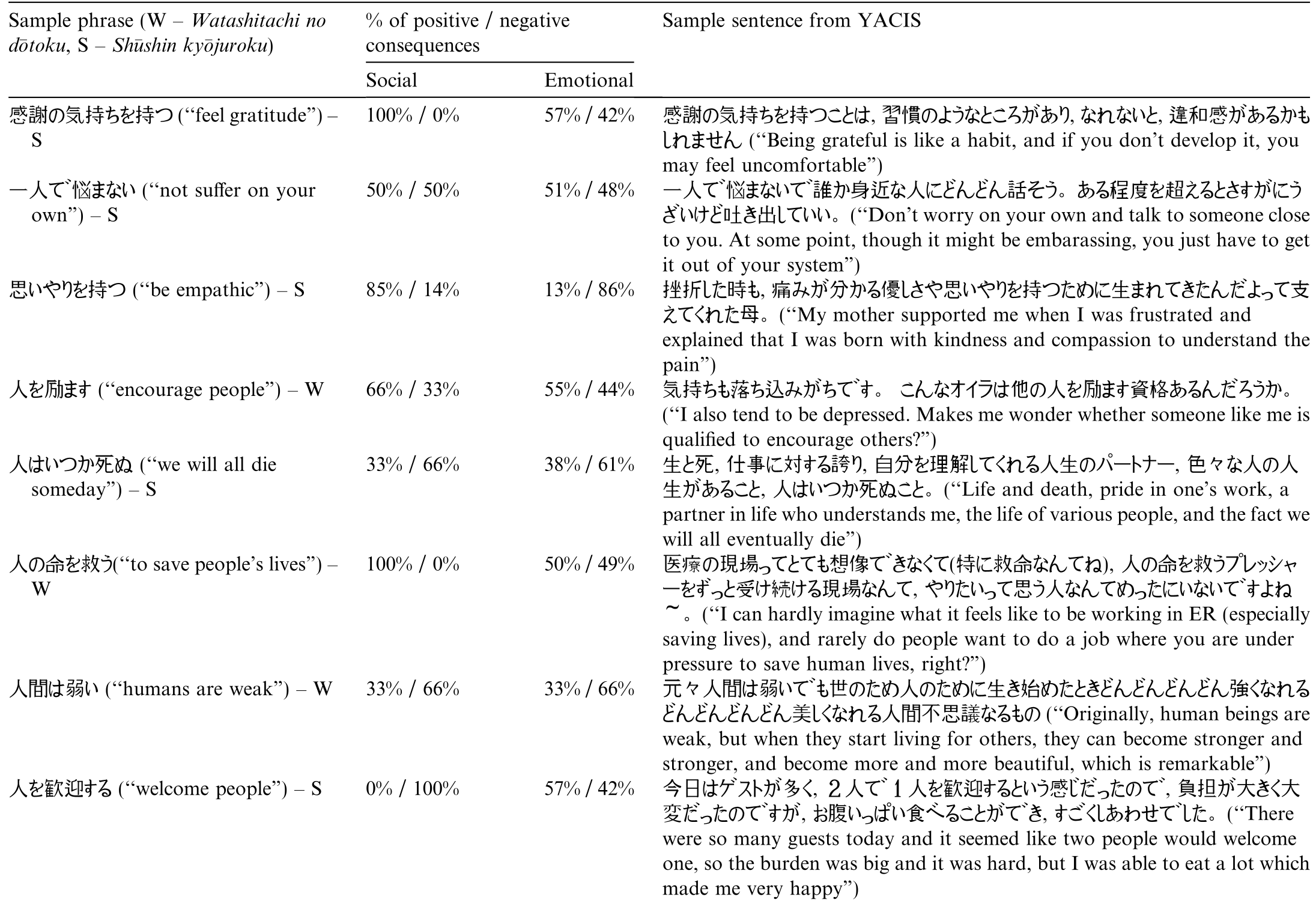 Table 2: Comparing social vs. emotional consequences of various moral phrases in modern corpora.
Critical Analysis & Conclusion
This paper provides a powerful proof-of-concept for History-Aware Machine Ethics. It proves that:
- Core Morals are Resilient: Values regarding the sanctity of life are stable across decades.
- External Ethics vs. Internal Morals: There is a clear distinction between "rules provided by an external source" (taught in school) and "individual principles" (expressed in literature and blogs).
Implications for AI
For future AI developers, the message is clear: Moral GPT-style alignment is not enough. A personal AI companion must understand the "correction level" for historical and cultural changes. If an AI is assisting an elderly user in Japan, its moral reasoning should perhaps lean more toward the collectivist/shishun foundations they were raised on, whereas for a younger user, it should prioritize individualistic/democratic values.
Limitations: The study focuses primarily on text-based associations. Future work could benefit from analyzing multi-modal data (like visual propaganda vs. modern media) to further map the trajectory of moral evolution.