
Beyond Skin Deep: Tipping Virtual Identity Through Behavioral Authenticity
Ethnic Identity and Engagement in Embodied Conversational Agents
The paper presents the design and evaluation of a "Virtual Peer," an Embodied Conversational Agent (ECA) that models ethnic identity through culturally authentic verbal and non-verbal behaviors rather than just surface traits. By implementing African American Vernacular English (AAVE) and Standard American English (SAE) behavioral models, the researchers demonstrated that children's perception of an agent's ethnicity can be shifted purely through behavioral cues.
TL;DR
In the world of Embodied Conversational Agents (ECAs), "culture" is often reduced to a change in skin texture or hair geometry. This paper challenges that superficiality. By modeling the specific linguistics of African American Vernacular English (AAVE) and distinctive non-verbal gaze patterns, the researchers shifted children's perception of a virtual peer's ethnicity without changing its physical appearance. The result? A nuanced window into how children engage, mimic, and "code-switch" with digital entities.
The Problem: The "Skin-Deep" Limitation
Historically, achieving diversity in AI agents has been a matter of graphic design. Prior works by researchers like Nass and Baylor established that users prefer same-ethnicity agents, but these agents were often "clones" with different skin tones.
The authors argue that this misses the essence of ethnicity, which is rooted in shared cultural behaviors. If a child interacts with an agent that looks like them but speaks and moves like a different cultural group, the resulting "behavioral mismatch" can break immersion and reduce the agent's effectiveness as an educational scaffold.
Methodology: Coding Culture
To build a truly authentic virtual peer, the authors moved beyond stereotypes into ethnographic data. They observed dyads of children playing and coded their interactions across several dimensions:
- Speech Acts: How they suggest, correct, or elaborate on stories.
- Linguistic Features: Specifically AAVE contrasts like the "zero copula" (e.g., "she drinking" vs. "she is drinking").
- Non-Verbal Cues: A key discovery was that African-American children were more likely to focus their eye-gaze on toys during play (66% of the time) compared to Caucasian children.
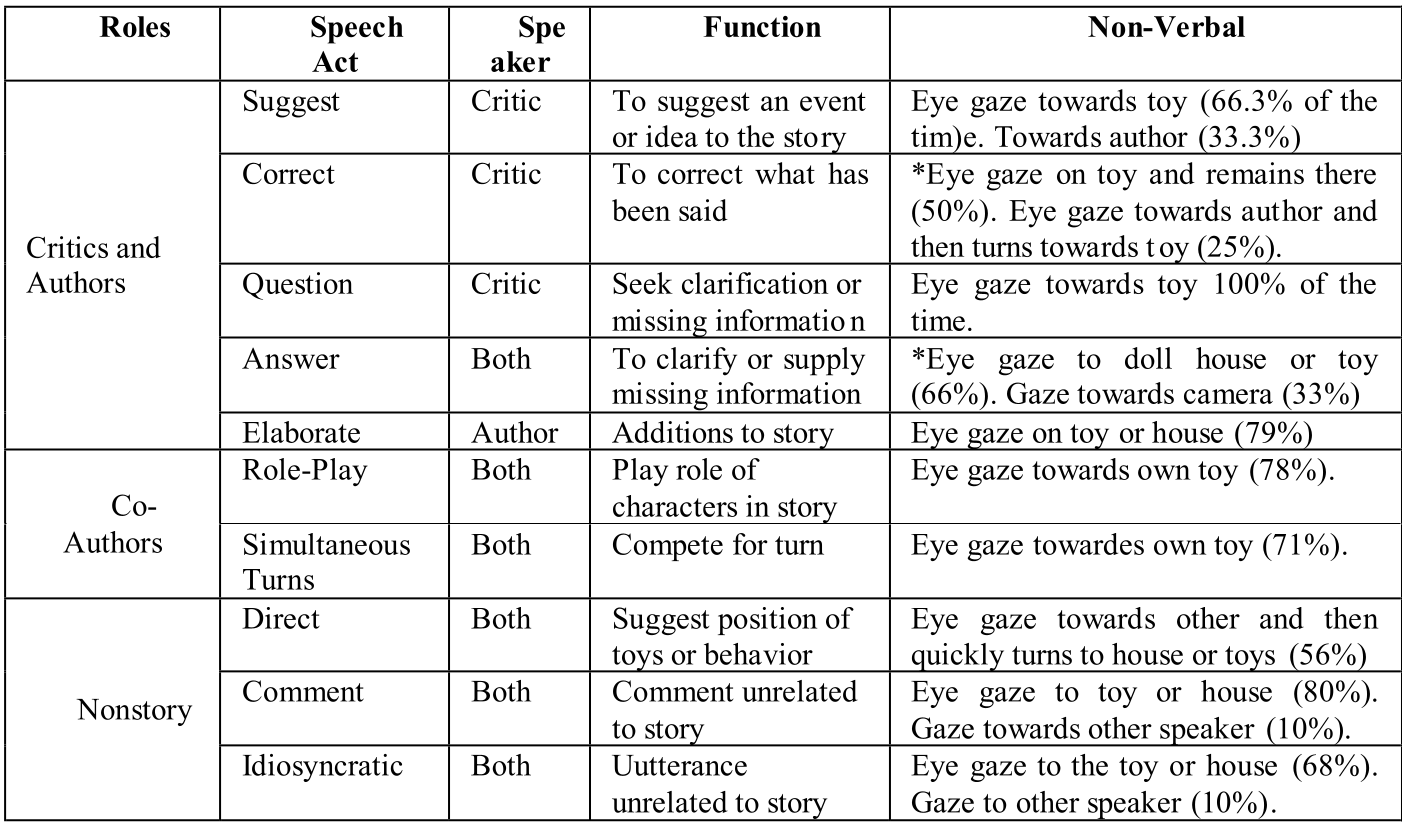 Table 1: Behavioral coding identifying "maximally distinctive" traits between AAVE and SAE speakers.
These behaviors were then mapped onto a racially ambiguous virtual child named "Alex," controlled via a Wizard-of-Oz setup.
Experiments and Results: The Perception Shift
The researchers tested 29 African-American third graders. The children interacted with either an AAVE-speaking agent or an SAE-speaking agent and were then asked to identify which "family" (African-American or Caucasian) would pick Alex up from school.
1. The Power of Behavior
Despite the agents looking exactly the same, the children perceived them differently:
- 83% judged the SAE-behaving agent as Caucasian.
- 56% judged the AAVE-behaving agent as African American.
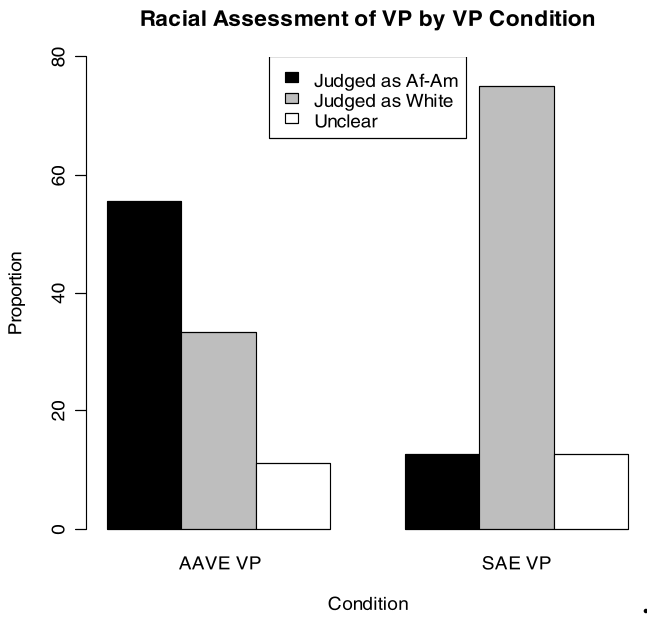 Fig 2: Evidence that behavioral cues alone can "tip" the perception of an agent's ethnic identity.
2. Mimicry and Engagement
One of the most fascinating findings was mimicry. Children who perceived the agent as Caucasian were significantly more likely to mimic its lexical and thematic choices (p < 0.02). This suggests that children are sensitive to the "prestige" or "standard" dialect of the agent and may begin to "code-switch"—a vital skill in literacy development—to match the perceived context of the interaction.
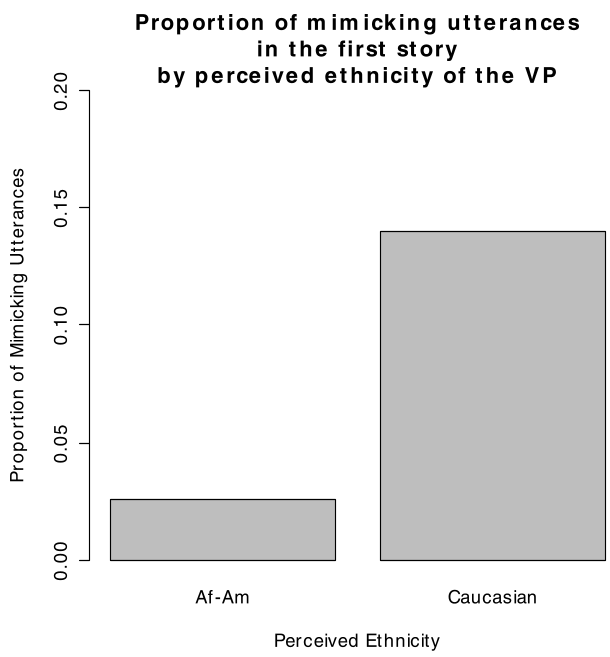 Fig 3: Children mimicked the SAE-behaving peer more frequently, indicating a tendency to align with the "standard" linguistic model.
Critical Insight: Why This Matters for the Future of AI
This study provides a roadmap for Authentic AI. It proves that:
- Identity is a Performance: In digital spaces, who an agent is depends more on how it talks and looks (gaze) than how its skin is rendered.
- Scaffolding through Diversity: For educational software, an AAVE-speaking virtual peer isn't just a "nice-to-have" for representation; it is a tool to sustain engagement and eventually teach the transition to standardized language through code-switching.
Limitations: The sample size was small, and the AAVE model was less complete than the SAE one. However, as an "iterative design" pilot, it proves that the behavioral approach to ethnicity is not only viable but necessary for creating agents that truly resonate with diverse populations.
Conclusion
Iacobelli and Cassell have demonstrated that to build AI that respects and reflects the user, we must look deeper than the surface. By grounding agent behavior in real-world ethnography, we move closer to virtual peers that can bridge cultural gaps and offer tailored support for all children.