
TechMemory: Bridging Kindergarten Rituals with NFC Technology
Using ethnographic data to support preschool children's game design
This paper presents an ethnographic-driven design of the "TechMemory Game," an augmented version of the classic memory card game using Near Field Communication (NFC) technology for children aged 5-6. By integrating ethnographic observations into the design process, the authors successfully balanced physical play with digital interaction, achieving high engagement in a real-world kindergarten setting.
TL;DR
Researchers from the University of Campinas have reimagined the classic memory game by infusing it with Near Field Communication (NFC) technology. By grounding the design in deep ethnographic data from a Brazilian kindergarten, they moved beyond "screen-time" to create a tangible, social, and emotionally resonant gaming experience where children interact with physical cards to trigger their own recorded stories.
Contextualizing the Playroom
The digital divide for preschoolers isn't just about access; it's about interaction fidelity. Standard GUI-based systems (mouse/keyboard) conflict with the developmental needs of 5-year-olds who learn through movement, manipulation, and social play.
The authors' insight was twofold:
- Ethnography as a Requirement Tool: Instead of inventing a new game, they observed a "favorite" (Memory) and a "ritual" (The Circle/A Roda).
- Smartphones as Probes: Since smartphones are ubiquitous in homes, they repurposed the device not as a screen to stare at, but as a "magic wand" to read hidden data.
Methodology: From Observation to Artifact
The design process didn't start in a lab. It started with the researcher spending "a day in the life" of two preschool classes (Turma da Alegria and Turma do Exercício).
The TechMemory Architecture
The system utilizes a surprisingly simple yet effective stack:
- NFC Tags: Embedded in 12 physical cards.
- Android Smartphone: Acts as the sensor/reader.
- Trigger App: Maps specific Tag IDs to local MP4 voice files.
- Bluetooth Speakers: Amplifies the "voice" of the game to ensure the experience remains social rather than solitary.
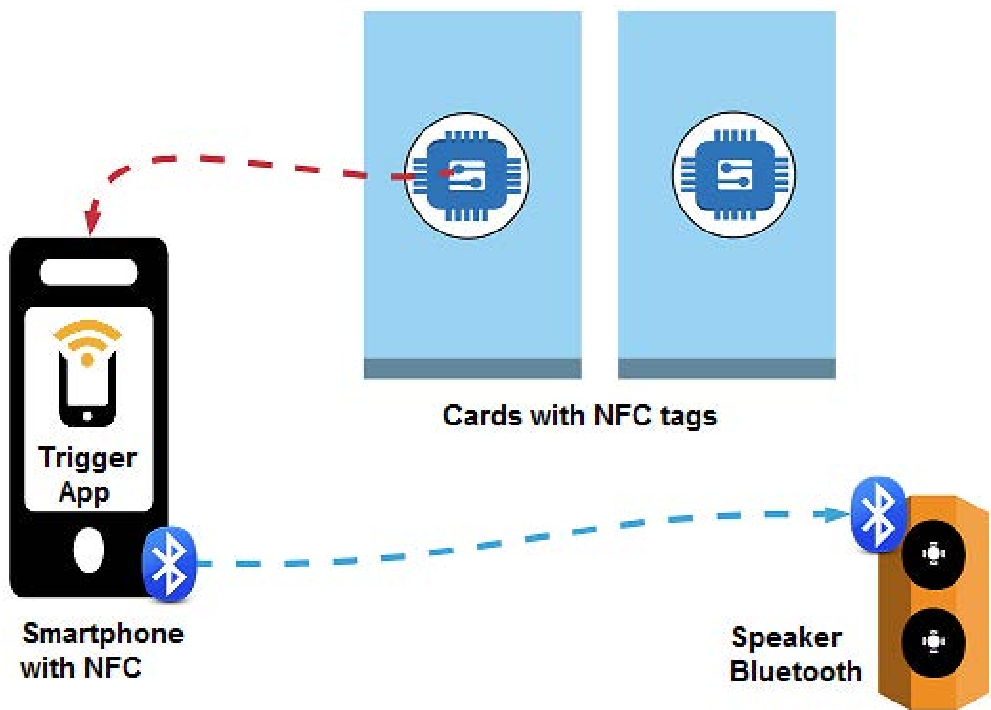 Figure 1: The TechMemory Game Architecture showing the flow from physical card to audio output.
The "Secret Sauce": Emotional Localization
Unlike commercial games with pre-recorded sounds, the authors recorded keywords from stories the children had invented (e.g., "Magic Key," "Robot Wolf"). This created an immediate "Aha!" moment where the game became a reflection of their own creative output.
Experimental Insights
The Case Study utilized an adapted Emoti-SAM (Self-Assessment Manikin) and drawing sessions to capture the fleeting emotions of 5-6 year-olds.
Key Findings:
- Engagement: Children treated the smartphone as a "non-conventional" tool. They didn't look at the screen; they focused on the cards and the group's reaction.
- Competitive Motivation: Defeat/Victory played a massive role in evaluation. One child noted, "I did not like it because I did not win," highlighting that for children, the game's mechanics often outweigh the technology's novelty.
- Embodiment: Drawings by the children often showed them holding the phone over cards, indicating they perceived themselves as active participants in a technological loop.
 Figure 2: Children engaging with the smartphone and NFC cards in a social, co-located setting.
Critical Analysis: Why This Matters
The Success of TechMemory stems from Inductive Bias. By choosing a game children already knew, the cognitive load was shifted from "learning the rules" to "exploring the technology."
Limitations: The study is small-scale (23 children) and localized to a specific Brazilian cultural context. Furthermore, as the authors noted, the "victory vs. defeat" mentality can skew subjective satisfaction scores in young children, making it difficult to isolate the "tech appeal" from the "game appeal."
Future Outlook
This work signals a shift toward Pervasive Learning Environments. By using Ethnography to identify "pedagogical spaces," designers can create tools that don't replace teachers but augment the "circles" and "playtimes" that already exist. The next frontier? Investigating how "embodied coupling"—where the child's movement and the digital response are perfectly synced—further solidifies early childhood learning.
Summary by Senior Academic Tech Editor. Source: IHC '19: XVIII Brazilian Symposium on Human Factors in Computing Systems.