
Simulating the Social Ripple: Why Risk Perception Lives a Life of Its Own
European journal of operational research
The paper presents an Agent-Based Model (ABM) to simulate the Social Amplification of Risk Framework (SARF). It captures how risk perceptions "ripple" through a society of heterogeneous actors, utilizing "availability cascades" to explain the divergence between objective risk and public anxiety.
TL;DR
Why did the Fukushima evacuation cause ten times more deaths than the radiation itself? The answer lies in the Social Amplification of Risk Framework (SARF). This paper introduces a sophisticated Agent-Based Model (ABM) that proves public fear isn't just a reaction to danger—it's a self-propagating social phenomenon driven by "availability cascades," behavioral feedback, and mutual skepticism between the public and authorities.
The Problem: The Gap Between Math and Mind
In classical risk management, we often treat humans like particles in a gas: predictable, homogeneous, and reactive only to physical stimuli. However, history (Chernobyl, BSE, MMR vaccine) shows that social response is frequently at odds with objective assessments.
The authors identify a major gap in academic modeling: existing frameworks describe what happens during risk amplification but fail to provide the how—the underlying algorithmic mechanism. They argue that risk is a matter of communication, not just physics.
Methodology: The Architecture of Anxiety
The researchers built an artificial society where heterogeneous agents interact across a scale-free network. The model is structured around three "endogenous" loops:
1. Availability Cascades (The Core)
Drawing on Kuran and Sunstein, the model splits belief into two layers:
- Espoused Beliefs: What an agent actually thinks (driven by information).
- Expressed Beliefs: What an agent tells others (driven by the reputational need to conform).
This creates a "cascade" where even skeptical individuals start signaling alarm to avoid social friction, creating a runaway feedback loop of perceived danger.
2. Behavioral Ripples
When agents perceive high risk, they stop "consuming" (e.g., they stop eating beef during a Mad Cow scare). This behavior is visible to others, acting as a secondary signal of danger that bypasses official news.
3. Theory of Mind in Communication
Agents don't just "receive" news; they evaluate the source. If a government agency (Risk Principal) says "Everything is fine," a skeptical public with an attributed "attenuation bias" toward the government might actually become more afraid, assuming the truth is being hidden.
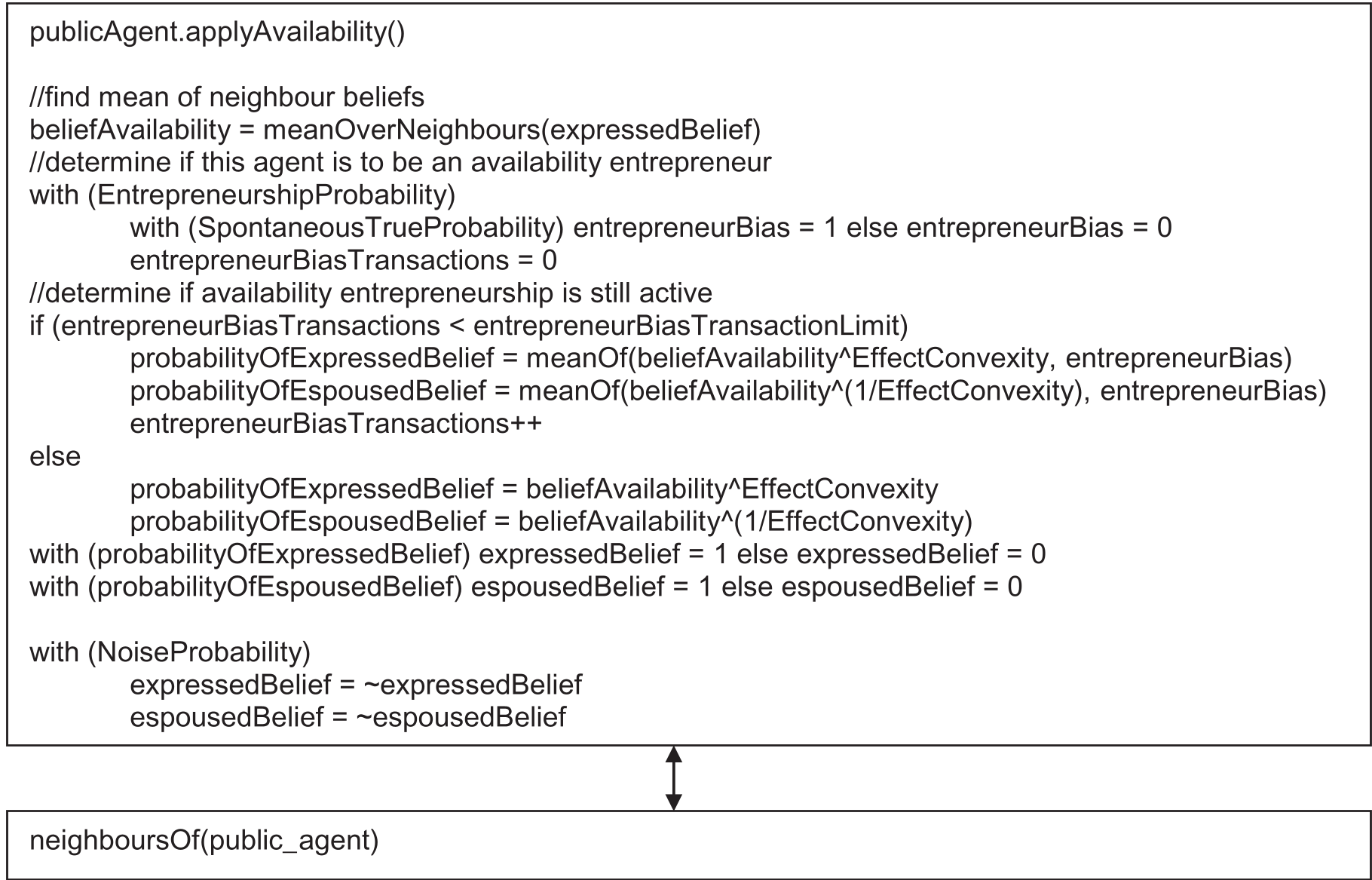 Figure 1: The logic gated process of how an individual agent updates its internal and external beliefs based on its neighbors.
Experimental Insights: Peaks Without Triggers
The most striking finding from the simulations is that public concern can peak even when the objective risk is zero.
By introducing "availability entrepreneurs"—actors who benefit from high or low risk perception—the model generates "Endogenous Peaks." In these scenarios, social noise and small-world connections synchronize to create a localized panic that looks identical to a real crisis in the data.
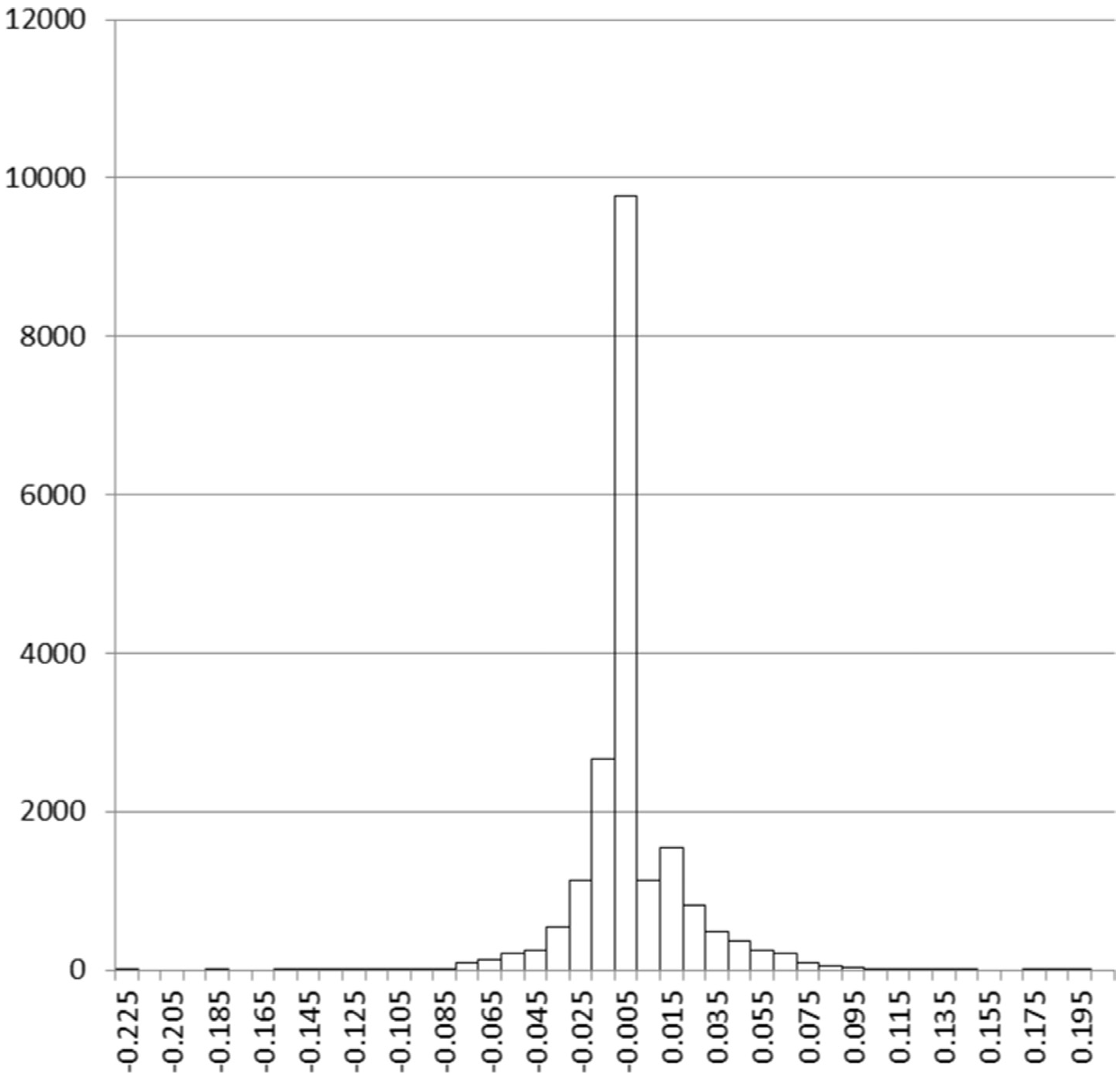 Figure 2: A simulation trace showing how expressed beliefs (black) can deviate wildly from objective risk levels (shaded areas), showing high volatility and "clumping" of fear.
Key Statistical Findings:
- Leptokurtosis: The model exhibits an excess kurtosis of 815, meaning that extreme "shocks" in public opinion are far more common than a normal distribution would predict.
- Path Dependency: Identical starting conditions can lead to completely different social outcomes based on the order of agent activation—vindicating the "Third Way" of science (simulation over pure math).
Critical Analysis & Conclusion
This paper fundamentally challenges the idea that risk managers can control the narrative simply by presenting "the facts."
Takeaways for the Future:
- The "Silent" Signal: Managers must watch not just what people say (expressed belief) but what they do (behavioral ripples), as behavior often drives the next wave of perception.
- Trust is a Variable: The "Theory of Mind" component shows that if you are perceived as biased, your attempts to calm the public will paradoxically amplify the risk.
- Limitations: The model lacks a robust "Media" agent and doesn't fully account for "Homophily" (the tendency to only talk to people who agree with us), which in the age of social media algorithms, is a critical amplifier.
In conclusion, the paper provides a rigorous mathematical foundation for the "Social Ripple Effect." It reminds us that in a complex society, our perception of danger is a mirror of our social network, often reflecting more about our interactions than the world itself.