
The Architecture of Online Genius: A Deep Dive into Crowdsourcing Contests
European journal of operational research
This paper provides a comprehensive review of crowdsourcing contests, synthesizing two decades of multi-disciplinary research into a unified framework. It categorizes the literature into theoretical game-theoretic models (Game Theory, All-pay auctions) and empirical data-driven analyses, specifically focusing on how prize structures, feedback mechanisms, and participant behaviors converge to define contest success.
TL;DR
Crowdsourcing is more than just "outsourcing to a crowd"; it is a complex economic game. This review by Ella Segev dismantles the mechanics of online contests, revealing why bigger prizes don't always mean better results and how the "openness" of a contest can both foster innovation and encourage plagiarism.
Backgound: The Digital Colosseum
Crowdsourcing platforms like TopCoder, 99designs, and Kaggle have transformed professional services into a global arena. This paper positions itself as a bridge between the mathematical rigor of Game Theory and the messy reality of Empirical Data, providing a roadmap for how to design mechanisms that actually elicit human creativity.
The Core Friction: Effort vs. Innovation
A central insight of the paper is the distinction between two types of tasks:
- Fixed-Effort Tasks: Where quality is a direct result of hours spent (e.g., data entry).
- Innovation/Search Tasks: Where quality is stochastic—a "eureka" moment that requires experimentation (e.g., logo design, algorithmic breakthroughs).
The paper argues that traditional models (like the All-pay Auction) often fail because they assume quality is deterministic. In reality, the "noise" or randomness of a creative outcome changes everything about how prizes should be distributed.
Methodology Breakthrough: From Deterministic to Stochastic
Theoretical research has shifted toward modeling contests as a Search Process. Participants don't just "bid" effort; they conduct trials.
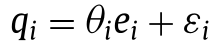 The formula above (q = θe + ε) represents the shift toward acknowledging that even high effort (e) and skill (θ) are subject to a random shock (ε).
Empirics: Do Big Prizes Work?
One might think a 1,000 prize. The empirical evidence reviewed suggests a more nuanced Inverted-U relationship:
- The Attraction Effect: Higher rewards increase the quantity of submissions.
- The Deterrence Effect: Intense competition can scare off "average" experts who feel they have no chance against "Superstars," potentially lowering the aggregate quality.
Empirical studies across platforms like Taskcn and Crowdspring show that feedback from organizers is often a stronger motivator than the marginal increase in prize money.
The "Open" vs. "Blind" Dilemma
Should contestants see each other's work?
- Open Contests: Lead to Information Spillovers. Later contestants can learn from the failures of earlier ones. However, this risks "copycat" behavior.
- Blind Contests: Force original thinking but prevent the community from "standing on the shoulders of giants."
The research highlights that Sequential Open Contests often produce higher quality because they allow for a "co-evolution" of ideas, even if the primary motivation is competitive.
Deep Insight: The Platform as an Actor
Unlike older models, this paper emphasizes that the Platform is not a neutral stage. It is an agent seeking to maximize its own profit through fee structures.
 In this model, the platform balances the "Tax" (K) it charges the organizer against the likely quality of outcomes to ensure long-term ecosystem health.
Critical Analysis & Conclusion
Takeaway for Designers
If you are running a contest for a highly creative task, don't just award one prize. Offering 2nd and 3rd place prizes maintains "marginal incentives"—it keeps the experts who aren't in the lead from dropping out.
Limitations & Future Work
The review notes a significant gap: we still don't fully understand why the majority of participants, who statistically have zero chance of winning, continue to exert high effort. Is it for reputation? Learning? Or a "lottery effect"?
As AI begins to enter these contests (e.g., LLMs participating in coding challenges), the game theoretical models will need to be rewritten to account for zero-marginal-cost competitors.