
PIT-OSN 1: Systematizing Privacy Inspections for the Social Media Era
Evaluating PIT-OSN 1 in inspecting the privacy levels of an online social network
This paper introduces and evaluates PIT-OSN 1, a specialized reading-based inspection technique designed to detect privacy defects regarding "privacy levels" (access limits) in Online Social Networks (OSNs). Through a comparative empirical study on Twitter, the method demonstrated significant superiority over ad hoc inspections in both efficiency and efficacy for non-expert evaluators.
TL;DR
As Online Social Networks (OSNs) grow, user privacy expectations often clash with system realities. This paper evaluates PIT-OSN 1, a reading-based inspection technique that helps non-experts identify privacy "defects"—instances where a system fails to let users reach their desired level of privacy. In head-to-head testing against traditional ad hoc methods, PIT-OSN 1 more than doubled the detection rate of privacy issues on platforms like Twitter.
The "Expertise" Trap in Privacy Auditing
Most privacy evaluations in industry are ad hoc. This means they depend entirely on the "gut feeling" and experience of the auditor. If the auditor isn't a privacy specialist, critical defects—such as a system recommending a profile to strangers without permission or allowing search engines to index private content—go unnoticed.
The authors identified that current approaches lack a systematic lens to view privacy not just as a setting, but as a "state of access" that users need to control dynamically.
Methodology: Bridging Social Theory and Interface Inspection
PIT-OSN 1 is grounded in Altman’s Privacy Regulation Theory, which views privacy as a selective control of access to the self. The technique transforms this abstract theory into concrete Verification Items.
The Workflow
The technique follows a structured 5-step pipeline to ensure scientific rigor:
- Preparation: Setting the context and distributing taxonomies.
- Detection: Individual inspectors use verification items to find discrepancies.
- Collection: Merging individual reports and removing duplicates.
- Discrimination: Expert review to filter out "False Positives" and confirm real defects.
- Solution: Recommending fixes for the identified flaws.
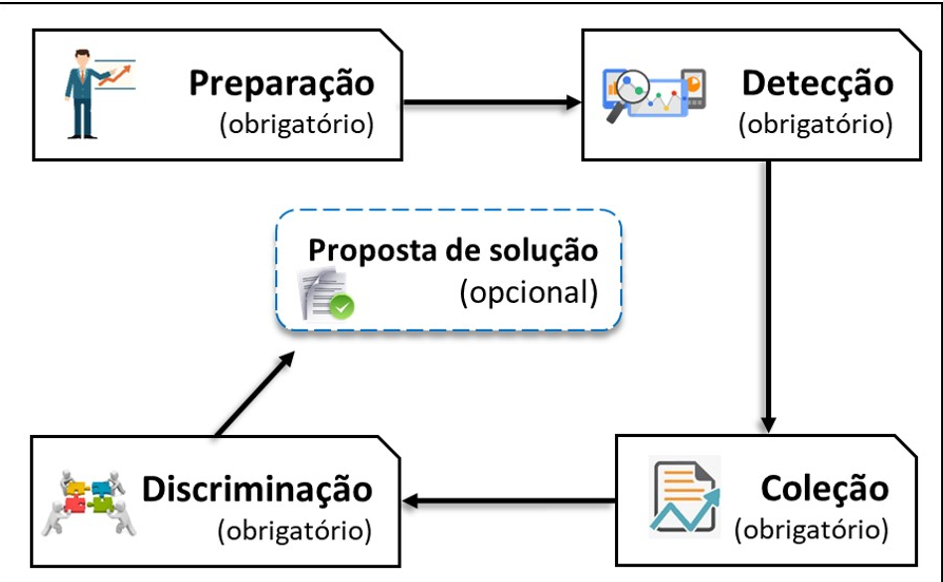 Figure 1: The systematic 5-step process for applying PIT-OSN 1, ensuring a transition from raw detection to consolidated privacy reports.
Verification Dimensions
Inspectors are guided by specific dimensions, such as "Communication Space" and "Audience," asking critical questions like: “Does the system take the initiative to recommend the individual’s profile to others without permission?”
Experimental Results: PIT-OSN 1 vs. Ad Hoc
The researchers conducted a controlled experiment with 26 computer science students inspecting Twitter.
Performance Metrics
- Efficacy (Detection Rate): PIT-OSN 1 scored 14.00% vs. Ad Hoc's 5.67%.
- Efficiency: PIT-OSN 1 yielded 6.24 defects per unit of time, significantly outperforming the 2.94 achieved by the ad hoc group.
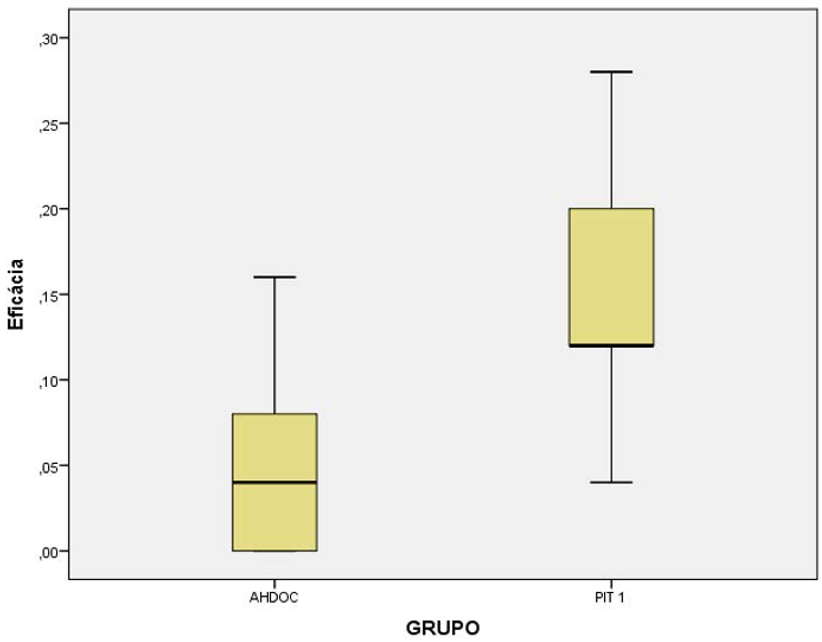 Figure 2: Statistical comparison of efficacy. The top plot shows the clear lead PIT-OSN 1 (Green) has over Ad Hoc methods (Blue) in catching actual privacy defects (p=0.003).
User Acceptance (TAM Model)
Using the Technology Acceptance Model (TAM), the authors found that while PIT-OSN 1 requires more "initial mental effort" due to its structured nature, users found it far more useful and reliable than wandering through the interface without a map.
Critical Insight: Why it Works
The secret to PIT-OSN 1’s success is its Inductive Bias. By forcing the inspector to look at specific "dimensions" of privacy (like what the system says about the user vs. what the user says about themselves), it prevents "tunnel vision." While ad hoc inspectors might focus only on obvious settings menus, PIT-OSN 1 inspectors look at the behavioral output of the social network.
Conclusion and Future Outlook
PIT-OSN 1 proves that you don't need to be a "Privacy Guru" to perform a high-quality audit if you have the right structural framework.
Limitations: The study used students and focused solely on Twitter. Future work should explore how these techniques hold up in the world of Decentralized Social Media (Web3) or AI-driven feed algorithms, where the "privacy state" is even more opaque.
The Takeaway for Developers: Privacy is a design requirement, not a feature. Tools like PIT-OSN 1 should be integrated into the UX/UI walkthrough phase to catch "Privacy Debt" before it reaches the end-user.