
Evaluating User Reputation: Beyond Simple Ratings on YouTube
Evaluation of User Reputation on YouTube
The paper proposes a novel User Reputation (UR) algorithm for video-sharing platforms like YouTube by modeling social activities as a complex network. By applying a weighted PageRank-inspired approach to an implicit social network of 600,000 users, the authors successfully quantify user influence based on subscriptions, uploads, and favorites.
TL;DR
In the landscape of Web 2.0, not all feedback is created equal. This paper introduces a weighted PageRank-based algorithm to calculate User Reputation (UR) on YouTube. By analyzing the implicit social network formed through subscriptions, favorites, and uploads, the researchers provide a mathematical framework to identify influential users, revealing that a user's "fame" is strongly tied to their consistency in uploading rather than the average rating of their videos.
Context: The Shift from Web 1.0 to Social Intelligence
The transition from Web 1.0 (read-only) to Web 2.0 (read-write-share) created a data problem. Traditional algorithms like PageRank were designed for hyperlinks between static pages. On platforms like YouTube, there are no explicit "links" between video A and video B. Instead, the "links" are human behaviors: a sub, a like, or a comment. The authors argue that these behaviors represent a new type of social network—one that can be used to measure the reliability of "Collective Intelligence."
Methodology: Engineering the Reputation Network
The core innovation lies in treating social interactions as weighted directed edges. The authors redefine the importance of a node (User or Content) through a specialized version of the PageRank formula.
1. The Implicit Network
Unlike Facebook, where a "friend request" creates an explicit link, this model builds links implicitly.
- If User A favorites User B’s video, a link is formed.
- If User A subscribes to User B, a stronger link is formed.
2. The Weighted UR Formula
The authors didn't just count links; they assigned Relative Importance Weights based on the effort/intent of the action:
- Subscription (0.35): Highest weight, as it implies long-term trust.
- Uploads (0.30): Reflects the creator's contribution to the platform.
- Favorites (0.20): Indicates specific content value.
- Others (0.15): Comments and general interactions.
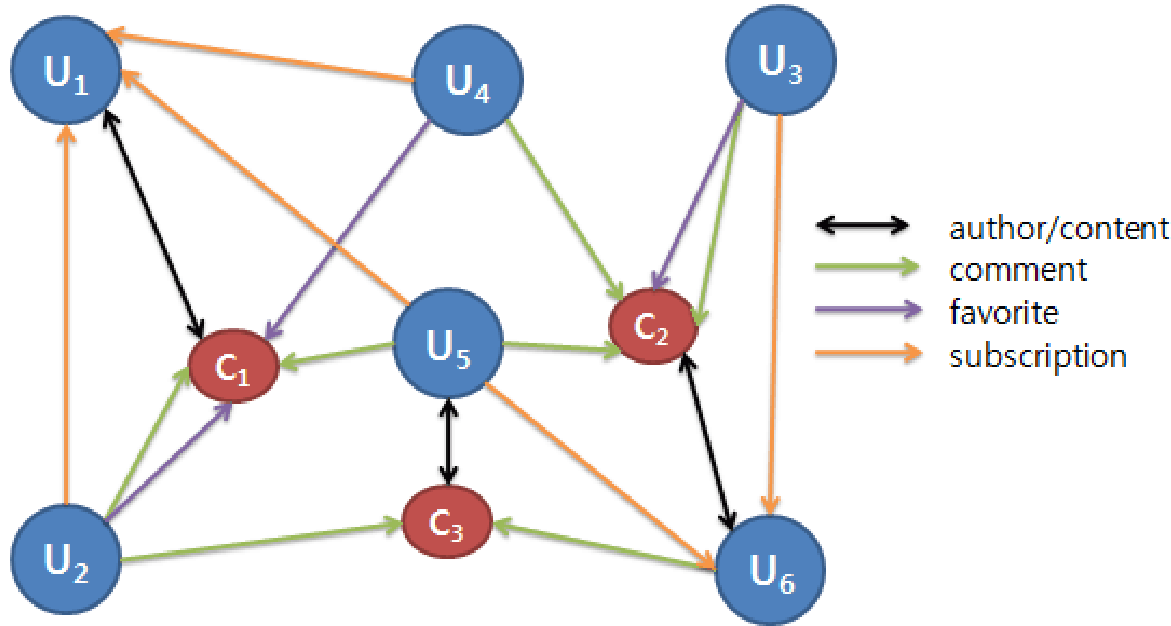 Fig 1: Conceptualizing social interactions as a link-based network.
Experiments: What Makes a User Reputable?
The study analyzed a massive dataset of 600,000 users and 600,000 videos. Using the top 20 users (including legendary names like nigahiga and Smosh), they compared UR scores against standard metrics.
Key Findings:
- The "Upload" Dominance: Surprisingly, the correlation between UR and the number of uploads (0.84) was higher than the correlation with subscriptions (0.61). High-reputation users are often "power houses" of content creation.
- The Rating Paradox: The correlation between UR and average content rating was -0.01. This is a critical insight: Good ratings do not equal high reputation. A random viral video might get 5 stars, but that doesn't make the uploader a "reputable" pillar of the community.
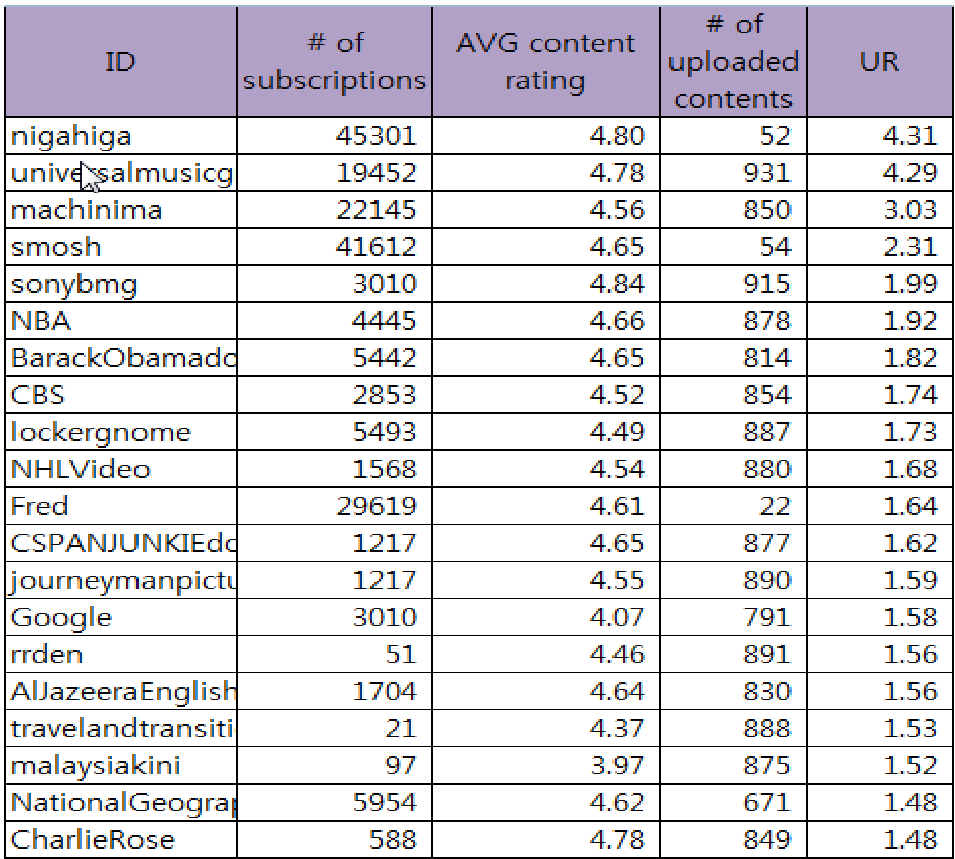 Table 1: Top 20 users and their calculated Reputation Scores (UR).
Critical Insight: Why This Matters for the Future
The current "one person, one vote" system on most platforms is vulnerable. If a "Bad User" (low reputation) and a "Good User" (high reputation) both rate a video 1-star, the system treats them the same.
The authors suggest that by using their UR score, we can re-weight the rating system. A 5-star review from a reputable creator should carry more weight than 5-stars from a brand-new account. This moves us toward a "Meritocratic Ranking" system that is more resilient to manipulation and spam.
Conclusion & Future Work
The paper marks an important step in quantifying social capital outside of explicit friend-graphs. While the authors focused on YouTube, the logic applies to any Web 2.0 platform. The next frontier, as noted by the team, is using these UR scores to filter the "noise" in human judgment, potentially creating a "Reputation-Weighted Recommendation Engine."
Takeaways for Tech Leaders:
- Don't treat all engagement metrics as equal. Subscriptions are a stronger indicator of trust than comments.
- Reputation is separate from Popularity. A user can be popular (high ratings) without being reputable (long-term contribution and network strength).
- Weight your data. Use behavioral networks to determine which users are your "signal" and which are your "noise."
Written by the Senior Academic Tech Editor. Source: Han et al., "Evaluation of User Reputation on YouTube".