
Facebook’s Privacy Paradox: How the "Timeline" Changed What the World Knows About You
Evolution of Publicly Disclosed Information in Facebook Profiles
This paper presents a longitudinal study on the evolution of publicly disclosed information among 73,000 Facebook users over a five-month period. Utilizing the "Degree of Public Exposure" (DPE) metric, the research tracks how the transition to the "Timeline" layout influenced privacy behaviors and SOTA levels of attribute disclosure.
TL;DR
This study analyzes the evolution of public data on 73,000 Facebook profiles during the mandatory migration to the "Timeline" layout. While users are becoming more protective of specific sensitive links (like friends-lists), the overall volume of public information remains surprisingly steady due to platform-driven defaults, highlighting a constant tug-of-war between user intent and interface design.
The Core Motivation: Tracking the Digital Footprint
In the early 2010s, Facebook underwent one of its most controversial transformations: the introduction of the Timeline. Critics argued that this new layout resurfaced old data and changed privacy defaults. The authors of this paper aimed to move beyond anecdotal evidence by quantifying the "privacy evolution" through a large-scale, automated analysis of 73K real-world profiles over a five-month window.
Methodology: The DPE Metric
To measure transparency, the researchers defined the Degree of Public Exposure (DPE).
- The Scale: A simple 0 to 17 score based on the visibility of personal attributes (e.g., Gender, Hometown, Birthday) and interest-based attributes (e.g., Music, Teams).
- The Snapshots: Data was crawled in February 2012 (pre-migration) and July 2012 (post-migration).
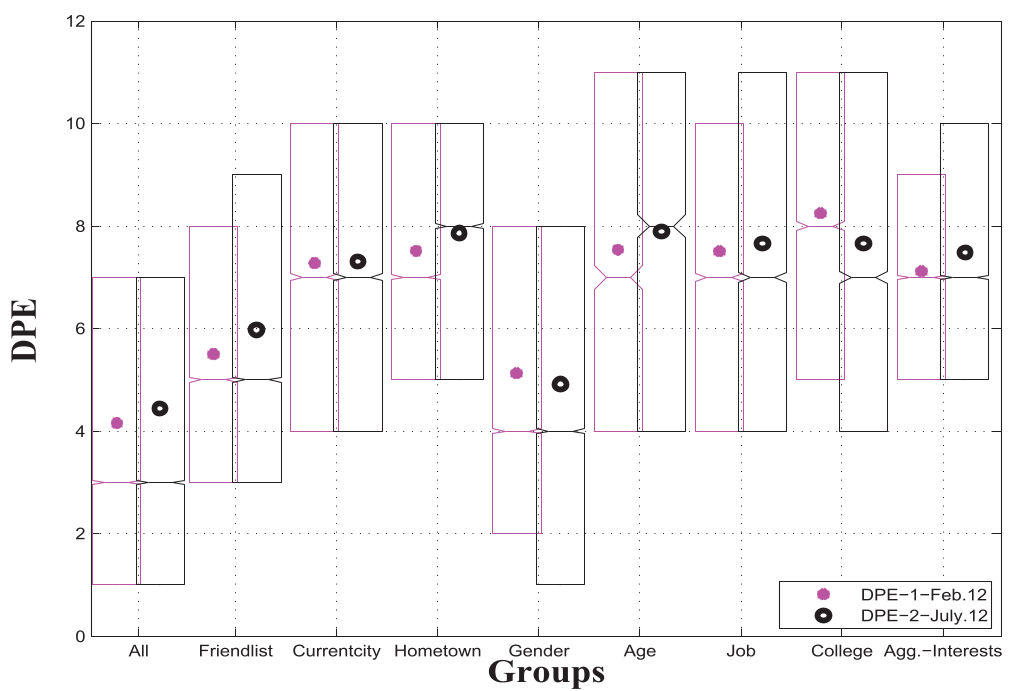 Figure 1: Comparison of DPE across different attribute groups, showing how disclosure levels fluctuate based on what information users choose to share.
Key Insights: Privacy vs. Platform Strategy
The study reveals a fascinating "push-and-pull" dynamic:
- The Great "Friends-List" Migration: The most significant user-initiated change was the mass-closing of contact lists. While 60% of users had public friends-lists in February, this dropped by 16.44% in five months. This indicates a growing awareness of "social graph" privacy.
- The Gender Spike: Conversely, the Gender attribute saw a massive 25.22% increase in public availability. This wasn't because users suddenly wanted to be more public—it was a direct result of Facebook's "Timeline" default settings.
- Stability in Aggregate: Remarkably, when looking at the "forest" instead of the "trees," the average DPE remained stable (around 3-4 attributes). Users were "trading" privacy—closing one door (friends-list) while the platform opened another (gender/interests).
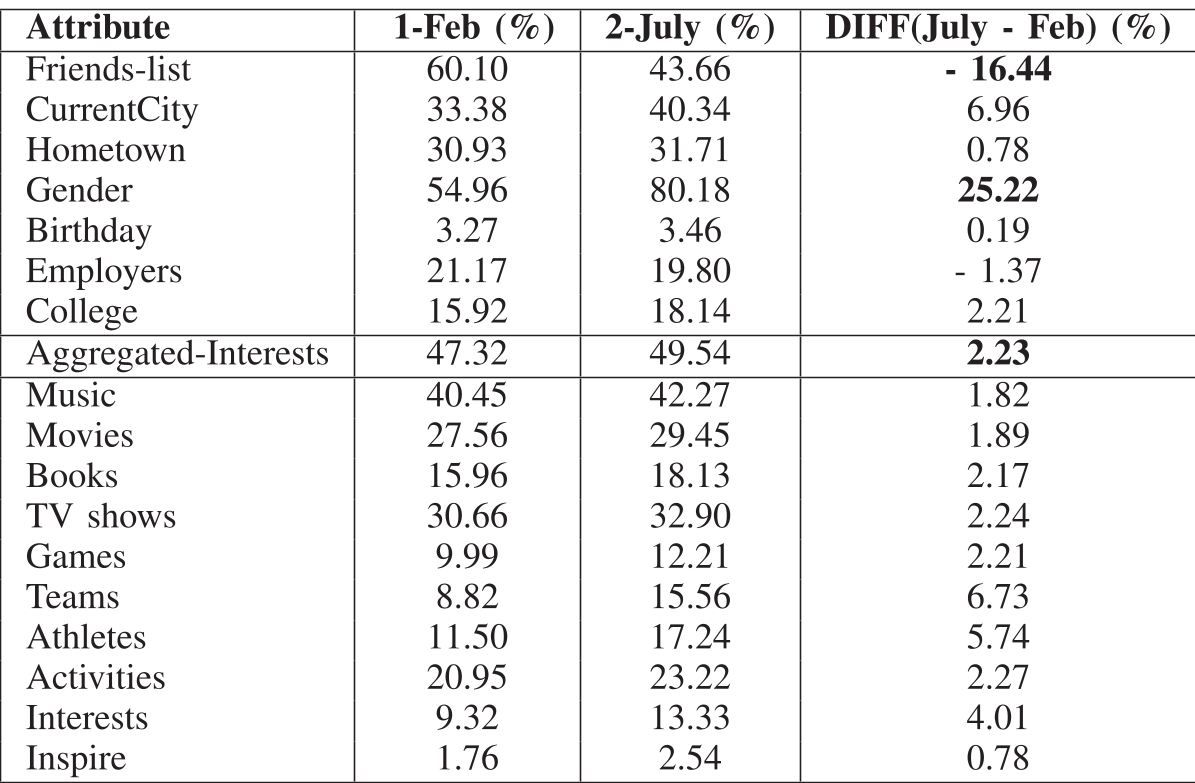 Table 1: Detailed breakdown of attribute disclosure changes. Note the sharp contrast between Friends-list (decreasing) and Gender (increasing).
Social Dynamism: More Friends, More Interests
Beyond privacy, the study captured the raw growth of Facebook. Despite the privacy concerns, the network remained hyper-dynamic:
- 95% of users increased their contact list size.
- On average, users added 77 new friends in just five months.
- 61% of users expanded their "Interests" section, adding an average of 6 new likes/pages.
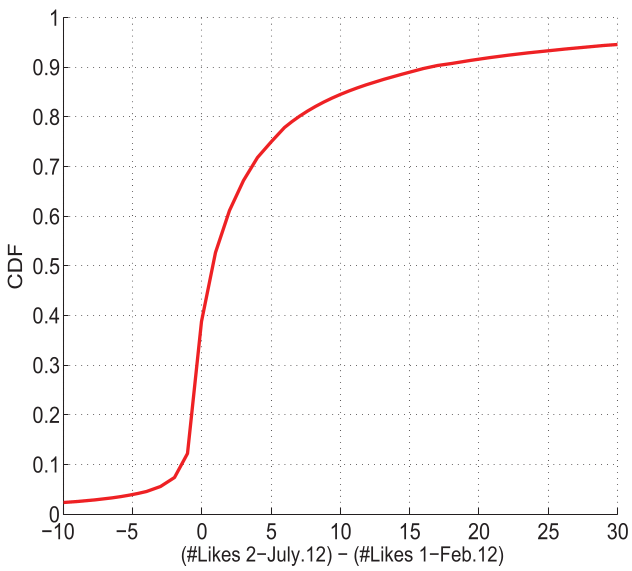 Figure 2: The Cumulative Distribution Function (CDF) showing that while nearly half of users changed their privacy posture, the net effect on public data volume was nearly balanced.
Academic Perspective: Why It Matters
This work demonstrates that Privacy is not a static choice but an evolving response to two forces: User Anxiety (leading to the closure of contact lists) and Institutional Architecture (defaults that expose "low-sensitivity" data).
Future Work & Limitations: The study’s main limitation is its inability to distinguish between a "private" attribute and a "blank" one. However, as an empirical look at the 2012 era of OSN, it provides a critical baseline for understanding how major UI overhauls—like those we see today in the age of AI and algorithmic feeds—secretly reshape our digital autonomy.
Final Takeaway
If you think you've tightened your privacy settings, check again: every platform update is a silent renegotiation of your public identity.