
The Weight of Friendship: How BMI Shapes the Evolution of Adolescent Social Networks
Evolution of Social Networks and Body Mass Index for Adolescence
This study investigates the co-evolution of high school friendship networks and Body Mass Index (BMI) using longitudinal panel data and Stochastic Actor-Oriented Models (SIENA). Comparing all-boys, all-girls, and mixed-gender classes, it identifies that social norms surrounding physical appearance significantly drive network dynamics in females but have negligible impact on males.
TL;DR
Does your weight dictate who your friends are, or do your friends influence how much you weigh? This study tracks three high school classes over two semesters to reveal a stark gender divide: for girls, BMI is a critical gatekeeper in social evolution, affecting popularity and social activity, while for boys, it remains virtually irrelevant to their friendship dynamics.
Background: Beyond Static Snapshots
In the landscape of adolescent health, BMI is rarely just a medical metric; it is a social signal. Previous research has often treated social networks as static backgrounds, but this paper argues that networks are evolutionary systems. The authors place this work at the intersection of Social Comparison Theory and Objectification Theory, aiming to prove that BMI-related social norms serve as a "hidden hand" that rewires friendships over time.
Problem & Motivation: The Gender Sensitivity Gap
The core problem identified is the lack of clarity on how gender composition in a social setting (like a classroom) moderates the impact of BMI on social status. Adolescence is a period of peak sensitivity to "ideal" body types. The authors hypothesize that girls, who are socialized to internalize an observer's perspective of their bodies, experience different network pressures than boys. The goal was to move beyond "what" the correlations are and uncover the "how" of network formation.
Methodology: Decoding Dynamics with SIENA
To capture the fluid nature of friendships, the researchers used SIENA (Simulation Investigation for Empirical Network Analysis). This allows for a "Stochastic Actor-oriented Model," which simulates how individuals (actors) change their ties based on preferences and network constraints.
Key Experimental Structure
- Subjects: Three classes (Mixed-gender, All-boys, All-girls).
- Data Points: 7 waves of surveys across one academic year.
- Network Metrics: Reciprocity (returning a friendship), Transitivity (becoming friends with a friend's friend), and BMI Similarity.
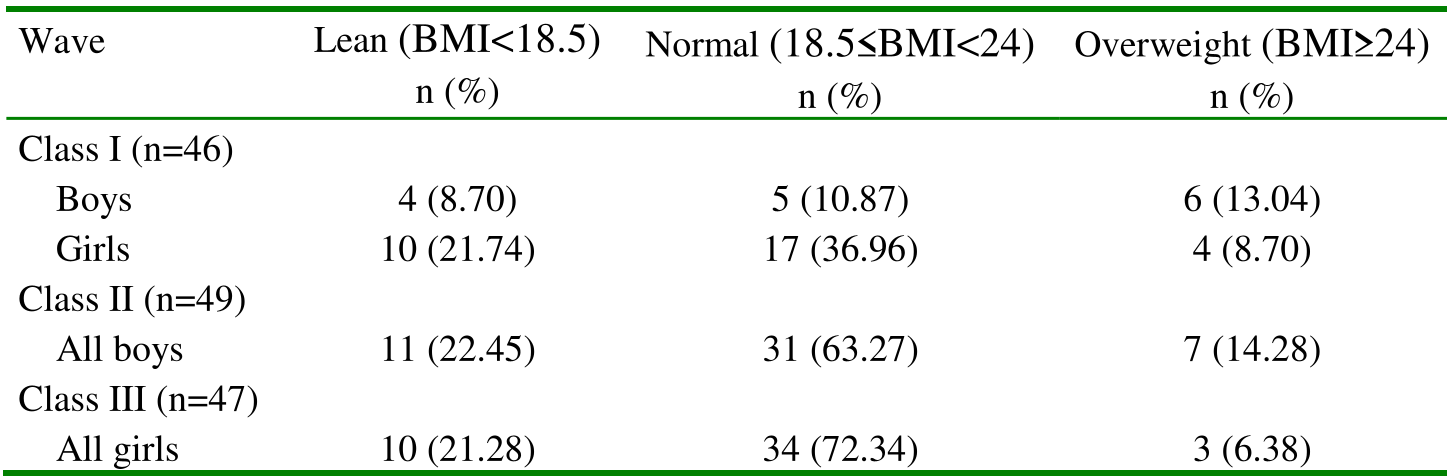 The baseline data shows higher overweight percentages in boys, yet social consequences were more pronounced in girls.
Experiments & Results: Popularity and Prejudice
The findings provide a nuanced look at how "social norms" manifest differently in various environments:
- The "Stigma" in All-Girls Environments: In the girls' class, students with higher BMI were significantly less popular (negative BMI alter effect). Interestingly, these girls were more active in sending out nominations (BMI ego), suggesting a drive to seek social integration despite facing exclusion.
- The "Popularity Paradox" in Heterosexual Classes: In the mixed-gender class, higher BMI actually correlated with increased popularity. This suggests that in mixed settings, social norms or the definition of "attractiveness" and "leadership" might shift.
- Boys' Indifference: In the all-boys class, BMI had no statistically significant effect on network evolution. Boys' networks were characterized by higher density and faster "rate parameters" (speed of tie changes), but these changes were driven by activity levels rather than physical metrics.
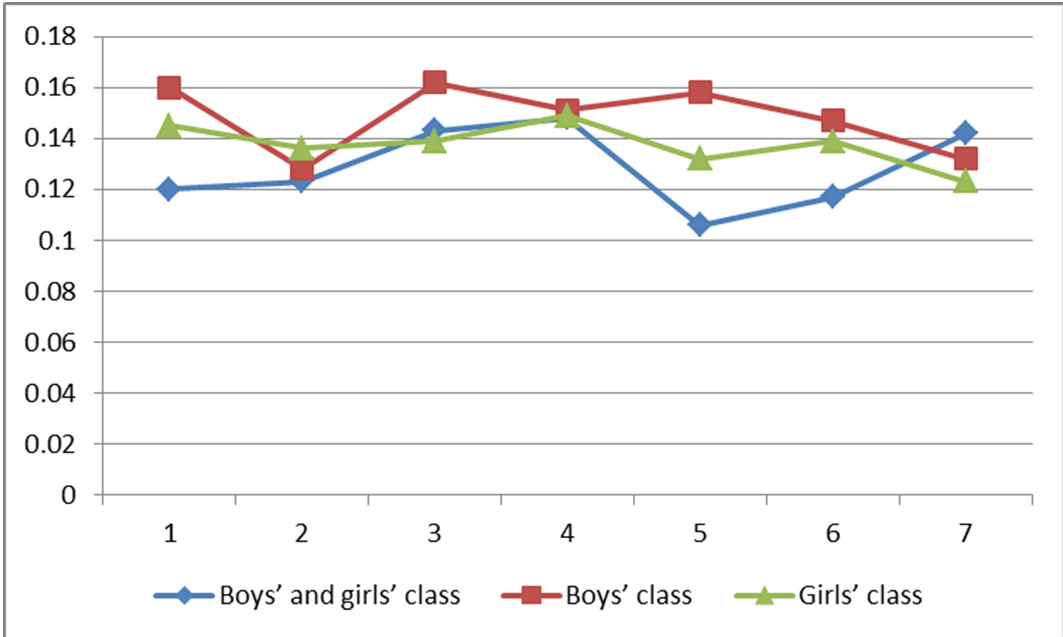 The boy-only network (Class II) maintained the highest density throughout the study, indicating a more interconnected but volatile social structure compared to girls.
Deep Insight: Why Does This Resilience Vary?
The study concludes that girls tend to maintain smaller, more intimate groups where "collaborative and affiliative" language dominates. Because these friendships are more intensive, the "cost" of deviating from social norms (like BMI) is higher. Boys, engaging in broader, more "competitive and assertive" social structures, may prioritize skills or shared activities over physical body norms.
Limitations & Future Work
While the study is robust in its longitudinal design, it is limited by its specific cultural context (high schools in Taiwan) and the relatively small sample size of three classes. Future research could explore the "dose effect": at what threshold of overweight prevalence in a class does the social stigma begin to dissolve?
Conclusion
This study proves that social networks are not neutral. They are filters that favor certain physical traits depending on the gender of the group. For health educators, the message is clear: solving adolescent obesity isn't just about nutrition—it's about addressing the social architecture that penalizes or rewards body types.