
Deciphering the Digital Skeleton: How Enterprise Social Networks Evolve Over Time
Evolution, Structure and Users' Attachment Behavior in Enterprise Social Networks
This paper investigates the longitudinal evolution of Enterprise Social Networks (ESN) using a 4-year dataset from the German Armed Forces. It reveals that ESN structures follow a non-random, preferential attachment growth model, characterized by a power-law degree distribution.
TL;DR
Contrary to the belief that internal corporate networks grow sporadically or locally, this long-term study of a large-scale ESN proves that professional networks follow a structured Preferential Attachment model. Over four years, the network converged into a "single giant component" where well-connected users became increasingly attractive as social partners, creating a "rich-get-richer" dynamic that defines the organization's information flow.
The Motivation: Moving Beyond Static Snapshots
Most IT managers look at their Enterprise Social Network (ESN) as a static directory or a pile of messages. Academic research has often echoed this, focusing on "who is important right now." However, networks are living organisms. The author, Katharina Wiesneth, recognized a critical gap: we didn't know how these structures form over years of interaction. Is the growth random? Does it mirror the viral nature of Twitter? Or do the rigid hierarchies of a workplace (like the German Armed Forces) stifle natural network evolution?
Methodology: Mining 4 Years of "Med-Net"
The study analyzed Med-Net, an ESN used by medical officers in the German Armed Forces.
- Scale: Over 2,800 users and 7,390 social relationships.
- Timeframe: November 2010 to February 2015.
- Dual Perspective: The author looked at both the Social Graph (confirmed friendships) and the Activity Graph (actual message exchanges).
The Structural Evolution
The research tracked four key topological pillars:
- Density: How many of the possible connections actually exist?
- Clustering Coefficient: Do your friends know each other?
- Shortest Path: How many "handshakes" away is the average colleague?
- Degree Distribution: The mathematical signature of the network's growth.
Key Findings: The "Rich-Get-Richer" Phenomenon
1. The Power-Law Reality
The study found that the degree distribution follows a Power Law. In plain English: most users have very few connections, while a "vital few" have a massive number of ties. This confirms that ESNs are Scale-Free Networks, a trait they share with the World Wide Web and biological systems, but which is often contested in social contexts.
2. Preference for "Old" and "Central"
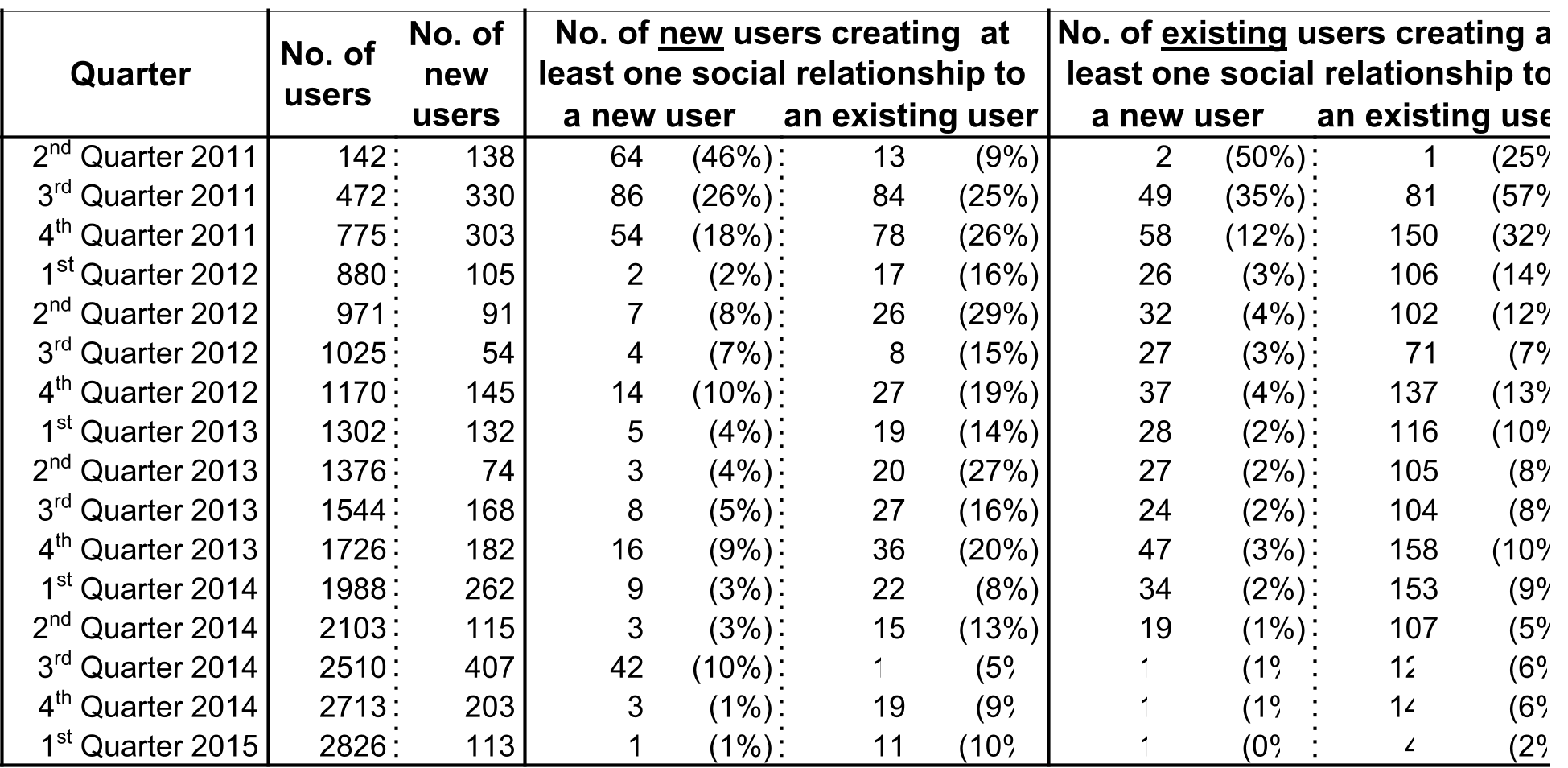
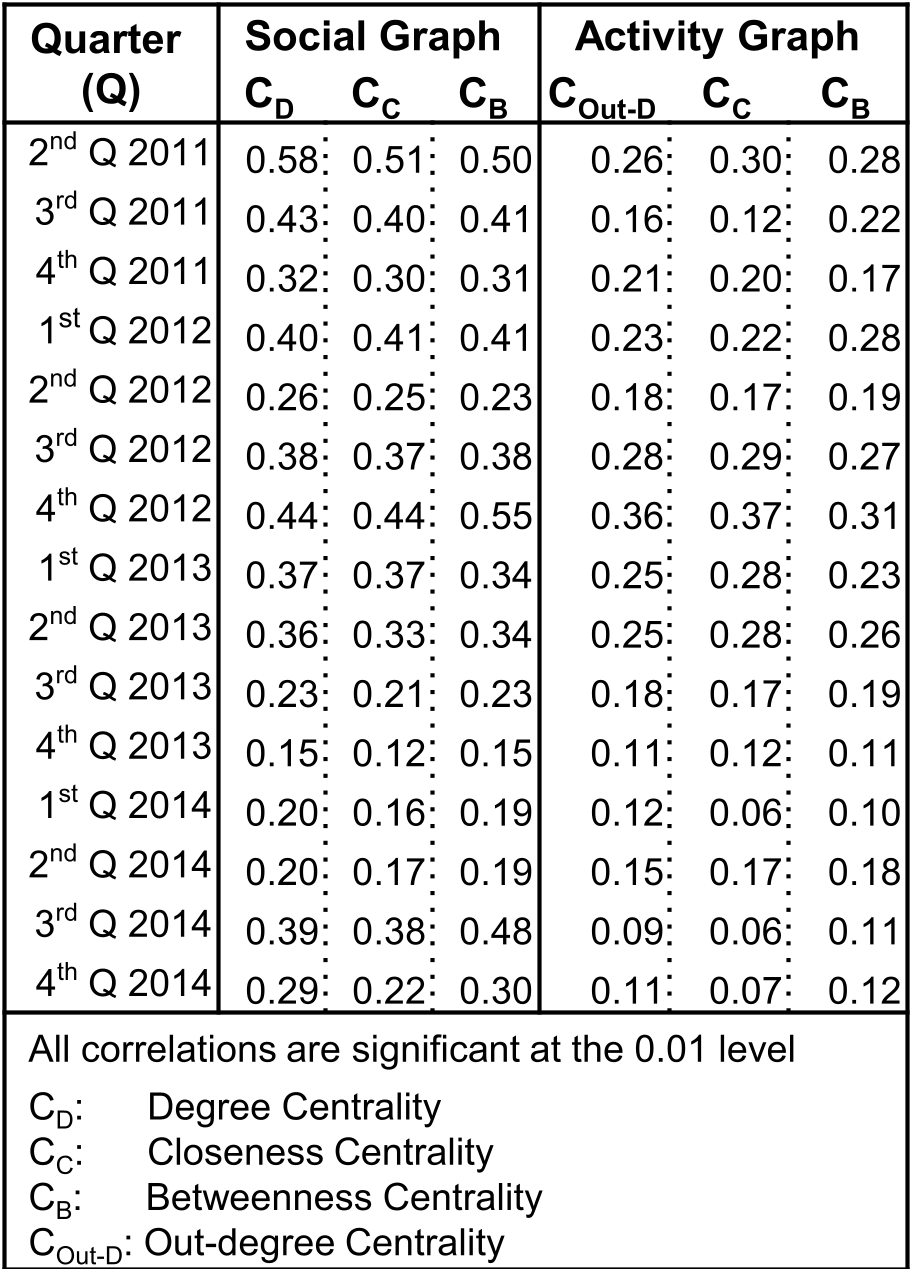
Data showed that new users rarely befriend other new users. Instead, they seek out "Existing Users." Specifically, there is a strong correlation between a user's Centrality (how well-connected they already are) and the number of new contact requests they receive in the next quarter.
3. Declining Density, Increasing Reach
Surprisingly, as the network grew, it became less dense and the clustering coefficient dropped. While this sounds negative, it actually indicates that the network is expanding across departmental silos rather than just thickening existing local cliques. The "Single Giant Component" ensures that almost everyone is connected to the main hive, facilitating enterprise-wide knowledge sharing.
Critical Analysis & Business Insight
The most profound takeaway is that human behavior in ESNs provides a natural governance structure.
- For Researchers: This validates that even in hierarchical military settings, digital social behavior leans towards universal scaling laws. The "social graph" degree centrality was a better predictor of future ties than "activity graph" (message) centrality, suggesting that the status of a connection often outweighs the frequency of interaction.
- For Practitioners: You don't need to constantly hunt for new "key users." Once a user becomes a hub, the preferential attachment mechanism ensures they stay one. These users are your "Super-Spreaders" for new policies, ideas, or cultural changes.
Conclusion and Future Outlook
The study concludes that ESNs are robust, self-healing systems that naturally resist fragmentation into isolated islands. However, the author notes a limitation: the study didn't account for "offline" social ties or formal ranks.
The next frontier of this research lies in Fitness Parameters—understanding if a user becomes a hub because of their digital activity or because of their real-world job title. For now, the message is clear: the rich get richer in the digital office, and that might be exactly what keeps the organization connected.