
MGA: Elevating Community Detection with Hybrid Evolutionary Intelligence
An Evolutionary Approach for Detecting Communities in Social Networks
This paper introduces a Modified Genetic Algorithm (MGA) for community detection in social networks by maximizing the modularity metric (Q). It utilizes a Grouping Genetic Algorithm (GGA) encoding and incorporates Newman’s Spectral Method as a pre-processing step to handle large-scale datasets efficiently.
TL;DR
Detecting communities in massive social networks is often a tug-of-war between accuracy and computational speed. This paper introduces the Modified Genetic Algorithm (MGA), which reimagines community detection by treating groups as the fundamental unit of evolution. By combining the global search power of Genetic Algorithms with the analytical precision of Spectral Pre-processing, the authors achieve state-of-the-art modularity scores with significantly reduced convergence times.
The Bottleneck of Modularity
In network science, Modularity (Q) is the gold standard for measuring the strength of division of a network into communities. High modularity implies dense internal connections and sparse external ones. However, finding the absolute maximum modularity is an NP-hard problem.
Previous methods like the Girvan-Newman Algorithm (GNA) are theoretically sound but practically sluggish—requiring time. On the other hand, early Genetic Algorithms (GAs) often treated every node as a gene, leading to a massive search space and "noisy" results where individual nodes were easily misplaced.
Methodology: The Genetic Shift
The core innovation of this work lies in its Encoding and Initialization strategy.
1. Group-Based Encoding
Unlike traditional GAs that map nodes to genes, MGA uses Grouping Genetic Algorithm (GGA) principles. Each gene in a chromosome represents a community, containing a set of vertices. This high-level representation allows evolutionary operators to manipulate entire social structures rather than individual memberships.
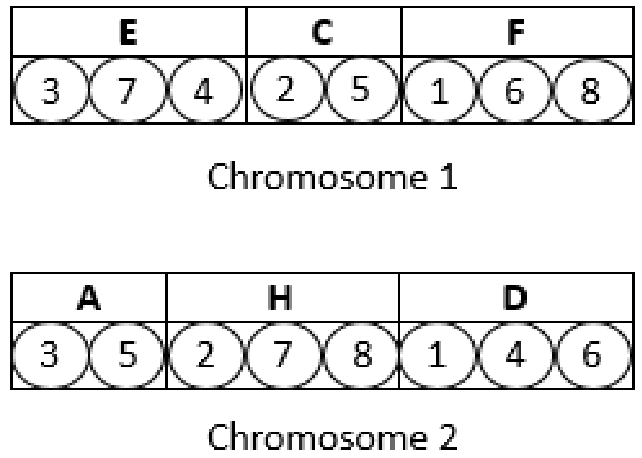 Fig 1. Visual representation of community-based encoding.
2. Spectral Pre-processing (The Warm Start)
For large networks (e.g., PGP or Cond-Mat), starting from a random population is inefficient. MGA employs Newman’s Spectral Algorithm as a pre-processor. By calculating the leading eigenvectors of the Laplacian matrix, the algorithm generates an initial "good" pool of candidates. This leverages the Building Block Hypothesis, providing the GA with high-quality genetic material to refine.
3. Intelligent Mutation and Crossover
When nodes become "idle" (unassigned) during crossover or mutation, MGA doesn't just reassign them randomly. It uses a probabilistic approach to place nodes into communities where they have the highest number of neighbors, naturally driving the modularity score upward.
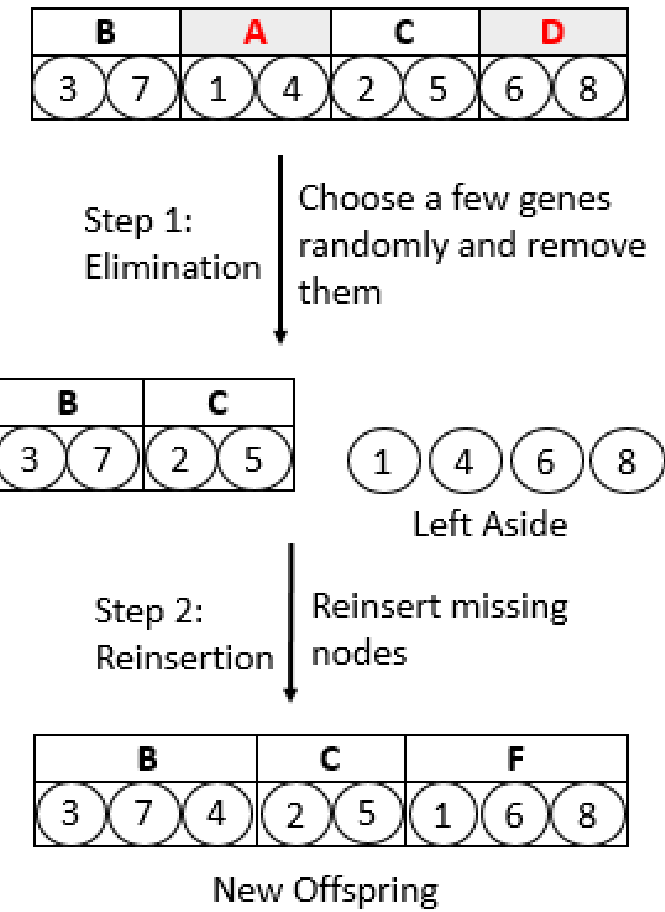 Fig 2. The mutation operator specifically manages the reinsertion of unassigned nodes.
Performance: Speed Meets Precision
The experimental results demonstrate a clear "evolutionary leap."
- Accuracy: On the E-mail network (1,133 nodes), MGA reached a modularity of 0.565, vastly outperforming Traditional GA (0.255) and the previous GACD baseline (0.433).
- Efficiency: On the Jazz dataset, MGA reached its peak modularity in just 5 seconds. For comparison, the Traditional GA took over 130 seconds to reach 0.44.
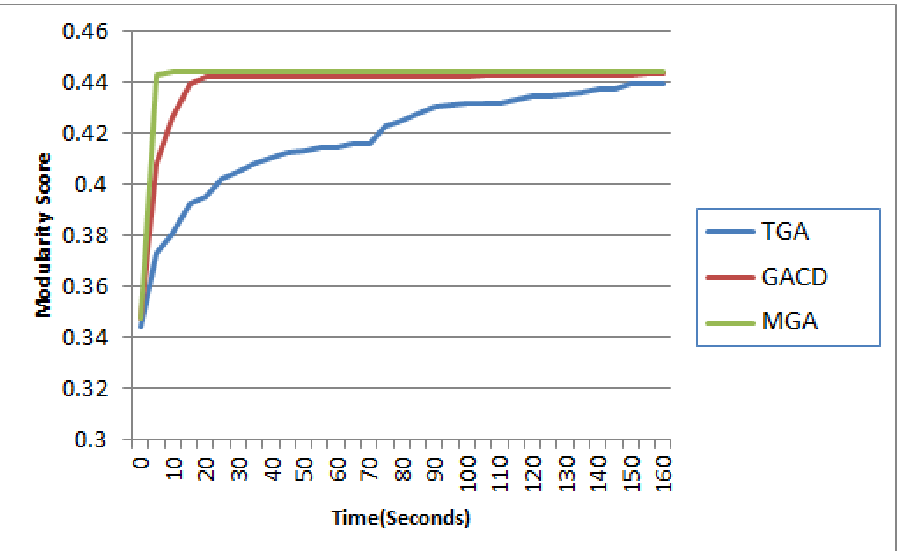 Fig 3. Time comparison on the Collaboration in Jazz network.
Critical Analysis & Future Outlook
MGA shines because it respects the physical intuition of social networks: communities are cohesive units, not just collections of labels. By using Spectral methods to handle the "heavy lifting" of initial partitioning, the GA can focus on fine-tuning the boundaries.
Limitations: The current model assumes "hard" partitioning (each node belongs to exactly one community). However, real-world social circles often overlap. A future extension of MGA using fuzzy membership or multi-objective optimization could address Overlapping Community Detection, a significantly more complex but realistic challenge.
Conclusion
This work provides a robust framework for scalable network analysis. For technical teams working on recommendation systems or fraud detection, the MGA approach offers a blueprint for combining classical linear algebra with modern evolutionary heuristics to extract meaning from complex relational data.