
Evolving Social Networks: The Math of Friend Recommendations
Evolving Social Networks via Friend Recommendations
This paper proposes a rule-based social network evolution model centered on the transitive property of friendship and "friend recommendations." By associating edges with specific sociological "factors" and "quality scores," the model simulates growth through a randomized recommendation process where shared acquaintances act as catalysts for new connections.
TL;DR
How does a stranger become a friend? This paper presents a generative model for social networks that moves beyond simple random graphs. By simulating the "transitive property" (friend-of-a-friend) and weighting connections with socio-psychological factors, the authors demonstrate how dense, real-world community structures emerge from decentralized local rules.
Background & Motivation: Beyond Random Graphs
Predicting the "destiny" of a social network—be it Facebook, a political organization, or a corporate structure—requires understanding the microscopic mechanisms of edge formation. Traditional models often fall into two camps: Network Evolution Models (focusing on local structure like triangles) and Nodal Attribute Models (focusing on similarity).
The authors argue that real evolution is a hybrid process. It is decentralized (no central authority dictates who becomes friends) and driven by the "Similarity Effect": we choose friends who share our workplace, interests, or location. These are termed "factors" in this study.
Methodology: The Transitive Recommendation Engine
The core of the paper is a set of evolution rules that mimic real-life social dynamics.
1. Factor-Based Edges
Every edge in the graph represents a friendship, but not all friendships are equal. Each edge is assigned:
- Factors (): A set of common attributes (e.g., "living in the same city").
- Score (): A cumulative measure of the "quality" or intensity of that similarity.
2. The Transitive Rule
A new link between node and can only be proposed if there is a bridge node such that and already exist. This captures the intuition that we are usually introduced to new friends through mutual acquaintances.
3. The Recommendation Score Function
The model calculates a "Recommendation Score" for a potential edge based on the shared factors of the existing paths. The key formula involves: The link is then added with a probability if the score exceeds a specific threshold .
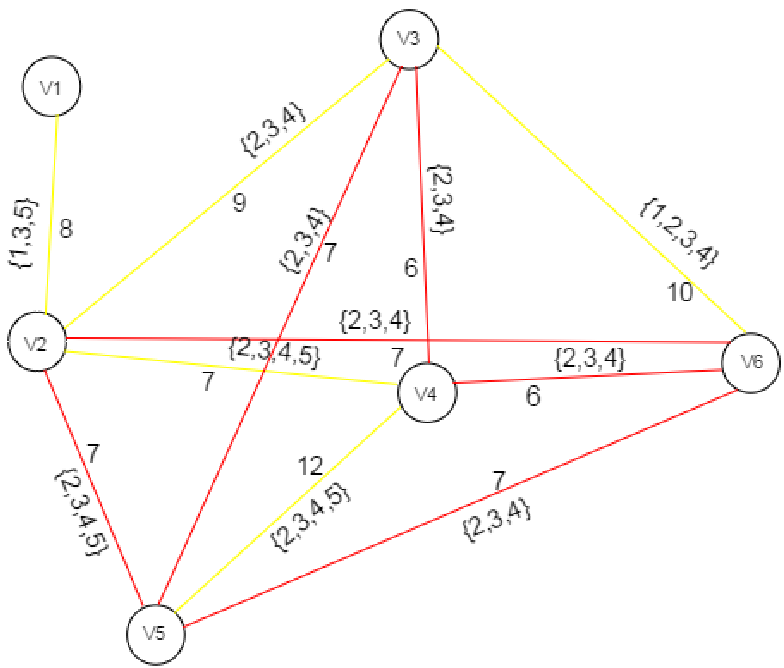 Fig 1: A visualization of the evolution process. Yellow lines represent initial connections; red lines represent new ties formed via recommendation.
Experiments and Discovery of Community
The authors conducted simulations on networks ranging from 100 to 700 nodes. A critical finding was the impact of the Mean Type used in the score function.
- Arithmetic Mean: Consistently produced dense, realistic communities. This suggests that high similarity in one "leg" of the triangle can compensate for lower similarity in the other, facilitating the closure of social triangles.
- Geometric Mean: Failed to form clear communities, resulting in a more sparse and fragmented network.
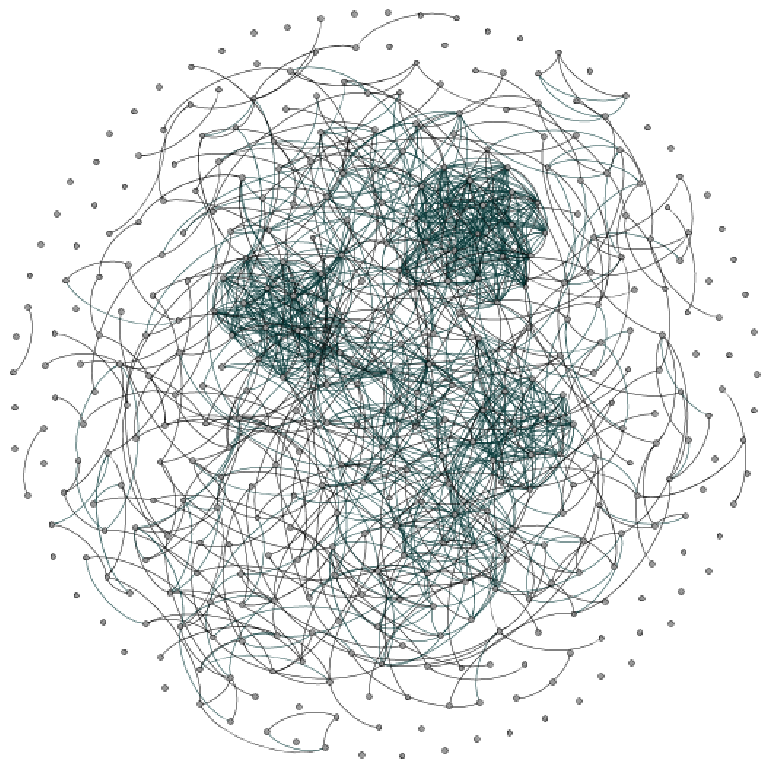 Fig 2: Evolution on 400 nodes using the Arithmetic Mean, showing clear community clustering.
Iterative Evolution: Adding New Members
The paper doesn't just look at a static group of people. In its Iterative Evolution Process, new nodes are periodically added to the network and then "vetted" through the recommendation process. This mirrors how a professional organization or a social platform grows over time, maintaining its community structure even as it scales.
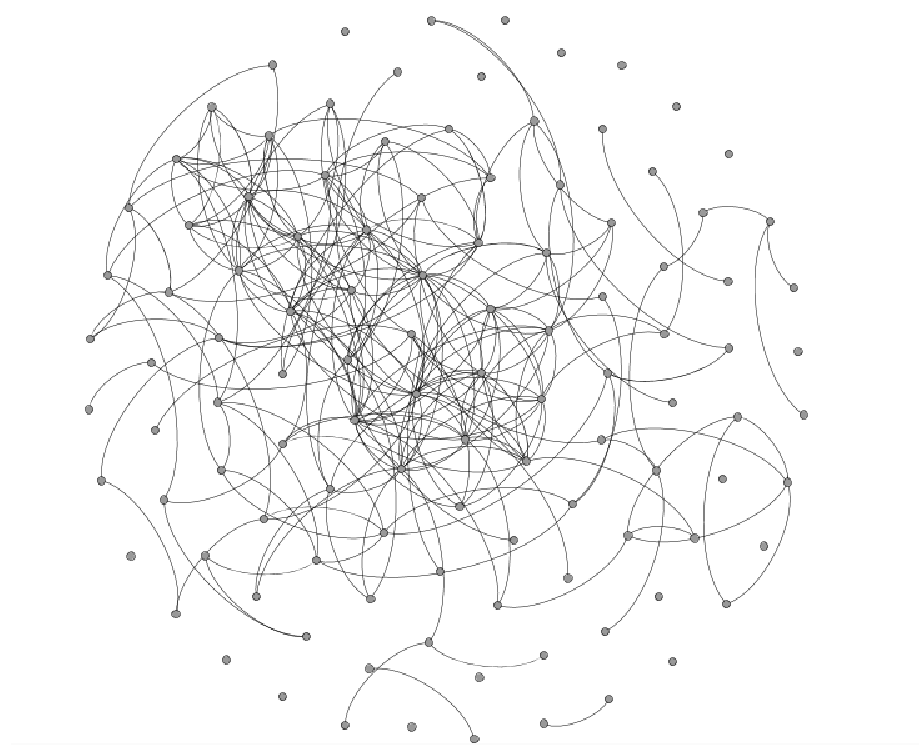 Fig 8: A snapshot of the network at time T+k, illustrating how community density is maintained during growth.
Critical Insight & Conclusion
The main value of this work lies in its validation of Decentralized Local Rules. It proves that global network properties (like the "shrinking diameter" or "community formation" observed in real life) are the emergent consequences of individual choices based on shared factors.
Limitations: The model assumes the number of factors is finite and static, whereas in reality, people develop new common interests over time. Future work could benefit from testing this model against real-world datasets (like Facebook or LinkedIn friendship logs) to calibrate the probability and threshold .