
Beyond the Database: How Embodied Cognition is Revolutionizing Digital Tourism Marketing
Experience-based Internet Marketing: An Exploratory Study of Sensory Experiences Associated with Pleasure Travel to the Midwest United States
This paper explores "Experience-based Internet Marketing" by investigating how sensory information (colors, scents, sounds) can be categorized and bundled to market tourism experiences. Using a model of embodied cognition, the authors demonstrate that consumers organize sensory inputs into meaningful "experience bundles" rather than just functional attributes.
TL;DR
This research challenges the "spreadsheet" approach to tourism websites—where price and availability dominate—and argues for a marketing strategy rooted in Embodied Cognition. By analyzing how travelers bundle colors, scents, and sounds, the authors prove that sensory patterns are the true building blocks of travel desire.
Academic Positioning: A foundational exploratory study that bridges cognitive psychology (embodied cognition) with digital marketing, shifting the focus from functional utility to multisensory experience design.
Problem & Motivation: The "Rational Consumer" Fallacy
Most destination marketing organizations (DMOs) treat potential travelers like computers searching for the best row in a database. They provide lists of hotels and distances but ignore the "why" of travel: the feeling of a lake breeze or the sound of a crackling campfire.
The authors argue that tourism is a hedonic experience. Current websites suffer from a "lack of an experiential mindset" because they don't understand how humans actually construct memories. According to the theory of Embodied Cognition, we don't just "think" about a vacation; we "feel" it through sensory inputs that work on a subconscious level.
Methodology: Mapping the Sensory Mind
The researchers sampled over 1,400 travelers to the Midwest US, asking them to describe the colors, scents, and sounds they associated with their dream trip.
To turn messy human language into data, they used:
- Neural Network Text Analysis: Identifying high-frequency sensory concepts.
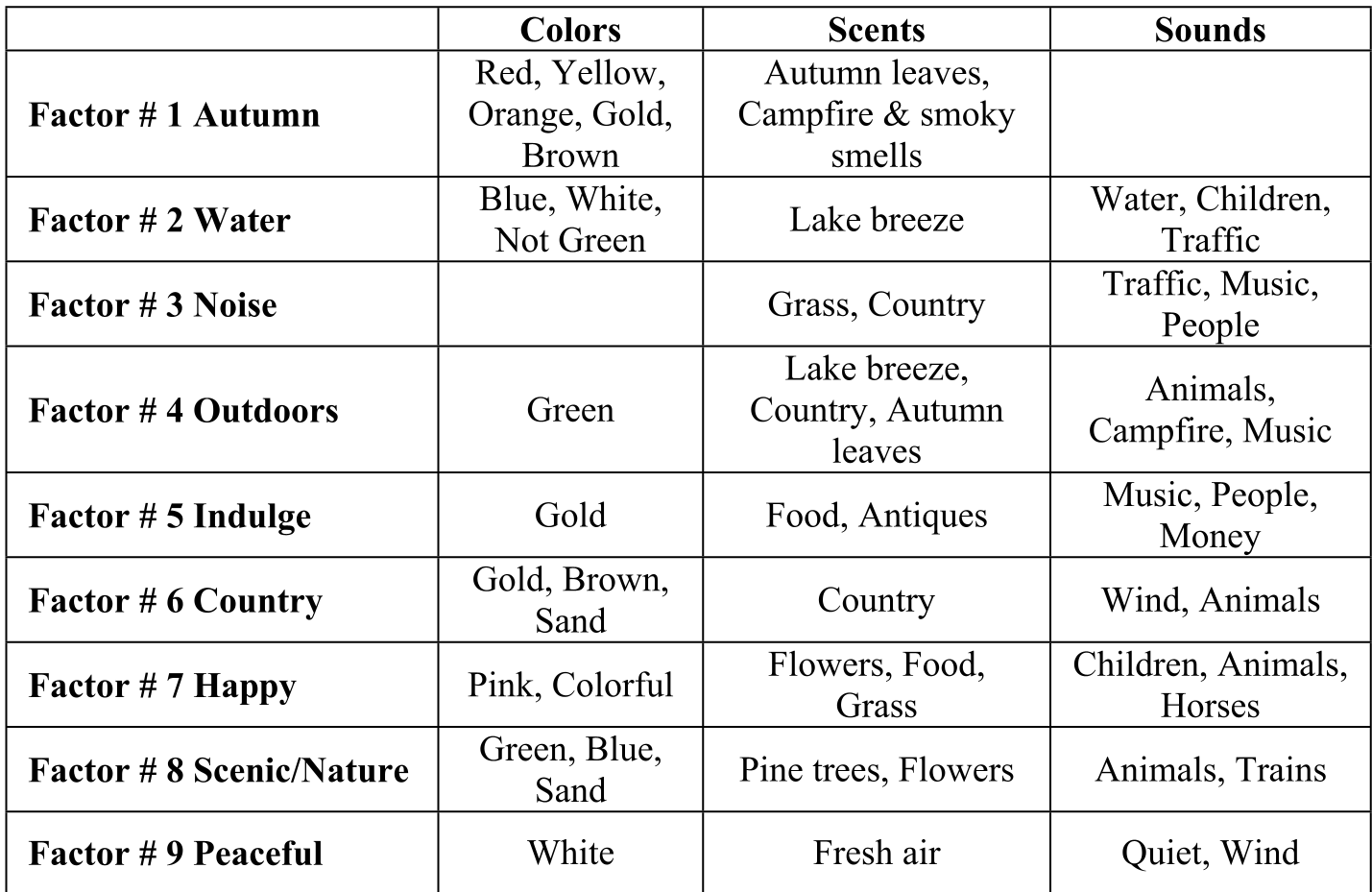
- Factor Analysis: Discovering which senses "stick together" (e.g., why do we associate the color 'Brown' with 'Wind' and 'Country'?).
- Cluster Analysis: Grouping travelers based on the specific "sensory bundles" they crave.
Key Categorization
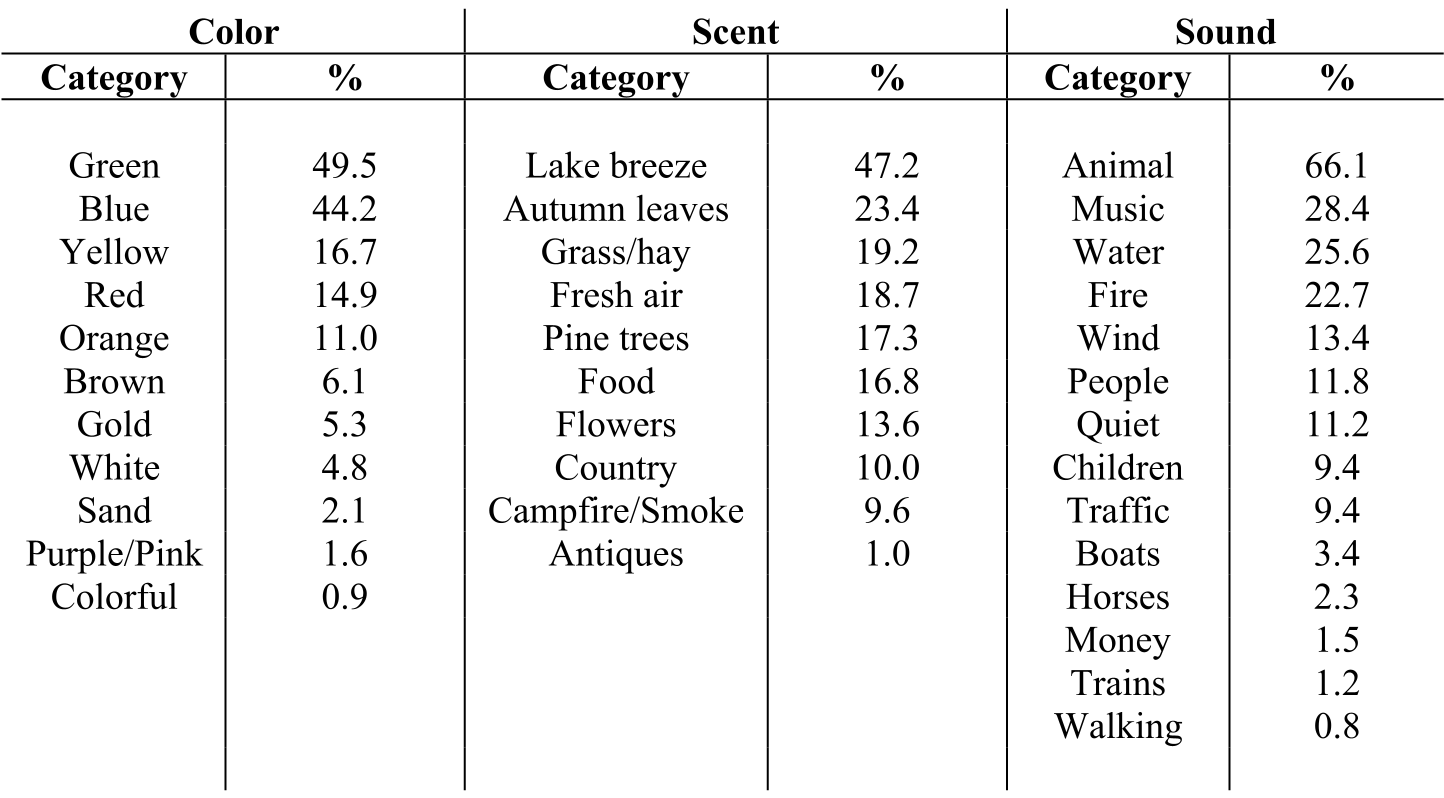
The researchers identified 11 color, 10 scent, and 14 sound categories. Green (49.5%) and Blue (44.2%) dominated the visual landscape, while "Animal sounds" were surprisingly the most anticipated acoustic element (66.1%).
Methodology Detail: The Birth of "Experience Bundles"
The most striking insight is that senses are rarely isolated. They form Sensory Domains. For example, the "Indulge" factor isn't just about food; it bundles the scent of antiques, the sound of music, and the color gold.
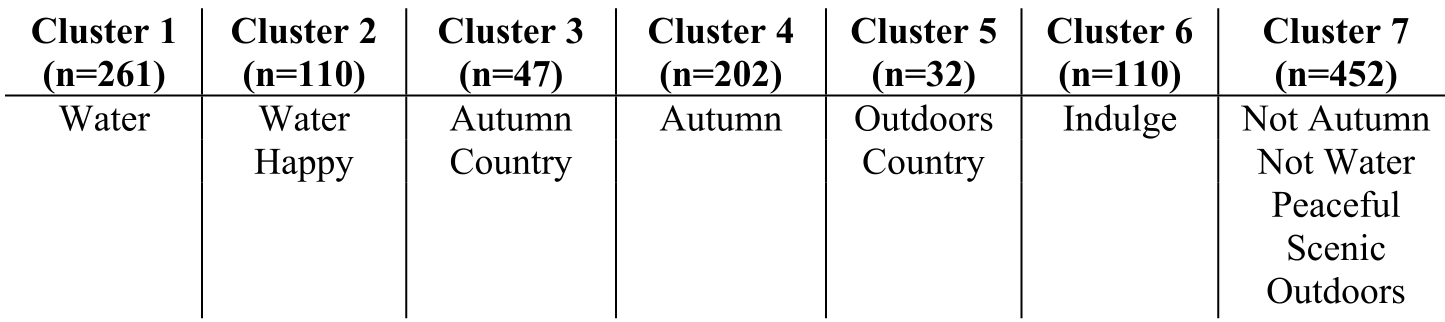
By applying K-means clustering, the authors identified seven types of travelers. Some are "Water" seekers (Cluster 1), while others are "Happy" seekers (Cluster 2) who combine water with the sounds of children and flowers.
Experiments & Results: The Power of the Bundle
The study demonstrated that these sensory bundles are highly predictive. A discriminant analysis showed a 94.5% success rate in classifying travelers into their respective experience clusters based solely on their sensory preferences.
Key Results:
- Complexity of Sound: Travelers mentioned more unique sounds (2.1 on average) than colors (1.6), suggesting audio cues are underutilized in current marketing.
- The "Peaceful" Segment: A significant portion of respondents (Cluster 7) sought a "minimalist" sensory experience—peace, quiet, and fresh air—contrasting with the high-stimulation "Indulge" or "Happy" groups.
Critical Analysis & Conclusion
Takeaway
For developers of Recommendation Systems and AI Trip Planners, this paper is a goldmine. It suggests that instead of asking "What is your budget?", systems should ask questions that evoke sensory imagery. By capturing a user’s "Sensory Profile," platforms can recommend destinations that match the feeling a user is chasing.
Limitations
- Context Specificity: The results are tied to the Midwest US in Autumn. "Experience Bundles" for a tropical beach or a metropolitan city would likely shift toward different sensory anchors.
- Missing Senses: Tactile (touch) and Gustatory (taste) senses were largely omitted due to the limitations of current web technology in 2001/2002.
Future Outlook
As we move into the era of the Metaverse and Spatial Computing (Apple Vision Pro, etc.), the "Embodied Cognition" model becomes even more critical. We are moving toward an internet that doesn't just show us a destination but attempts to simulate the presence of being there. Understanding these sensory bundles is the first step toward creating truly immersive digital tourism.