
I-SPY: Leveraging the Power of the "Community" to Solve Search Ambiguity
An Experiment in Social Search
This paper introduces I-SPY, a social search architecture that re-ranks Web search results based on the collective interaction histories of specific "like-minded" communities. By mapping queries to successful result selections within a community-specific hit-matrix, I-SPY provides a collaborative-based personalization layer on top of traditional meta-search engines.
TL;DR
The "I-SPY" system transforms Web search from an isolated activity into a collaborative social experience. By recording what members of a specific community (like AI researchers or car enthusiasts) click on, it re-ranks search results to prioritize what their peers found useful. In live trials, this "Social Search" approach improved search efficiency by 47% and significantly boosted task success rates.
Background: The Limits of "One Size Fits All" Search
Despite the sophistication of search engines like Google, they largely remain context-blind. If two people type "Jaguar," they get the same list, even if one is a zoologist and the other a car collector. Traditional personalization often requires invasive tracking of individual behavior, which raises privacy concerns and architectural complexity at scale.
The authors argue that search is inherently social. Just as a well-used book naturally falls open to the most popular pages—a concept known as "computational wear"—digital search results should reflect the "wear" left by previous searchers within a common interest group.
Methodology: The Hit-Matrix and Collaborative Ranking
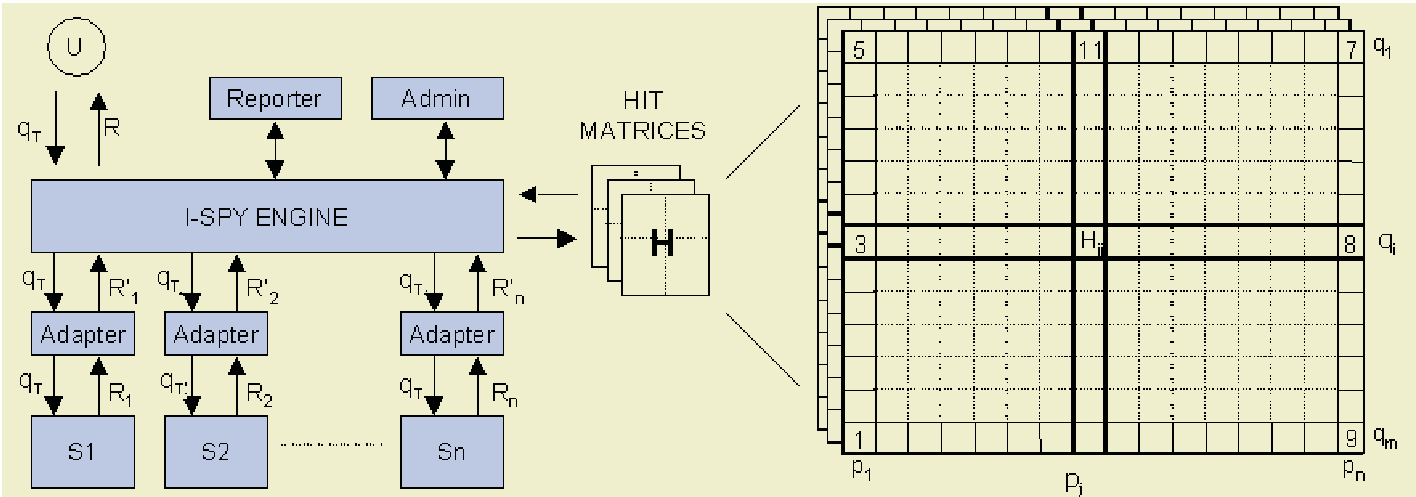
I-SPY functions as a meta-search layer. Its core innovation is the Hit-Matrix, which tracks the relationship between queries () and selected pages ().
1. Capturing Interaction Histories
Every time a user in a specific community selects a result, a counter is incremented in the matrix. This creates a domain-specific "memory" of success.
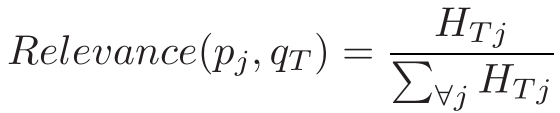
2. The Relevance Formula
The relevance of a page for a query is calculated based on its selection probability:
3. Community Isolation
Instead of one giant matrix, I-SPY supports multiple matrices for different "Social Search" communities. This ensures that the "AI researcher" community doesn't have their results "polluted" by the "Basketball fan" community when searching for "Michael Jordan."
Experimental Results: Faster and More Accurate
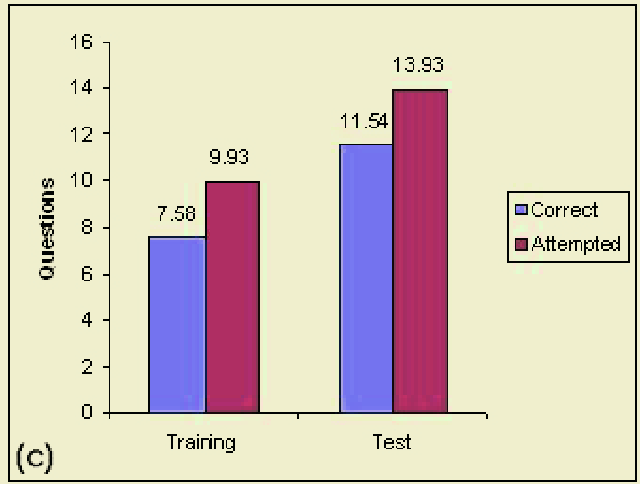
The authors conducted a live-user study with 92 computer science students tasked with answering technical questions.
- Selection Behavior: The "Test Group" (using I-SPY's social ranking) found their answers much higher in the result lists. The mean position of selected results dropped from 4.26 to 2.24—a 47% improvement in ranking precision.
- Task Performance: Students using Social Search were significantly more productive. They attempted 13.93 questions on average compared to 9.93 in the control group.
- Success Breadth: 70% of the I-SPY group passed the test (score > 40%), while only 30% of the standard meta-search group achieved the same result.
Critical Insight: Deep Personalization without Deep Privacy Risks
The brilliance of I-SPY lies in its anonymous personalization. Because the system optimizes for the community rather than the individual, it doesn't need to know who you are—it only needs to know which "search room" you are currently in. This mitigates the "Privacy vs. Personalization" paradox.
Limitations and Future Work
- The "Cold Start" Problem: New communities or rare queries won't have enough hits to provide meaningful re-ranking.
- Bias and Decay: Older pages naturally accumulate more hits, which can lead to a "rich get richer" scenario. The authors suggest a "decay model" to give more weight to recent selections, ensuring the results stay fresh.
- Adversarial Gaming: Malicious users could "spam" clicks to promote specific URLs, requiring robust fraud detection mechanisms.
Conclusion
I-SPY demonstrates that search is more effective when it's a team sport. By capturing the collective intelligence of a community, we can transform vague queries into highly targeted gateways to information, proving that the future of search may be as much about social networks as it is about information retrieval.