
The Digital Mirror: Can Virtual Agents Use Our "Vanity" to Save the Planet?
An Experimental Study on Promotion of Pro-Environmental Behavior Focusing on “Vanity” for Interactive Agent
This study investigates whether "Vanity"—the desire to appear better in the eyes of an observer—can be leveraged via interactive agents to promote Pro-Environmental Behavior (PEB). Using a chick-type CG character named "Piyota," the researchers conducted a comparative experiment between interactive and non-interactive agent conditions to measure effects on water conservation and monetary donation.
TL;DR
Can a tiny digital chick convince you to save water? This study explores using "Vanity"—our drive to look good to others—as a catalyst for pro-environmental behavior (PEB). While the research successfully proved that interactive agents make us feel more "vain" and observed, the actual behavior (saving water and donating money) remained unchanged, revealing a fascinating gap between feeling judged and acting differently.
Problem & Motivation: The Social Dilemma of Going Green
Why is it so hard to turn off the tap? PEB is a classic social dilemma: it requires individual effort for a collective gain. Historically, the presence of a human observer has been the "secret sauce" of prosociality—we act better when someone is watching because we care about our reputation.
Previous studies have shown that even a simple picture of eyes can increase supermarket donations by 48%. The authors of this paper take this a step further: If "static" eyes work, shouldn't a living, breathing, interactive digital agent work even better?
Methodology: Designing the "Judgemental" Chick
The researchers introduced Piyota, a chick-type CG character. To trigger vanity, the agent was built on three design pillars:
- Evaluation: The user must feel the agent is judging them.
- Values: The agent must express that they value the environment.
- Favorability: The user must actually like the agent.
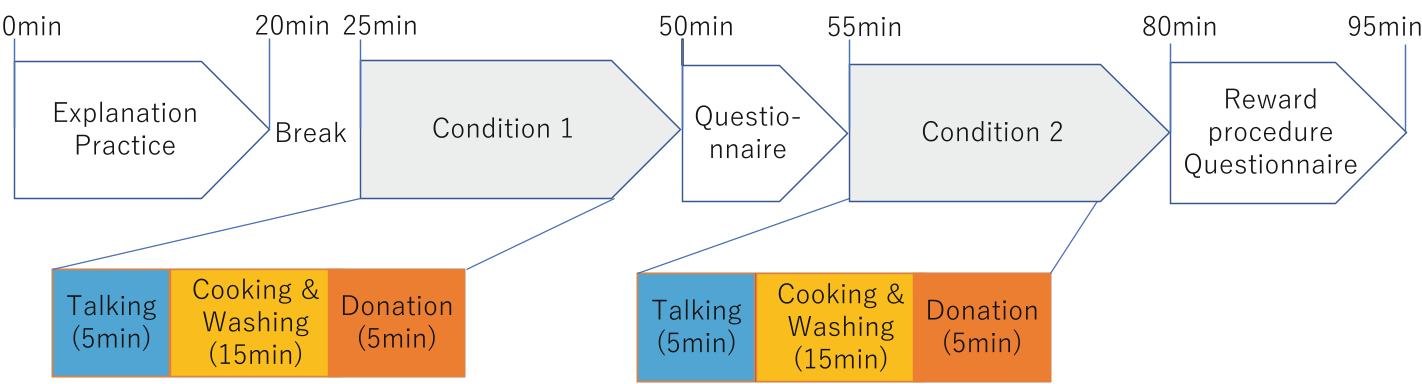
The study used a "Wizard of Oz" method, where a hidden experimenter controlled the agent's responses to make it seem truly intelligent. Participants interacted with two versions:
- Interactive: Responded to their name, reacted to being "patted" on the screen, and asked personalized questions.
- Non-Interactive: Simply delivered information without responding to the user.
The Core Results: Vanity Captured, Behavior Stalled
The experiment yielded a striking psychological success but a behavioral stalemate.
1. The Psychology Worked
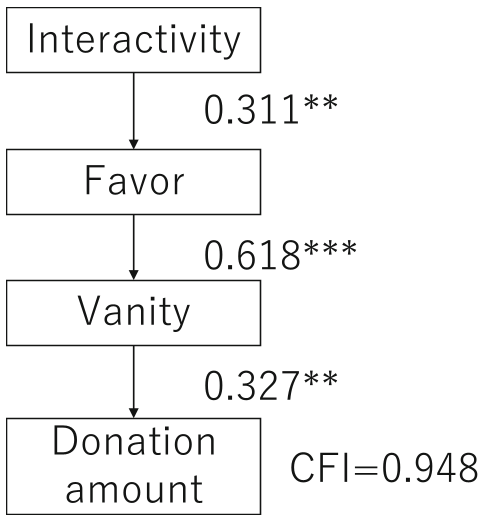
Participants reported significantly higher levels of "Vanity" when interacting with the responsive version of Piyota. They felt more "evaluated" and perceived the agent as having its own "will."
2. The Behavior Failed to Shift
Surprisingly, the amount of water used and donations made did not change significantly between the interactive and non-interactive groups.
Why the Disconnect?
The authors provide a brutally honest post-mortem of the results:
- The Consistency Bias: Participants donated twice. Most simply gave the same amount the second time to remain consistent with their first choice, regardless of the agent's interactivity.
- The Politeness Paradox: In the dishwashing task, some participants became more thorough (and thus used more water) because they liked the agent, effectively canceling out the "saving" behavior the agent requested.
Deep Insight & Future Outlook
This study is a vital reality check for Human-Agent Interaction (HAI). It proves that creating a psychological state (Vanity) is not enough to change a physical habit (Water consumption).
The takeaway for future AI designers is clear: Interactivity increases engagement and the feeling of being observed, but it can also trigger unintended "politeness" cues that might work against the intended goal. To truly drive PEB, we must design tasks where "doing good" doesn't conflict with "doing the task well."
Conclusion: We care what the digital chick thinks of us—we just haven't figured out how to let it change our chores yet.