
The Segmentation Recommender: A Meta-Learning Approach to Skin Lesion Extraction
Expert Systems With Applications
This paper introduces a novel "segmentation recommender" system for skin lesion extraction, leveraging transfer learning (VGG16/ResNet50) and crowdsourcing logic from the ISIC2017 challenge. By dynamically predicting the most suitable segmentation algorithm for a specific input image, the method achieves an improved Jaccard index of 0.786, surpassing individual state-of-the-art models.
TL;DR
In medical imaging, no single algorithm is perfect for every patient. This paper flips the script by proposing a Deep Learning Recommender that doesn't segment images itself; instead, it looks at a skin lesion and "recommends" the best algorithm from a pool of 5 SOTA methods to do the job. By combining Transfer Learning (VGG16/ResNet50) with the collective intelligence of the ISIC2017 challenge (Crowdsourcing), the authors achieved a new SOTA Jaccard Index of 0.786.
Problem & Motivation: The "One-Size-Fits-All" Limitation
In the world of automated melanoma diagnosis, accurate segmentation (isolating the lesion from healthy skin) is the critical first step. Most research focuses on creating a single, robust Neural Network (like U-Net or FCN) that can handle everything.
However, the authors noticed a crucial trend in the ISIC2017 challenge data:
- Method A might be great for high-contrast lesions.
- Method B might handle hairy skin or "Milia-like cysts" better.
- No single method won every individual image in the test set.
The Insight: If we can predict which specialized algorithm will work best for a specific image, we can achieve better results than any single algorithm could on its own.
Methodology: Crowdsourcing Meets Transfer Learning
The authors developed a three-stage framework to build this "Super-Selector."
1. Crowdsourcing Ground Truth
To train a recommender, you need labels. The authors took the top 21 methods from the ISIC2017 challenge and analyzed their performance on 600 test images. They selected the Top 5 methods (by Yuan et al., Berseth, Bi et al., Jahanifar et al., and Gutiérrez-Arriola et al.) to act as their "Expert Crowd." For every image, the label was simply the ID of the method that achieved the highest Jaccard score for that specific pixel-map.
2. Feature Extraction via Transfer Learning
Since medical image datasets are often small, the authors used Transfer Learning. They took VGG16 and ResNet50 (pre-trained on 1.2 million natural images from ImageNet) and stripped off the final classification layers.
 Figure 1: The high-level workflow of recommending a segmentation method based on image features.
3. The Recommender Classifier
The convolutional features were fed into a new set of Dense Layers (FC). The output is a Softmax layer with 5 nodes, representing the five candidate segmenters.
Experiments & Results
The authors tested both VGG16 and ResNet50 backbones. Both architectures proved highly effective at recognizing which segmenter to "hire" for a given task.
Quantifiable Gains
The performance was evaluated against the original ISIC2017 leaders:
| Method | Jaccard Idx | Dice Coef | Sensitivity |
|---|---|---|---|
| Yuan et al. (Top 1 ISIC) | 0.779 | 0.854 | 0.820 |
| Proposed (VGG16-based) | 0.786 | 0.860 | 0.832 |
| Proposed (ResNet50-based) | 0.786 | 0.861 | 0.833 |
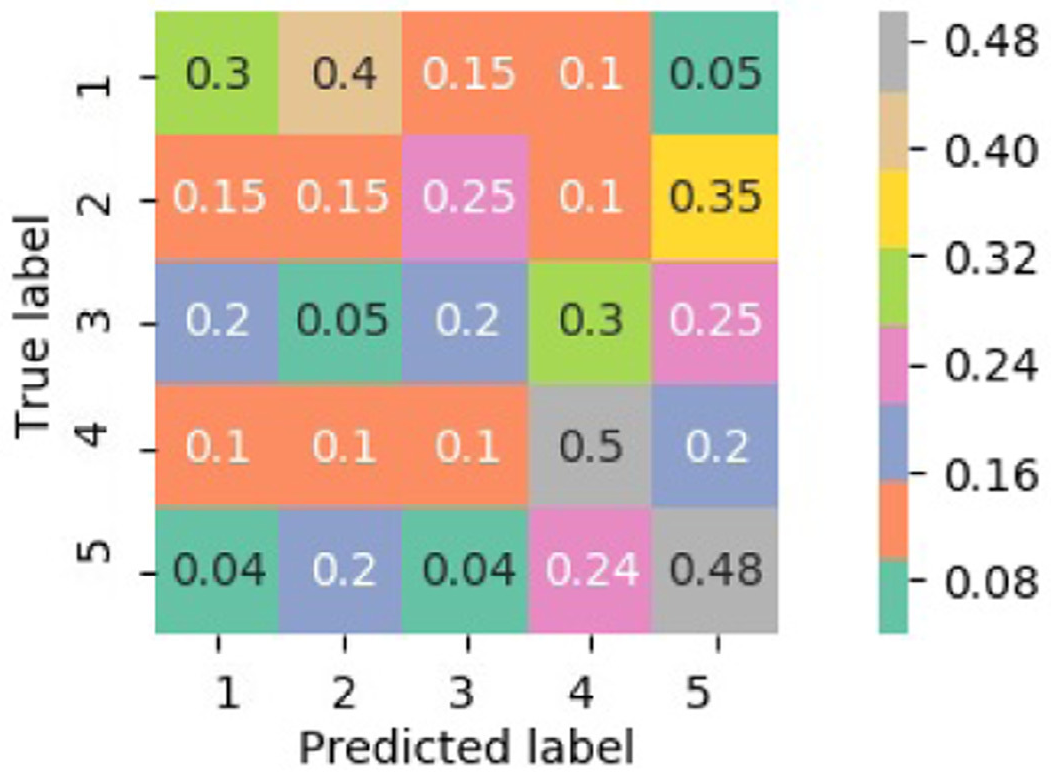 Figure 2: Training and validation curves show high accuracy (above 0.97) for the recommender, indicating it successfully learned the mapping between image visual features and the optimal algorithm.
Deep Dive: Why it Works
The confusion matrix revealed that while the system occasionally confuses similar segmenters (like Bi et al. vs. Jahanifar), it generally correctly identifies the "Expert" best suited for the lesion's morphology. The use of Data Augmentation was critical here to balance the "crowd" and ensure the classifier didn't just lean on the overall most frequent winner.
Critical Analysis & Conclusion
The "Recommender" Paradigm
This paper shifts the focus from Computer Vision to Decision Science. By treating existing SOTA models as "tools" in a toolbox, the authors have created a framework that is future-proof. As even better segmenters are released, they can simply be added as a new class in the recommender's output.
Limitations
- Computationally Heavy: To get the final mask, you theoretically need the recommender plus the infrastructure for 5 different segmentation models (though in inference, you only run the one recommended).
- Dataset Size: The study was limited to the 600 images of the ISIC test set. Generalizing this to "in-the-wild" images with different cameras and lighting remains a challenge.
Future Outlook
The authors suggest expanding this to other medical domains, such as Lung CT or Liver Tumor challenges (e.g., LiTS 2017). The core takeaway is clear: In the face of high biological variability, a dynamic ensemble is always superior to a static expert.