
PbLDext: Bridging the Accuracy-Interpretability Gap in Fuzzy Regression
Expert Systems With Applications
The paper introduces a generalized model of linguistic variables using fuzzy subpartitions and merges them into convex hulls to enhance "Perception-based Logical Deduction" (PbLD). This method benchmarks a new regression framework that maps linguistic associations mined from data to implicative fuzzy IF-THEN rules, achieving state-of-the-art interpretability and competitive precision.
TL;DR
Researchers have developed PbLDext, an enhanced version of Perception-based Logical Deduction. By introducing a flexible model of linguistic subpartitions, this method allows for complex descriptions like "Small but not extremely small" to be used in automated reasoning. The result is a regression model that rivals standard machine learning algorithms in precision while remaining entirely readable in natural language.
Background: The Interpretability Tax
In the world of data science, there is often an "interpretability tax." If you want high precision (like a Neural Network or XGBoost), you lose the ability to explain why a prediction was made. Conversely, if you want a model that a human can understand (like a simple logic rule), precision usually suffers.
The authors of this paper target this specific pain point. They leverage Fuzzy Association Rules, which look like IF-THEN statements but handle the "shades of grey" inherent in real-world data.
Methodology: Beyond Simple Fuzzy Sets
The core innovation lies in how the authors handle Linguistic Variables. Instead of static partitions (e.g., just "Small", "Medium", "Big"), they introduce Subpartitions and Convex Hulls.
1. The Flexible Subpartition Model
By allowing neighboring fuzzy sets to merge, the system can generate a much richer vocabulary. This allows the mining algorithm to find more specific relationships in the data.
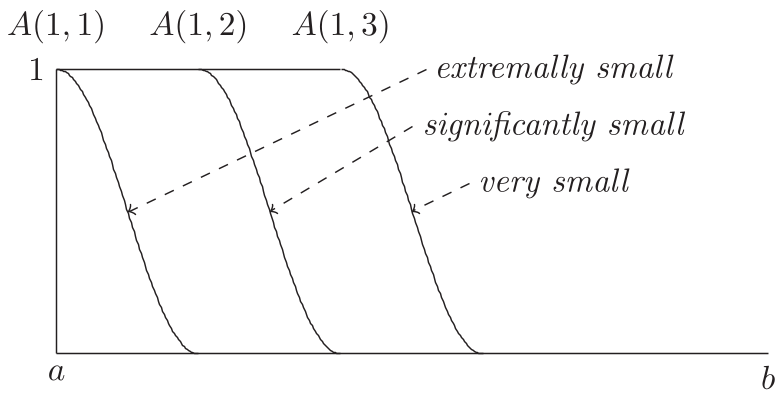 Fig 1: The extended model of linguistic associations showing subpartition merging.
2. Implicative Inference (PbLD)
Unlike many fuzzy systems that use "Mamdani" (minimum-based) inference, this work uses Łukasiewicz implication. This approach is more mathematically rigorous for logical deduction. The prediction for an input is calculated as: This ensures that the "perception" of the model is preserved through the specificity ordering of the linguistic rules.
Experimental Results: SOTA Performance
The authors tested their model against the original PbLD and a suite of 15 standard ML methods.
- Vs. Original Method: In the "Combined Cycle Power Plant" dataset, PbLDext consistently achieved lower Root Mean Squared Error (RMSE) across all confidence levels.
- Vs. Machine Learning: On the same dataset, the average RMSE of 15 ML methods (including ANN and SVM) was around 5.07. PbLDext achieved 4.96, effectively "canceling" the interpretability tax.
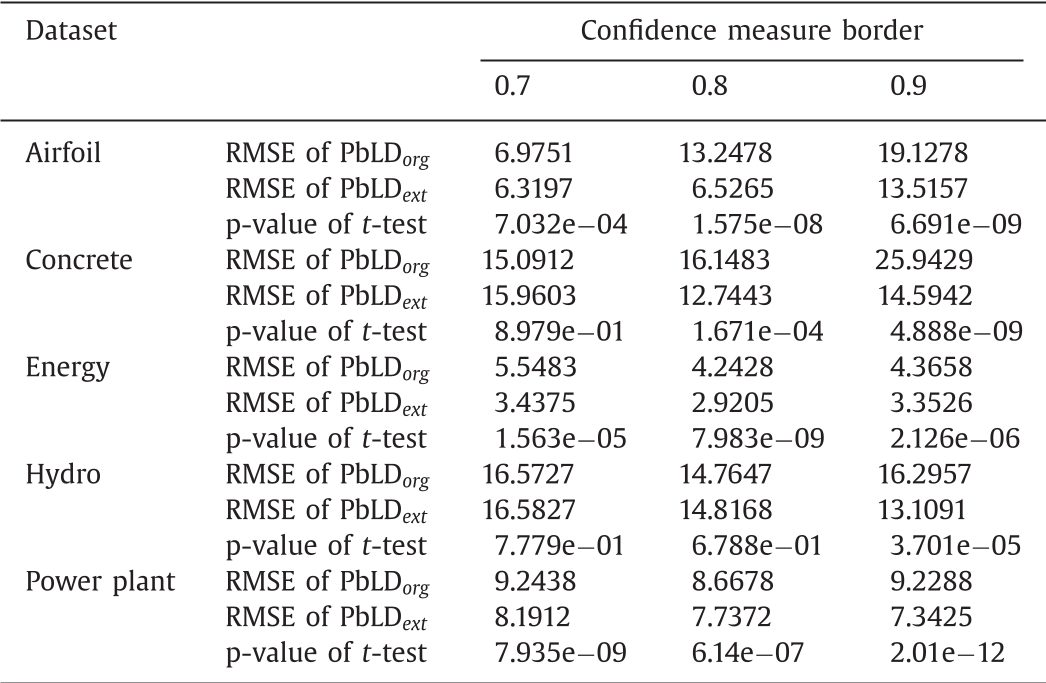 Fig 2: Statistical significance tests showing PbLDext outperforming PbLDorg across various datasets.
Analytical Insights: Why It Works
The success of PbLDext stems from its Specificity Ordering. When the model sees a new data point, it doesn't just average all rules; it finds the most specific rule that fits. If you provide a very precise input, the model responds with a very precise linguistic rule.
However, there is a catch: the number of mined rules increases significantly when using subpartitions. For the "Energy Efficiency" dataset, PbLDext mined nearly 10x more rules than the original method. To handle this, the authors successfully integrated the Lift measure to prune low-quality rules without sacrificing accuracy.
Conclusion & Future Outlook
This work proves that fuzzy logic isn't just a relic of the past; with modern subpartitioning techniques, it is a powerful tool for Explainable AI (XAI).
Future Work: The authors suggest exploring "Hesitant Fuzzy Sets" or "Rough Sets" to handle even more uncertainty. For those in industrial sectors (like power plant management), this method offers a way to have the best of both worlds: a model that is as accurate as a black box but as clear as a manual.
Main Takeaway: By refining the mathematical "granularity" of linguistic variables, we can achieve machine-learning-level precision in a human-readable format.