
T-Random: Capturing the Pulse of Expertise in Shifting Social Networks
Expertise Search in a Time-Varying Social Network
This paper introduces a temporal random walk model for expertise search in time-varying, heterogeneous social networks (e.g., academic networks). The method, called T-Random, integrates forward-and-backward temporal propagation to capture the evolution of authority over time, outperforming traditional PageRank by 17.2% in Mean Average Precision (MAP).
TL;DR
Static ranking is no longer enough for the fast-paced world of academia and social media. This paper presents T-Random, a temporal random walk model that integrates time-forward and time-backward propagation into a heterogeneous graph. It solves the "stale expert" problem, delivering a 17.2% improvement in MAP over traditional PageRank by distinguishing between historical prestige and current relevance.
The "Stale Expert" Problem: Why PageRank Fails
Imagine you are looking for a reviewer for a cutting-edge paper on Deep Learning. A traditional search engine might recommend a legendary professor who hasn't published in the field for a decade. While their historical authority is high (high PageRank), their current expertise is low.
Existing methods suffer from two fatal flaws:
- Homogeneity Bias: They treat different entities (authors, papers, venues) as the same type of node.
- Temporal Blindness: They ignore the evolution of interests and trends. Authority in 1995 is treated with the same weight as authority in 2025.
Methodology: Temporal Random Walk
The authors transform the academic network into a multi-layered, time-varying graph.
1. The Heterogeneous Intra-time Network
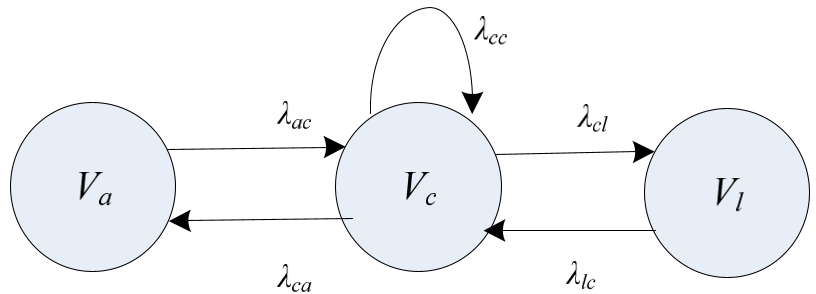
Within a single time slice, the model captures relationships between papers (citations), authors (authorship), and venues (publication). The transition probability is weighted based on user behavior (e.g., researchers are more likely to click a cited paper than a venue link).
2. Forward-Backward Propagation
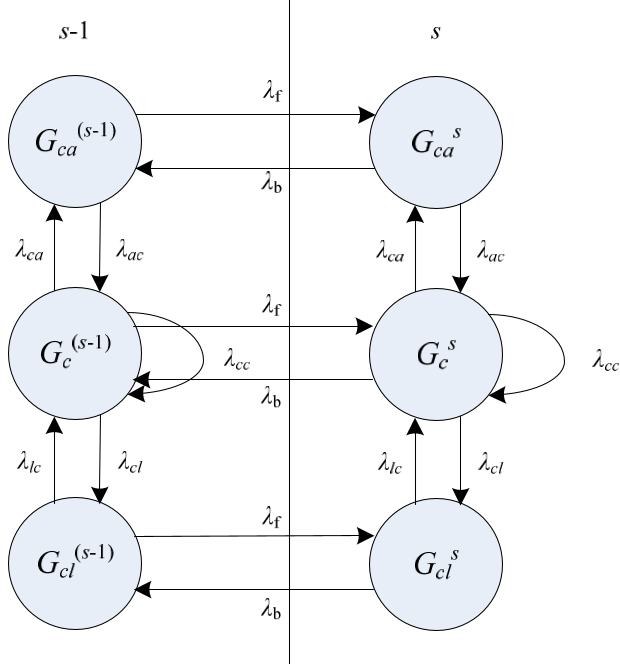
The breakthrough lies in how different time slices are connected. A surfer doesn't just wander within a year; they move across time:
- Forward Probability (): Represents how past authority influences future potential.
- Backward Probability (): Represents how current activity validates past work.
- Virtual Nodes: To prevent inactive experts' scores from dropping to zero instantly, "virtual nodes" act as a smoothing technique, allowing a gradual decay of expertise.
Experimental Showdown
The model was tested using the Arnetminer dataset, spanning 33 years of academic data.
| Method | Average MAP | Improvement vs. PageRank |
|---|---|---|
| Language Model | 54.9% | +38.3% |
| PageRank | 39.7% | - |
| T-Random | 56.9% | +43.3% |
Sensitivity to "Rising Stars"
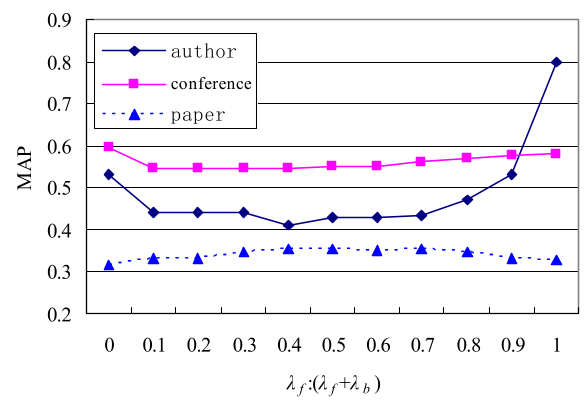
The analysis shows that Author ranking is significantly more sensitive to time than paper or conference ranking. This reflects the physical reality: research interests shift (e.g., from symbolic AI to Neural Networks), and new experts emerge ("Rising Stars") faster than journals or conferences change their focus.
Case Study: The Evolution of Interests
The authors tracked researcher Raymond Mooney. While PageRank might see him as a general "Machine Learning" expert, T-Random successfully mapped the evolution of his career: from Theory Refinement in the late 80s to Natural Language Processing and Text Mining in the late 90s and 2000s.
Critical Insight & Conclusion
T-Random proves that Ranking is not a static property of a node, but a dynamic state of a network. By allowing authority to flow through temporal edges, the model successfully balances "freshness" and "prestige."
Limitations: The model relies on predefined time-window sizes (e.g., 5 years). In faster-moving domains like Twitter/X or News, these windows might need to be dynamic or much smaller to capture the "pulse" of the network effectively.
Future Work: Integrating the content-based relevance of Language Models with the structural-temporal power of T-Random could create a truly "all-knowing" expertise search engine.