
SRSN vs. DSN: Is Your Facebook Friend List the Secret to Efficient Mobile Routing?
Exploiting Self-Reported Social Networks for Routing in Ubiquitous Computing Environments
This paper investigates ubiquitous computing routing by comparing Self-Reported Social Networks (SRSNs) from Facebook with Detected Social Networks (DSNs) derived from physical sensor encounters. It demonstrates that SRSNs can achieve comparable delivery ratios to DSNs while significantly reducing communication overhead in Delay-Tolerant Networks (DTNs).
TL;DR
In the world of Delay-Tolerant Networks (DTNs), we usually wait for nodes to "discover" each other to build routing tables (Detected Social Networks). This paper challenges that status quo by proving that your Facebook friends list (Self-Reported Social Network) is actually a more efficient routing guide. While it delivers nearly as many messages as detected networks, it does so at 60% lower cost, effectively solving the "bootstrapping" problem in ubiquitous computing.
Problem & Motivation: The Discovery Delay
Ubiquitous computing environments—ranging from disaster relief to rural connectivity—often lack fixed infrastructure. In these "Pocket-Switched Networks," messages hop between mobile devices like a relay race.
The standard approach is to use Detected Social Networks (DSN): your phone watches who it bumps into and assumes frequent contacts are "socially close." However, this has two fatal flaws:
- Bootstrapping Time: It takes weeks of data collection to identify a reliable community.
- The Invisible Tie: You might be best friends with someone you rarely see physically; a DSN would ignore this path, whereas a Self-Reported Social Network (SRSN) captures it instantly.
Methodology: Structural vs. Role Equivalence
The researchers deployed sensor motes among 27 participants for 79 days. To compare the "Digital vs. Physical" reality, they used two advanced Social Network Analysis (SNA) metrics:
- Structural Equivalence: Do two nodes share the exact same set of friends? (Lower Euclidean distance = higher equivalence).
- Role Equivalence: Do two nodes behave similarly in the network (e.g., are they both "hubs" or "outliers")?
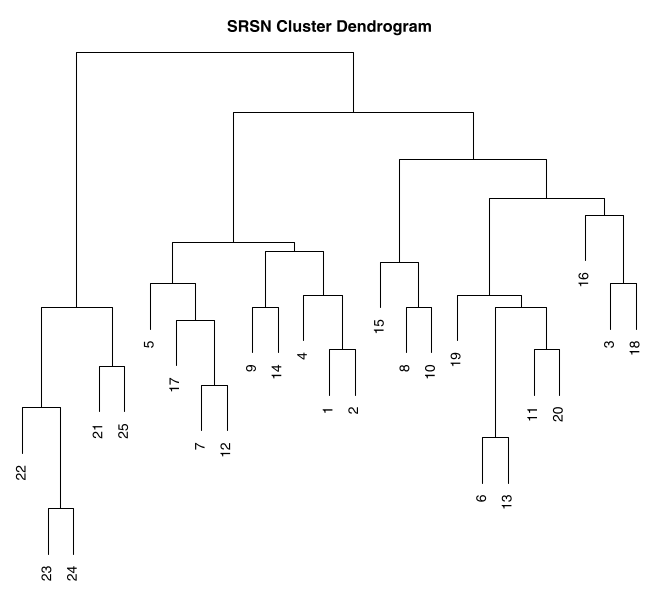 Figure 1: Comparison showing that DSNs (right) are significantly more dense and "noisy" than SRSNs (left).
The Insight: Clearer Boundaries
By analyzing Dendrograms (tree diagrams), the authors found that SRSNs have much more distinct roles—such as a dedicated "Postgraduate/Staff" cluster versus a student "Clique." In contrast, the DSN was a messy web of accidental encounters, making it harder to identify efficient routing paths.
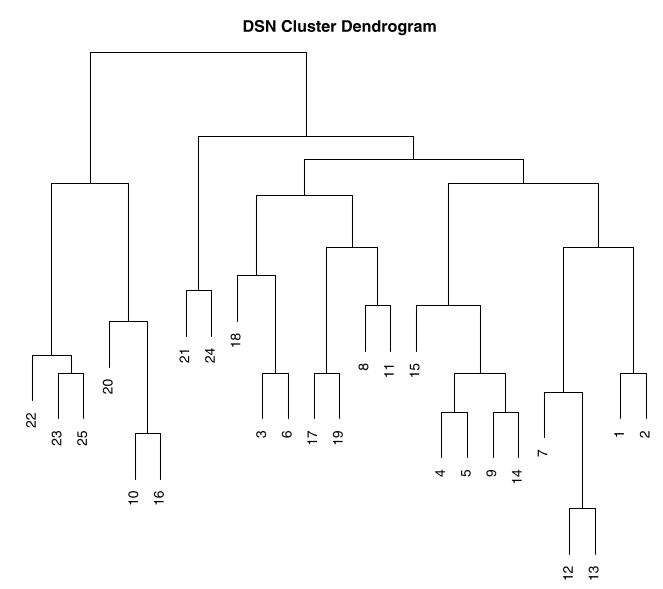 Figure 2: The hierarchical clustering of nodes. Closer branches indicate stronger structural equivalence.
Experiments & Performance: Leaner is Better
The team ran trace-driven simulations comparing routing performance across varying Time-to-Live (TTL) values for messages.
1. Delivery Ratio
While DSN had a statistically significant lead in delivery (+~5%), the SRSN held its own remarkably well. Both reached a plateau at ~26% delivery, constrained primarily by the physical movement of the participants rather than the routing logic.
2. Delivery Cost (The Winning Edge)
This is where SRSN shines. Because it is "sparser" and more intentional, it avoids the broadcast storm effect of DSN.
- DSN Cost: ~187 medium accesses per message.
- SRSN Cost: ~73 medium accesses per message.
Verdict: Using SRSN data reduces network congestion and saves battery life by over 50% while maintaining comparable performance.
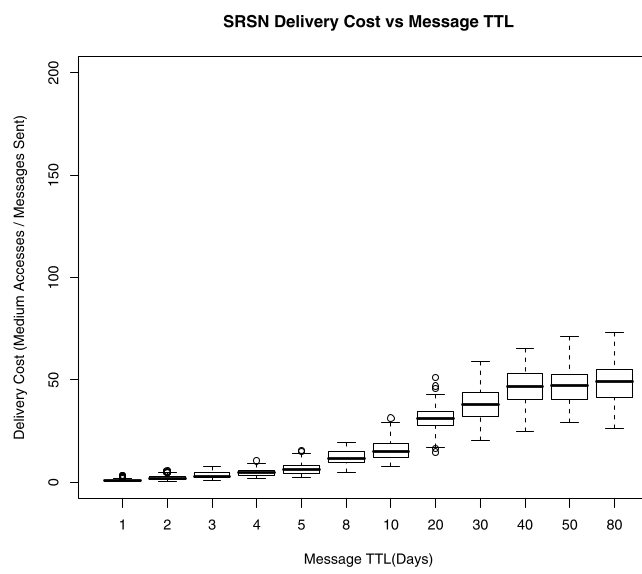 Figure 3: While DSN delivers slightly more, the trends are nearly identical, proving SRSN is a viable proxy.
Critical Analysis & Conclusion
This work provides a refreshing take on the "Social-Aware Routing" paradigm. By identifying that digital ties are a high-fidelity proxy for routing utility, the researchers offer a way to bypass the slow warm-up period of ad-hoc networks.
Limitations: The study is focused on a specific cohort (University students/staff). In more heterogeneous environments, the correlation between Facebook friends and physical encounters might fluctuate.
Future Outlook: The true potential lies in Hybrid Routing. Initializing a network with SRSN data and then refining it with DSN-based encounter records as the system matures could provide the "best of both worlds"—immediate availability and long-term optimization.
Takeaway for Practitioners: If you are building a decentralized app today, don't wait for your users to meet to map the network. Bootstrap your routing table with their existing social graph; the efficiency gains are too large to ignore.