
CoCo: Leveraging Social Logic to Solve the Data Scarcity in Mobile Sensing
19032_Exploiting Social Networks for Large-Scale Human Behavior Modeling.
The Cooperative Communities (CoCo) framework is a mobile sensing paradigm that leverages social networks to personalize human behavior classification models. By sharing training data and model parameters among socially similar users, CoCo achieves SOTA performance in activity recognition while drastically reducing the per-user data labeling burden.
TL;DR
The Cooperative Communities (CoCo) framework tackles the fundamental trade-off in mobile sensing: the need for personalized models versus the high cost of manual data labeling. By exploiting the inherent similarities within social networks (friends, colleagues, and co-occurrent individuals), CoCo allows users to share models and data, achieving superior classification accuracy with a fraction of the manual effort.
Background: The Personalization Paradox
Mobile sensing has transitioned from lab settings to everyday smartphones, but a core challenge remains: Diversity. Two people performing same "walking" activity may produce vastly different sensor signatures due to physical differences (height, gait) or context (phone in bag vs. pocket).
- Single models fail to generalize to this diversity.
- Isolated personalized models require each user to spend hours labeling their own data—a non-starter for mass-market apps.
The authors' core insight is that social ties are not just social; they are proxies for physical and behavioral similarity. People in the same social circle often share environments, activities, and even physiological traits, making their sensor data highly compatible.
Methodology: The Social Similarity Graph
The CoCo framework operates in two distinct phases: building a similarity map and then using it to find "data neighbors."
1. Constructing the Graph
CoCo aggregates multiple social signals into a single weighted graph:
- Friendship: Direct links from social media or surveys.
- Collocation: Spatial proximity detected via GPS/Bluetooth.
- Temporal Co-occurrence: People who follow similar routines at similar times.
The mathematical intuition is simple: use histograms of time/location data to calculate a similarity score () between any two nodes. This approach is 7,200x faster than calculating similarity through raw sensor data comparisons (seconds vs. hours).
2. Guided Search & Sharing
Instead of a brute-force search—which doesn't scale as the user base grows—CoCo uses the graph to guide a search within "cliques."
- Data Sharing: A user pools their small labeled dataset with data from highly similar users to train a robust model.
- Model Sharing: A user tests pre-trained models from similar users and adopts the one that performs best on their local mini-sample of data.
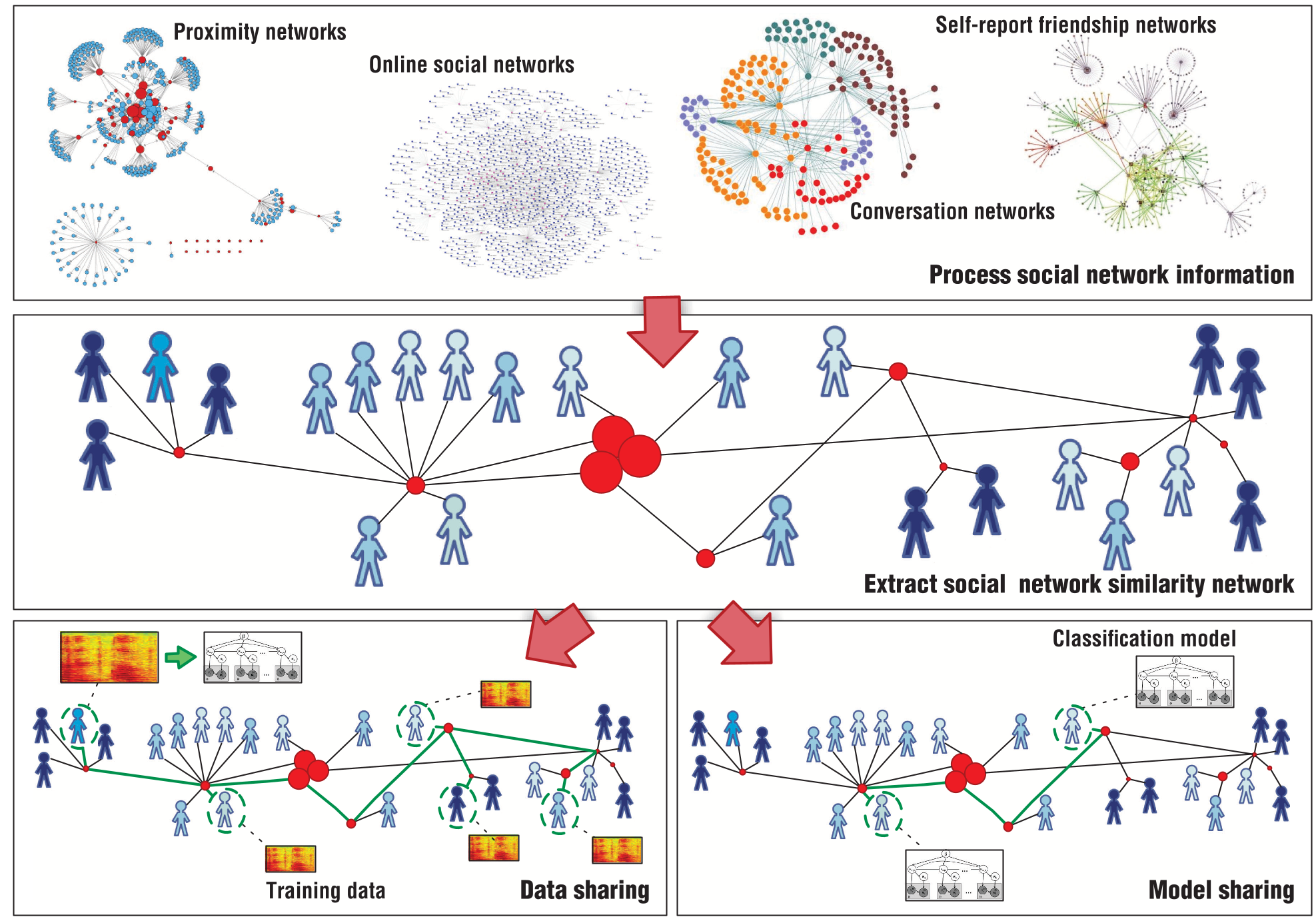 Figure 1: The CoCo framework workflow, from social data to personalized models.
Experiments & Results
The researchers tested CoCo across three diverse domains: everyday activities, significant place detection, and transportation modes.
- Efficiency Gains: In the transportation dataset, CoCo reached peak accuracy with 75% less data than isolated models.
- Robustness: On the "Everyday Activities" dataset (20 users), CoCo consistently maintained a lead of 5-10% in accuracy over traditional baselines regardless of the total labeling time invested.
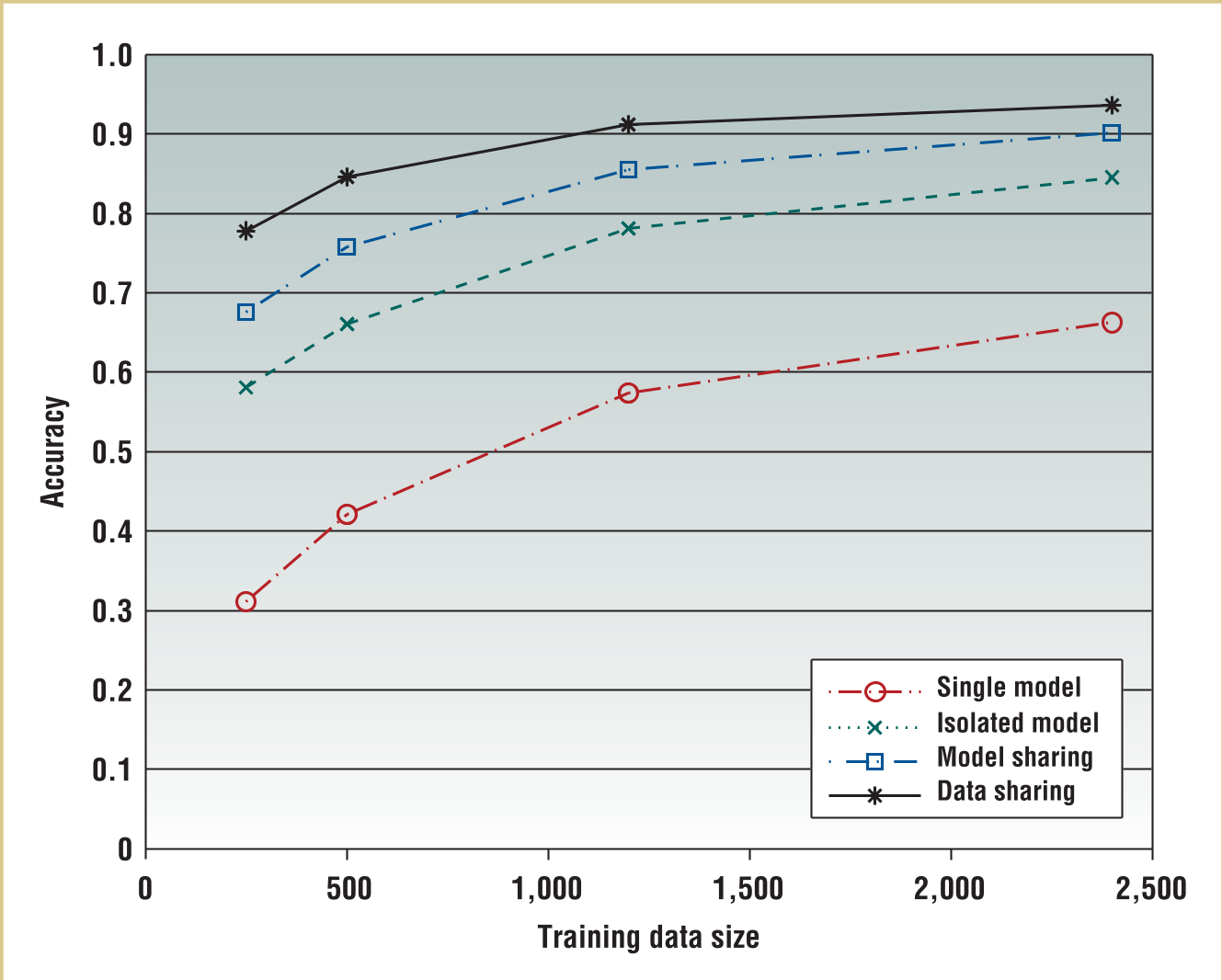 Figure 2: Performance on everyday activities. Note how CoCo dominates, especially when training data is scarce.
Critical Analysis & Deep Insight
One of the most fascinating findings in the paper occurs in the "Significant Places" experiment. The authors noted that accuracy sometimes decreased as more data was added.
- The Semantic Gap: Different users have different internal definitions of what a "significant place" is (e.g., is a coffee shop "work" or "social"?).
- CoCo's Resilience: Interestingly, the Model Sharing variant of CoCo was more robust to this label noise than the Data Sharing variant. This suggests that when social communities have conflicting definitions, sharing a "curated" model is safer than merging raw, noisy labels.
Limitations
While powerful, CoCo relies on the availability of social signals. In scenarios where users are socially isolated or in highly unique environments, the framework defaults back to isolated learning. Furthermore, the paper briefly touches upon data pollution—if one user provides bad labels, it could potentially degrade the models of their entire social clique.
Future Outlook
CoCo represents a shift toward Hybrid Sensing Systems. Moving forward, the integration of reputation systems (to weight the quality of shared data) and privacy-preserving techniques (like Federated Learning) could make CoCo the standard for large-scale, privacy-aware behavior modeling in the next generation of mobile OS.
Takeaway
If you want to understand a user, don't just look at their data—look at their community. Social logic is a powerful shortcut for machine learning in the physical world.