
Beyond the Contract: How Vendor Networks Mirror ITO Governance
Exploring IT Outsourcing Governance with Vendor’s Interpersonal Networks: A Case Study
This paper explores the relationship between intra-organizational interpersonal networks and IT Outsourcing (ITO) governance from a vendor's perspective. Using a mixed-methods approach (SNA and interviews), it identifies how high consistency between formal and informal networks signifies a "Hierarchy" form of governance in long-term outsourcing dyads.
TL;DR
Successful IT Outsourcing (ITO) is often credited to robust contracts, but the "hidden" architecture of interpersonal networks inside the vendor firm tells a different story. This study demonstrates that when a vendor's formal and informal communication networks are nearly identical, it signals a Hierarchy governance form—a structure often reinforced by geographical distance and virtual-first communication.
Background Positioning
While most ITO literature obsesses over why clients outsource (the "What"), this research dives into the How. Positioned at the intersection of Social Capital Theory and IT Governance, it shifts the lens to the vendor's side of the dyad, using a single-case study of a Nordic IT giant ("Alpha") and its long-term client ("Beta").
Problem & Motivation: The Blind Spot in Governance
Existing research typically views ITO governance through the lens of the client-vendor contract. However, the authors argue that governance also emerges through daily interactions within the organizations involved.
- The Gap: We don't fully understand how the internal "social fabric" of a vendor firm impacts the outsourcing relationship.
- The Intuition: Interpersonal communication networks reflect organizational structure. By analyzing these networks, we can "see" the true governance form beyond what is written in the Service Level Agreement (SLA).
Methodology: A Mixed-Method Deep Dive
The researchers used a sophisticated two-pronged approach to study a team of 24 Alpha employees:
- Qualitative: Open-ended interviews to identify perceptions of coordination and conflict.
- Quantitative: Social Network Analysis (SNA) to map five types of networks (Formal/Informal x Face-to-Face/Virtual + Social).
The Moments of Governance (MoG) Framework
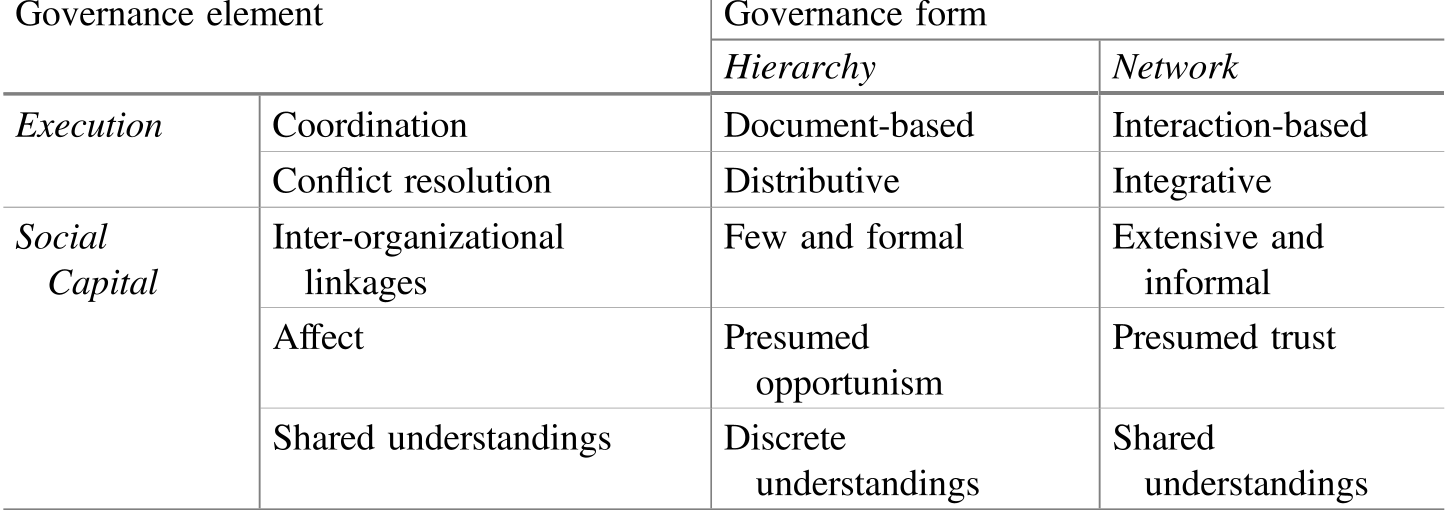
The study adopts the MoG model, which contrasts Hierarchy (document-based, formal, presumed opportunism) with Network (interaction-based, informal, presumed trust) governance.
Core Findings: The "Echo" of Hierarchy
The study produced a "chain of evidence" linking internal communication to external governance:
1. Document-Centric Reality
Interviews confirmed that coordination with the client relied heavily on the ITO contract. When conflicts arose, the contract was the primary source of judgment. This is a classic hallmark of Hierarchical governance.
2. High Network Consistency
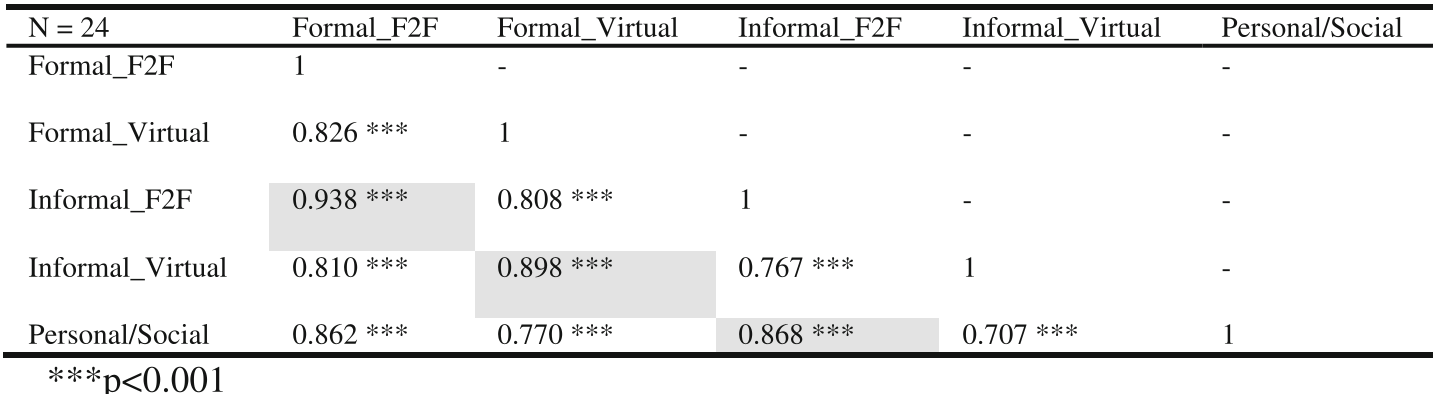
The SNA results were revealing. The Quadratic Assignment Procedure (QAP) showed a correlation coefficient of 0.938 between formal and informal face-to-face networks.
- Insight: This suggests that informal talk only happens within the brackets of formal meetings. There is very little "extra" social interaction, reinforcing a rigid, formal structure.
3. Virtual Reinforcement
As the team was geographically dispersed (Finland, Sweden, Russia, Czech Republic), virtual communication density was notably higher than face-to-face density.
Critical Analysis & Conclusion
Takeaway: The study proves that "Network Consistency"—the degree to which formal and informal networks overlap—is a powerful indicator of governance. In this case, high consistency mirrored a hierarchy.
Limitations:
- Single Case: Findings from a Nordic giant might not apply to agile, smaller vendors.
- The "Bridge" Exception: One interviewee exhibited high trust and informal efficiency with the client, suggesting that even within hierarchies, "network-form" individuals can exist as outliers.
Future Outlook: If organizations want to move from a rigid Hierarchy to a high-trust Network governance form, they must actively cultivate informal ties that don't just overlap with scheduled meetings. For managers, the message is clear: watch your team's internal social graph—it is the true face of your governance.