
Beyond Play: Can the Next Generation Revolutionize Crowdsourcing?
Exploring the Potential of Children in Crowdsourcing
This paper explores the integration of children into the crowdsourcing ecosystem, traditionally an adult-dominated domain. Using the CrowdFlower platform, the researchers employed a four-stage "divergent-convergent" methodology—generating, evaluating, and ranking ideas—to identify viable concepts for child-centric crowdsourcing, ultimately highlighting "Parent-Child Collaboration" in creative tasks as the most promising avenue.
TL;DR
Crowdsourcing has long been the playground of adult "workers," but a new study from the Eindhoven University of Technology suggests it’s time to invite children to the table. By leveraging a multi-stage ideation process, researchers found that both parents (93% approval) and the general crowd are eager for platforms where children contribute to book illustrations, game testing, and scientific brainstorming. The key? A "Parent-Child Collaboration" model that balances creativity with safety.
The "Child Gap" in Digital Innovation
Traditional User-Centered Design (UCD) often treats children as subjects to be observed. While companies like LEGO and IKEA have dabbled in child-led design, the scalable, task-oriented world of Crowdsourcing remains largely off-limits to minors.
The motivation for this research is simple: adults are constrained by "functional fixedness"—we see things as they are. Children see things as they could be. The paper argues that by excluding children, the crowdsourcing industry is missing out on a massive reservoir of lateral thinking and "unembarrassed" creativity.
Methodology: Crowdsourcing the Future of Crowdsourcing
The researchers didn't just speculate; they used the "Crowd" to design for the "Child." Following the framework of Nickerson and Sakamoto, they executed a four-stage funnel:
- Stage 1 (Divergence): 100 workers proposed raw ways to involve children.
- Stage 2 & 3 (Convergence): Ideas were categorized into themes like Playfulness and Inspiration and then ranked by preference.
- Stage 4 (Synthesis): The top-tier values were baked into three business concepts for final voting.
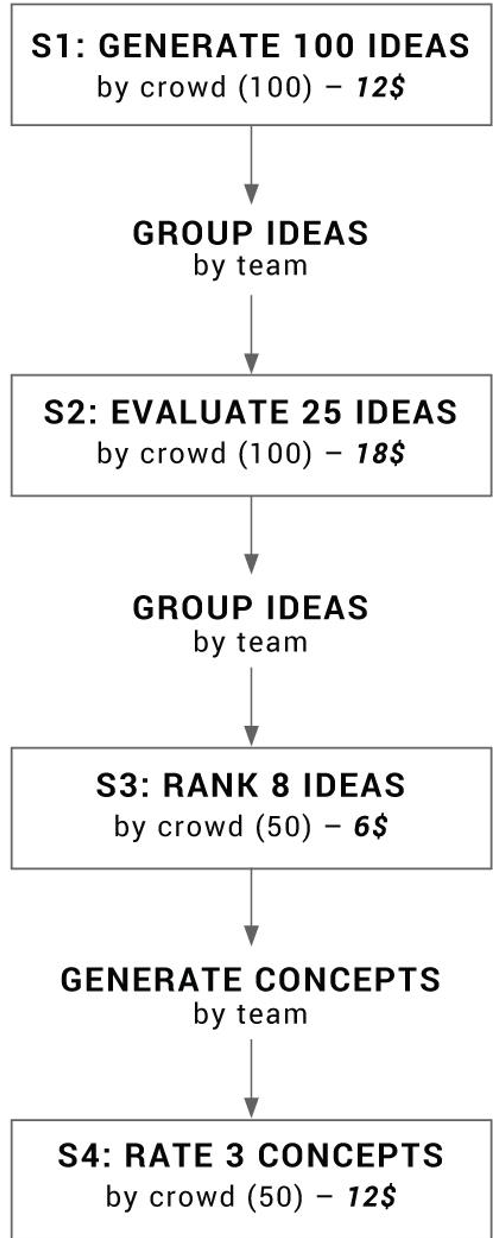 Figure 1: The iterative process of moving from raw crowd ideas to refined application concepts.
Key Insights: What Tasks Suit the "Young Crowd"?
Not all tasks are created equal. The study identified five core categories where children could excel:
- Testing and Tasks (25%): Feedback on games, books, or apps.
- Playfulness (22%): Solving problems through "Gamified" tasks.
- Collaboration (17%): Working with peers or parents.
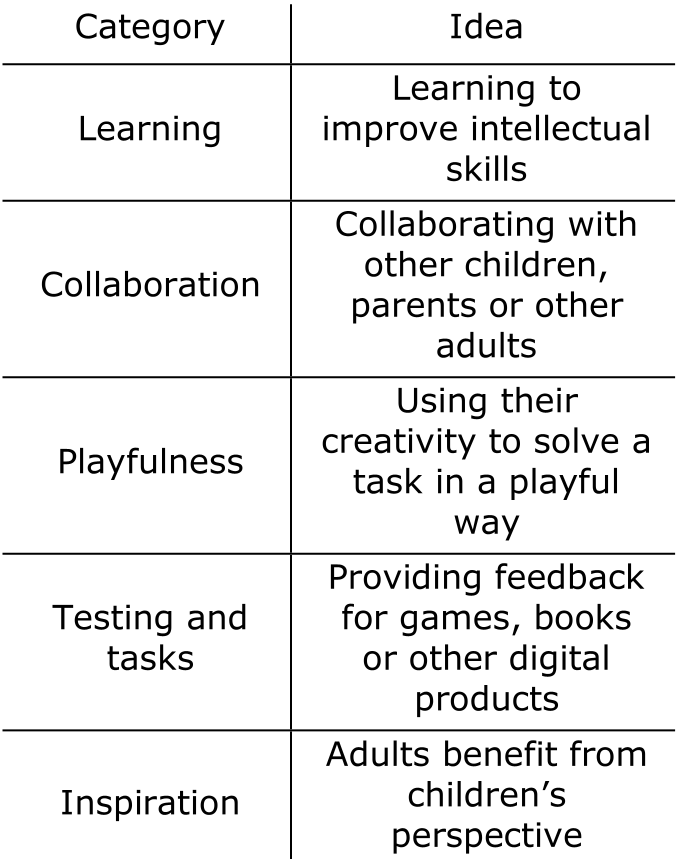 Table 1: The spectrum of potential engagement roles for children.
The "Winner"? The Book Illustration Concept. The crowd loved the idea of publishing houses requesting drawings from children. Why? Because it "allows children to stay children" while providing a clear business model where parents act as proxies for communication and payment.
Critical Results: Parental Enthusiams vs. Ethics
One of the most striking findings is the high level of support from parents. 93% expressed a willingness to involve their children, citing "collaboration" and "hobbies" as primary drivers.
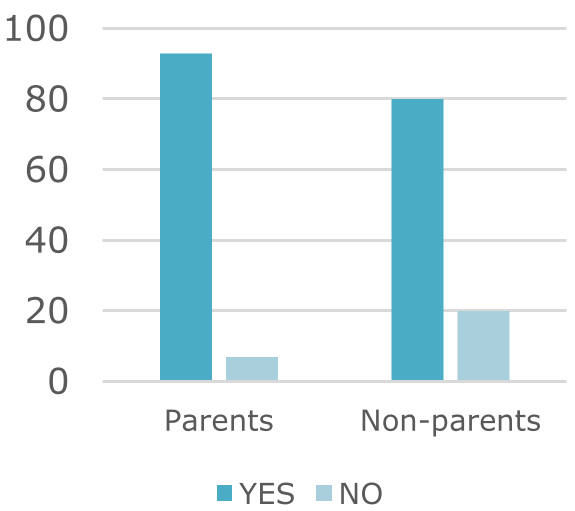 Figure 2: Enthusiasm levels for child-involved crowdsourcing among parents vs. non-parents.
However, the paper doesn't ignore the elephant in the room: Ethics.
- Labor Exploitation: How do we ensure "micro-tasks" don't become "digital sweatshops"?
- Data Privacy: The Children's Online Privacy Protection Act (COPPA) makes these platforms difficult to launch.
- The Parent Proxy: The study suggests that parents should act as a "legal and technical buffer," managing the interface and financial aspects so the child only interacts with the creative task.
Final Analysis & Future Outlook
This paper serves as a vital exploratory "probe" into a new frontier of Human-Computer Interaction (HCI). While current platforms like Amazon Mechanical Turk or CrowdFlower (now Figure Eight/Appen) are built for efficiency, a child-centric platform must be built for engagement and safety.
Takeaway: The future of crowdsourcing might not be 10,000 workers in a digital factory, but a vibrant community where children provide the "spark" of an idea and adults provide the "structure" to realize it. The "Parent-Proxy" model is currently the most viable path toward navigating the ethical minefield of child labor in the digital age.
Limitations: The study primarily surveys adult opinions. To truly understand if this works, the next step must involve "Comicboarding" or direct creative sessions with children to see if they actually want to be part of the crowd.