
Expressive Aesthetics: The Invisible Glue of Social Network Loyalty
Expressive aesthetics to ease perceived community support: Exploring personal innovativeness and routinised behaviour as moderators in Tuenti
This study investigates how high-level visual design, termed "expressive aesthetics," influences Perceived Community Support (PCS) within the Spanish social network Tuenti. Using Structural Equation Modeling (PLS-SEM), the authors demonstrate that creative and original design elements significantly foster a sense of belonging and mutual aid among users.
TL;DR
In the hyper-competitive world of Social Network Sites (SNS), why do users feel "at home" on one platform but not another? This research reveals that Expressive Aesthetics—design that is creative, original, and sophisticated—is a primary driver of Perceived Community Support (PCS). However, the impact isn't universal; it is significantly shaped by a user's Personal Innovativeness and how much the site has become a habitual routine in their daily lives.
Background: Moving Beyond Mere Usability
For years, the "Technical Perspective" dominated HCI research: if a site was usable, people would stay. But as functionally identical platforms emerged, the "why" of user loyalty became an emotional question. This paper argues that Tuenti's success (a dominant Spanish SNS of its era) was tied to its ability to make users feel supported and integrated through "Expressive Aesthetics."
The Core Insight: Why Design Matters
The authors distinguish between Classical Aesthetics (symmetry, clarity, usability) and Expressive Aesthetics (creativity, fascinating richness).
- The Intuition: Expressive design isn't just "eye candy"; it functions as an affective cue that signals uniqueness and elicits pleasure, which in turn fosters a sense of belongingness (Community Integration) and the perception that the community will provide aid (Community Organization).
Conceptual Model
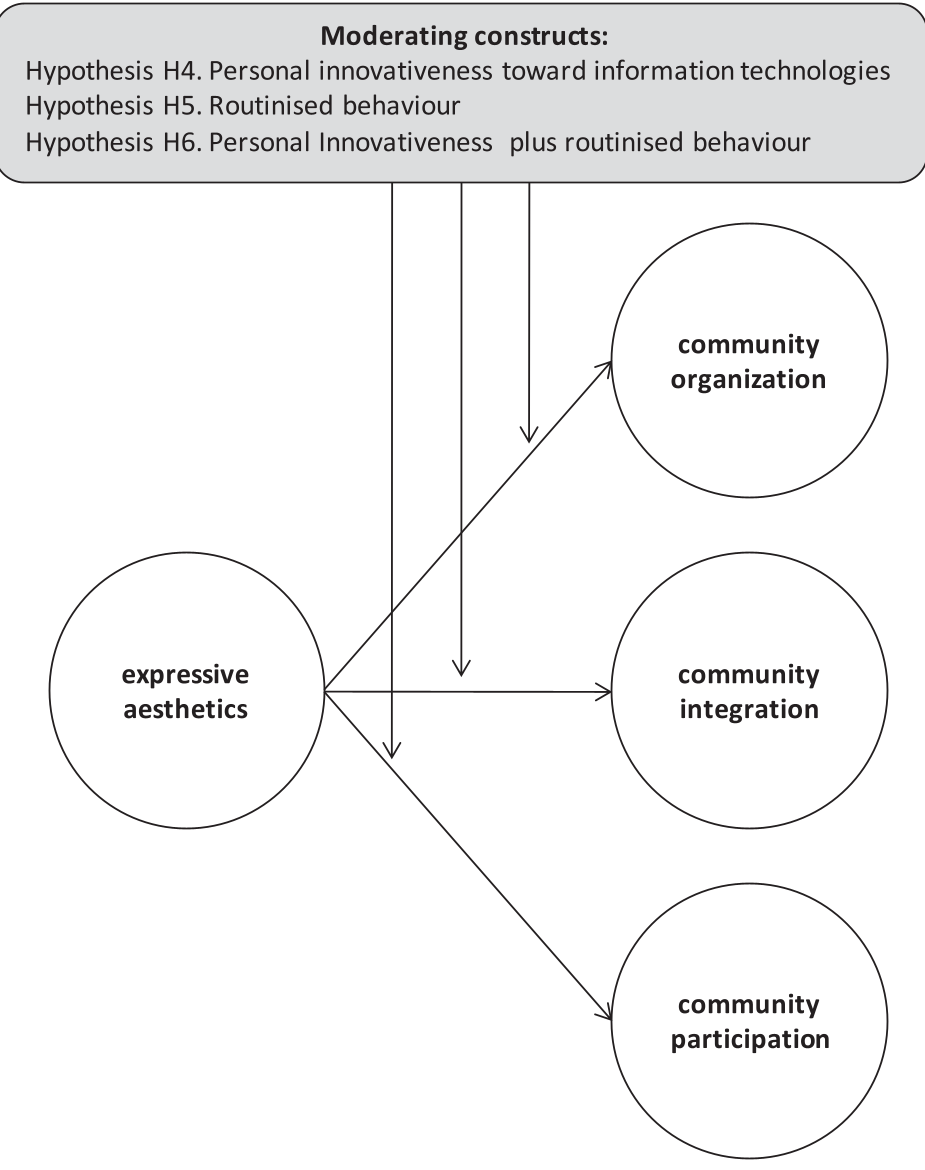 The model tests how Aesthetics (EA) impacts the three pillars of perceived support (CO, CI, CP), moderated by individual traits.
Methodology: The PLS-SEM Approach
The study surveyed 278 members of Tuenti, applying Partial Least Squares (PLS) modeling. This allowed the researchers to look at the "Heterogeneous Influence" of design—essentially acknowledging that a "Power User" perceives a site's beauty differently than a "Laggard."
Key Findings: The "Innovation-Routine" Paradox
The study found several counter-intuitive results regarding how we perceive design as we become "used" to a platform:
- The Direct Link: Expressive aesthetics significantly predicts all three dimensions of PCS. If it looks fascinating, users feel more integrated.
- The Non-Innovative Trap: For users with low personal innovativeness, as their usage becomes routinised, the influence of aesthetics fades. They begin to prioritize "usable" cues over "creative" ones.
- The Innovator's Bonus: In a surprising twist (H6), for highly innovative users, routinised usage actually increases the impact of aesthetics on community integration. For these users, the expressive design remains a central cue that reinforces their identity within the digital group.
Performance Metrics
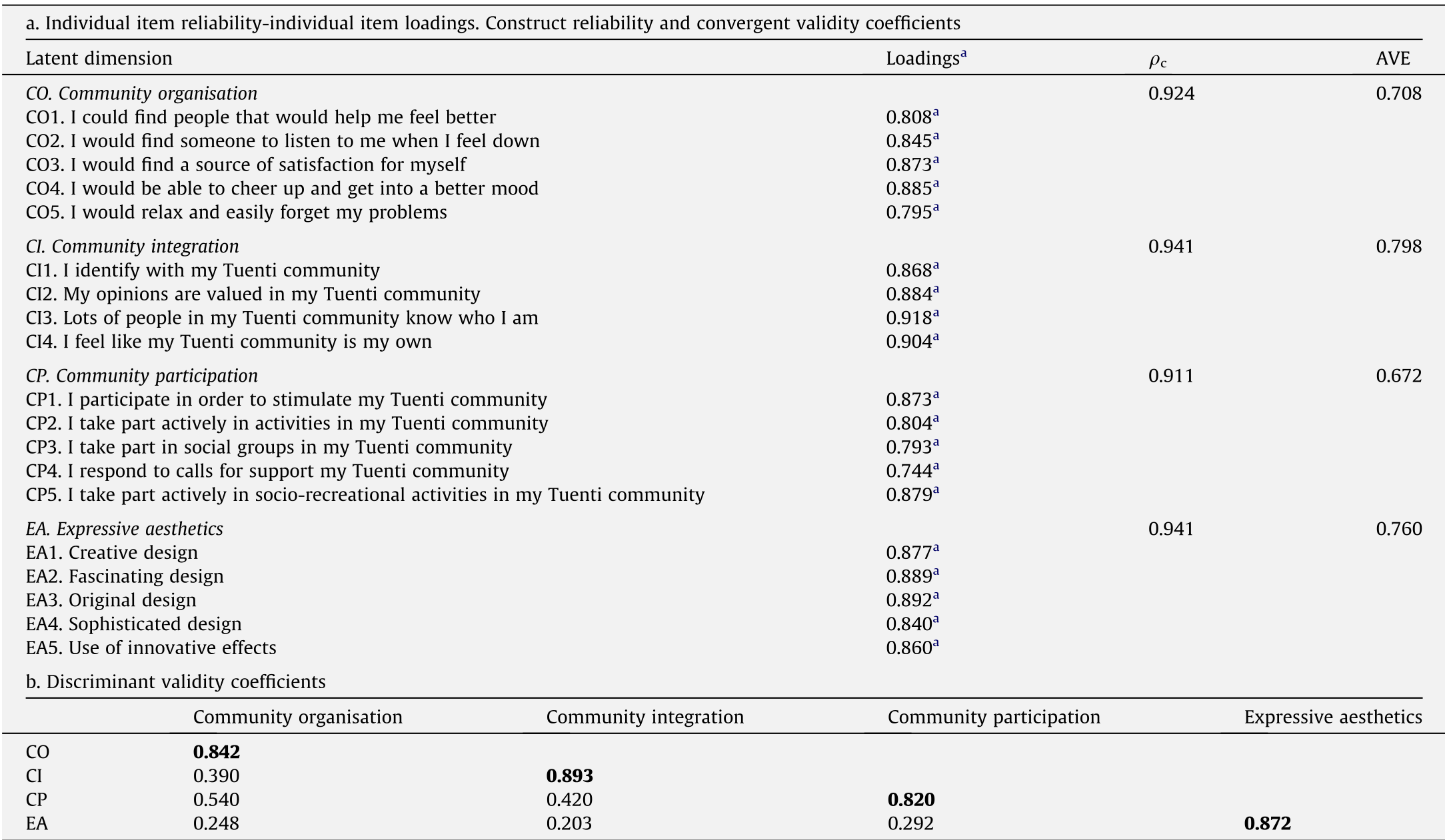 The statistical results confirm high composite reliability (above 0.9) across all measured dimensions, including Community Organisation and Expressive Aesthetics.
Critical Analysis & Takeaways
The paper confirms that aesthetics are not just a "first impression" factor but an enduring driver of community health.
- Industry Value: Designers should not stop "breaking conventions" once a site reaches maturity. For your most innovative and active users, the "fascinating" nature of the UI is what keeps the emotional bond strong.
- Limitations: The study focused on a specific demographic (Spanish students) and a specific site (Tuenti). In today's era of "minimalist UX," some might argue that expressive aesthetics have been sacrificed for standardisation—a trend this paper suggests might be hurting long-term community integration.
- Future Work: How do these findings apply to algorithmic feeds? If the content is expressive but the container (the UI) is sterile, does the sense of community support still hold?
Conclusion
"The beauty of a web page is an important factor determining how it will be experienced and judged." By understanding that different segments of users (Innovative vs. Habitual) react differently to design, platform architects can better tailor digital environments to foster genuine social capital.