
CRISP-TDM: Re-Engineering Data Mining Workflows for the High-Stakes NICU Environment
Extending CRISP-DM to incorporate temporal data mining of multidimensional medical data streams: A neonatal intensive care unit case study
This paper introduces CRISP-TDM, an extension of the industry-standard CRISP-DM framework, specifically designed for Temporal Data Mining (TDM) of multi-dimensional medical data streams. Tested in a Neonatal Intensive Care Unit (NICU) case study, the method integrates Temporal Abstraction (TA) with Data Mining to process high-frequency physiological waveforms for clinical decision support.
TL;DR
In modern Neonatal Intensive Care Units (NICUs), medical monitors generate data at over 500 readings per second—far exceeding human cognitive limits. This paper proposes CRISP-TDM, an extension of the de facto standard CRISP-DM methodology. It bridges the gap between raw multi-dimensional time series data and clinical decision-making by integrating Temporal Abstraction (TA) into the data mining lifecycle.
The "Data Overload" Problem in Critical Care
The fundamental issue in ICUs isn't a lack of data; it's the lack of structured processing. Traditional CRISP-DM (Business/Data Understanding, Preparation, Modeling, Evaluation, and Deployment) was designed for static business databases. It struggles with:
- High Velocity: Waveform data arriving at millisecond intervals.
- Multi-dimensionality: Interdependencies between heart rate, blood pressure, and oxygen levels.
- Temporal Context: Physicians care about trends and states (e.g., "how long has oxygen been falling?") rather than instantaneous values.
Methodology: Bridging TA and DM
The core innovation of CRISP-TDM is the formalization of tasks within the modeling phase to support Intelligent Data Analysis (IDA). The authors move beyond simple classification to a "Closed Loop" system.
The Two-Step IDA Architecture
- Clinical Algorithm Development: Using retrospective data, researchers perform Temporal Abstraction (transforming numbers into states like "Low" or "Trending Down") and then apply predictive Data Mining (DM) to find early indicators of complications.
- Real-Time Deployment: These validated algorithms are fed into a TDM system that monitors live patient streams, providing context-specific alerts.
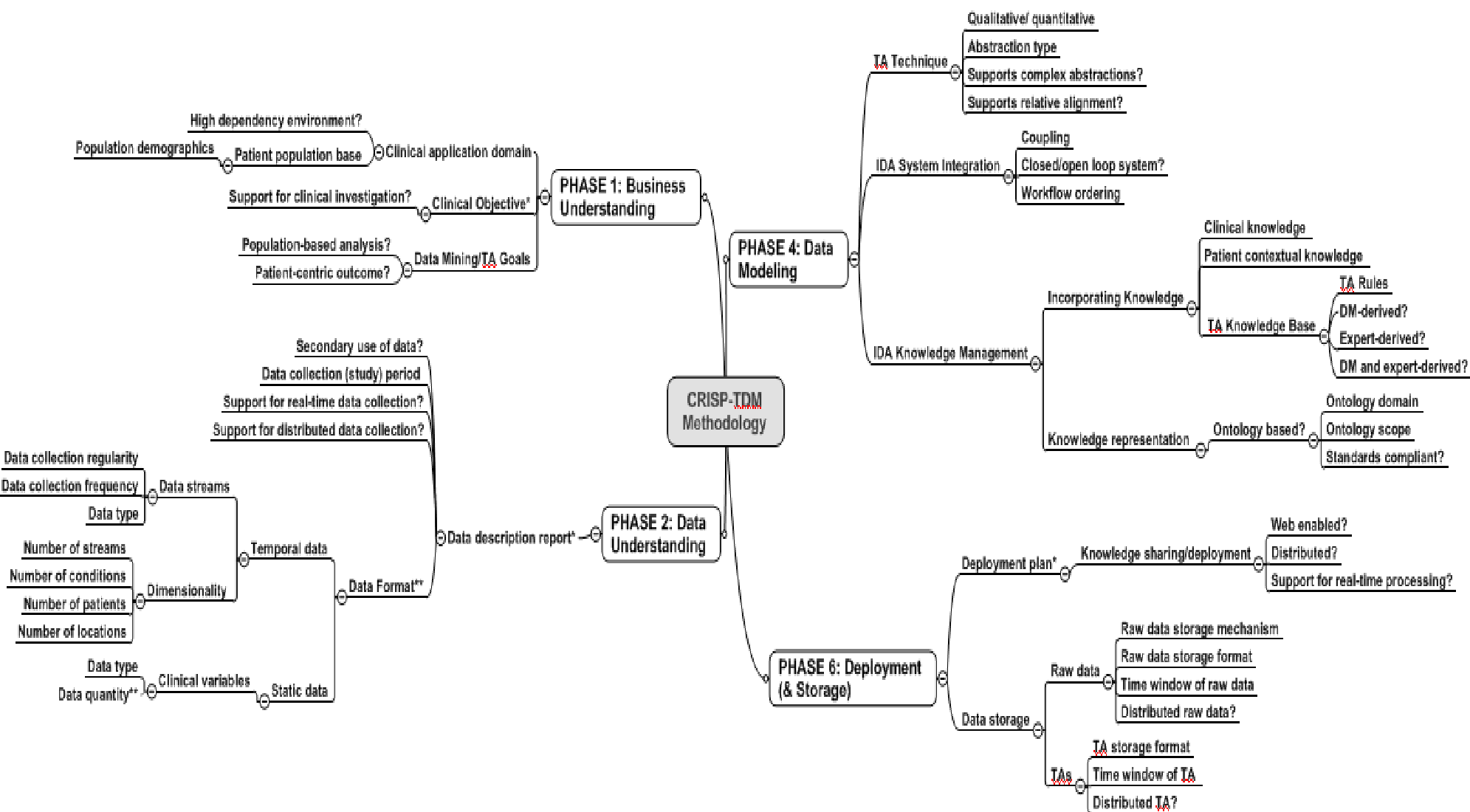 Fig 1. The extended CRISP-TDM phases highlighting additions to Business Understanding and Modeling.
Case Study: The NICU Neonatal Monitor
The study applied CRISP-TDM to detect patient instability. By looking at Arterial Mean Blood Pressure (ABPmean) and Oxygen Saturation (SaO2), the system creates "Complex Abstractions."
For instance, a simple rule might be:
- IF SaO2 < 85% for > 20 seconds AND ABPmean < 35 mmHg for > 20 seconds, THEN generate an alarm.
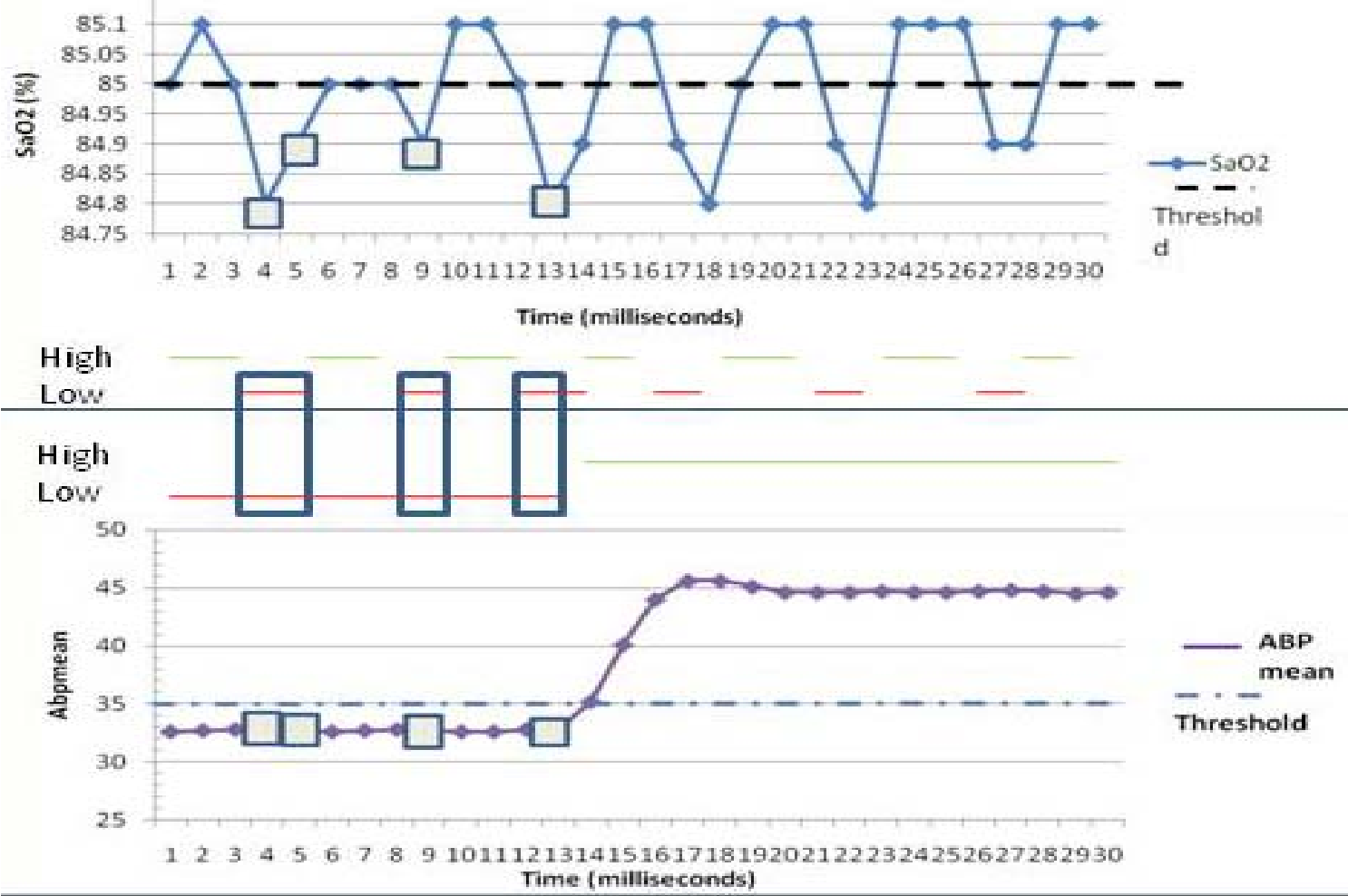 Fig 2. Visualization of how raw streams are abstracted into 'Normal' vs 'Low' states to identify concurrent physiological drops (boxed regions).
Experimental Insights
The research highlighted that critically ill babies often experience transient falls in blood pressure that manual paper notes (which summarize data every 30-60 minutes) completely miss. CRISP-TDM allows for the systematic capture of these "micro-events," which are often precursors to major clinical disability.
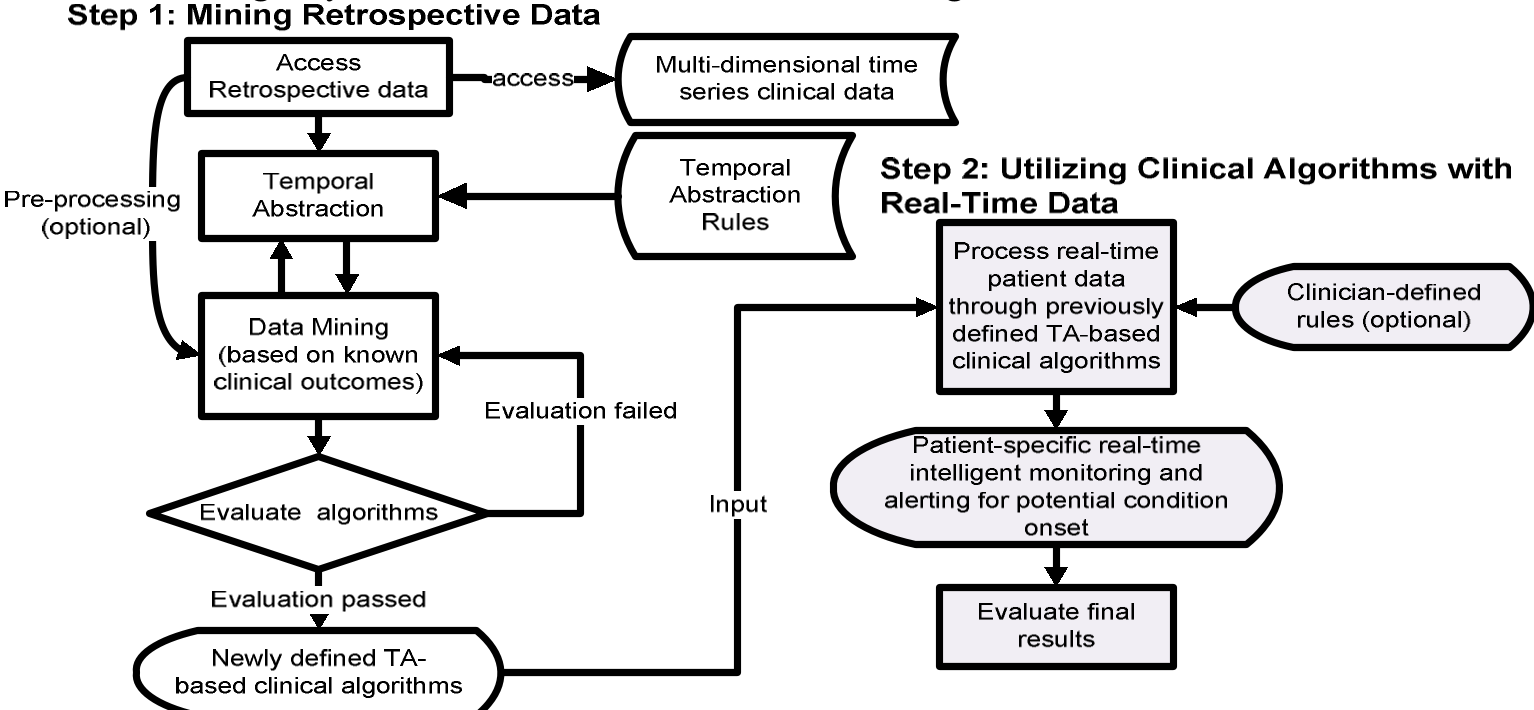 Fig 3. The proposed framework for real-time temporal analysis and clinical decision support (Artemis Project).
Critical Perspective: Moving Toward "Artemis"
While the CRISP-TDM methodology provides a much-needed formal structure, its current reliance on expert-derived rules (TA) suggests an opportunity for hybrid models. Future work, as noted in the "Artemis" framework, aims to move toward higher fidelity and automation.
Key Takeaways for the Industry:
- Standardization Matters: Without a structured process like CRISP-TDM, comparing different clinical AI systems remains "difficult, if not impossible."
- Storage Complexity: One significant insight is the need to archive both raw data and abstracted states, as clinical definitions of "abnormal" may evolve over time.
- Context is King: Successful medical data mining must incorporate population-based information (e.g., gestational age) into the Business Understanding phase.
Conclusion
CRISP-TDM successfully evolves a 1990s data mining standard into the era of real-time medical streaming. It provides the rigor required for researchers to transition from "bench to bedside," ensuring that temporal insights are not lost in the sheer volume of ICU noise.