
F-PAD: Quantifying the Illusion of Privacy in Online Social Networks
F-PAD: Private Attribute Disclosure Risk Estimation in Online Social Networks
The paper introduces F-PAD (Framework for Private Attribute Disclosure), a generalized system designed to estimate the disclosure risk of hidden user attributes (e.g., gender, age, location) in Online Social Networks. It achieves SOTA individual risk assessment by aggregating prediction results from a "basket" of diverse inference attack models.
TL;DR
Even when you hide your "Gender" or "Current City" on social media, sophisticated machine learning models can often guess them with alarming accuracy. F-PAD is a new framework that doesn't just predict your secrets—it estimates the exact probability that an attacker will be right, providing you with a "Risk Level" (from Guarded to Severe) and personalized advice on what to hide next to stay safe.
The "Hidden" Information Paradox
The central tragedy of modern Online Social Networks (OSNs) is the Inference Attack. You might hide your political views, but your "Likes" of specific movies and music act as a digital fingerprint.
Prior research typically suffered from two flaws:
- The Average Trap: They would say "this model is 80% accurate," which tells you nothing about your specific risk.
- The Single-Attacker Assumption: They assumed the attacker uses one specific method. In reality, attackers have a "basket" of tools.
F-PAD bridges this gap by moving from "model accuracy" to "individual disclosure risk estimation."
Methodology: How F-PAD Sees Your Secrets
The framework operates as a sophisticated pipeline that replicates the adversary’s logic to provide a defensive shield.
1. The Attack Basket
Instead of relying on one model, F-PAD uses a "basket" of diverse models (Logistic Regression, SVM, Random Forest) and a custom General Bayesian Inference approach. This ensures that even if one model fails to guess your data, another might succeed.
2. Learning the "Success Pattern"
This is the core insight of the paper. F-PAD trains a Disclosure Model. It doesn't just ask "What is the user's city?" but rather "Given this user's profile, how likely is it that my attack will be correct?"
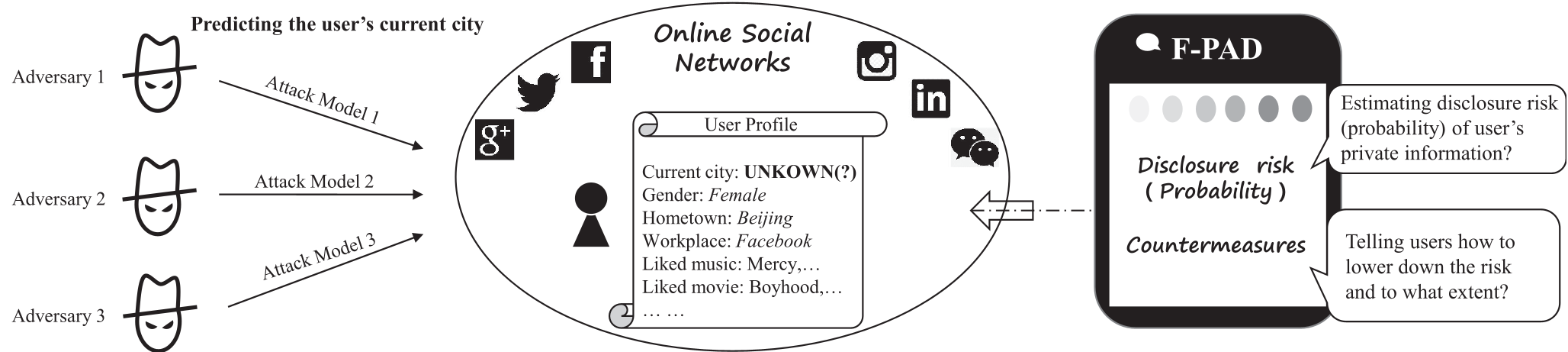 Figure 1: The F-PAD workflow, showing the transition from attack simulation to integrated risk reporting.
Experiments: Validating the Risk
The authors tested F-PAD on two massive datasets: Facebook (370k+ users) and Book-Crossing (270k+ users).
Key Findings:
- Location Privacy: Even if you hide your city, F-PAD can estimate your risk based on your friends' locations and your employer.
- The Gender Paradox: The study found an "Inversion Effect." For some users, hiding their favorite music actually increased their disclosure risk. Why? Because that music was "gender-neutral noise" that was confusing the AI. Removing it made the remaining "gender-biased" data clearer to the attacker.
 Figure 2: Validation of risk levels. The actual disclosure probability closely matches the estimated levels (Slight to Severe).
Personalized Countermeasures
F-PAD doesn't just deliver bad news; it provides a roadmap for safety. The "Countermeasure Generator" simulates what happens to your risk level if you hide specific pieces of info. It might tell you: "Hiding your employer reduces your city disclosure risk from 'Severe' to 'Moderate', but hiding your friends has no effect."
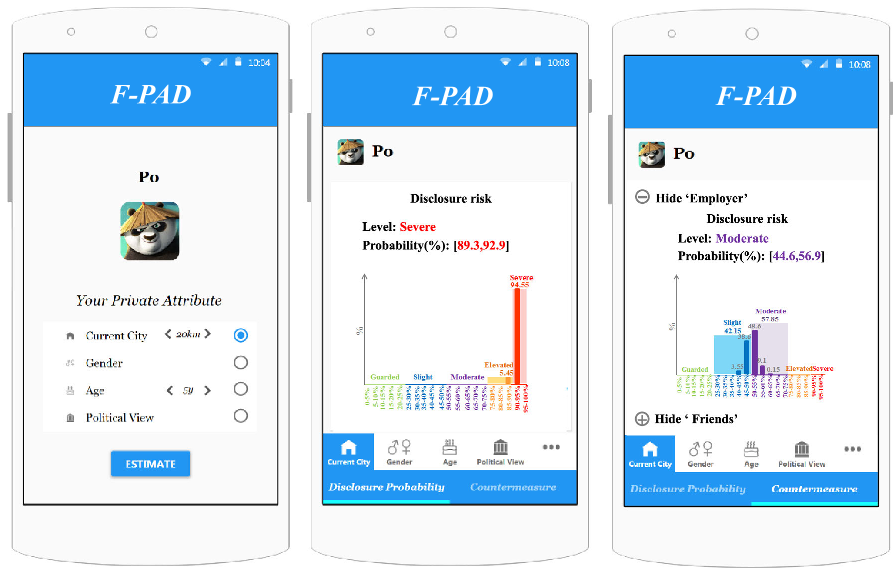 Figure 3: A mobile prototype showing individual risk distributions and suggested actions.
Critical Insight & Conclusion
The true value of F-PAD lies in its Generalizability. It treats the "Correctness" of an attack as a feature in itself. This means as new, more powerful AI models are developed by attackers, F-PAD can simply add them to its "basket" to keep the risk estimation current.
Takeaway: Privacy in the age of AI is no longer about what you hide; it’s about what your public data implies. F-PAD is one of the first robust attempts to give users the "mathematical high ground" in this ongoing arms race.