
Digital Connection vs. Virtual Isolation: Predicting Knowledge Sharing in Facebook Communities
Exploring the role of Facebook adoption and virtual environment loneliness on knowledge sharing behaviors in a Facebook learning community
This study investigates the structural relationships between Knowledge Sharing Behavior (KSB), Facebook Adoption (FA), and Virtual Environment Loneliness (VEL) within a Facebook learning community. Using Structural Equation Modelling (SEM), it establishes that high adoption rates and low virtual loneliness significantly predict enhanced knowledge-sharing activities among students.
TL;DR
In the era of Web 2.0, virtual learning communities (VLCs) are only as strong as the knowledge shared within them. This study reveals that Facebook Adoption (FA) and Virtual Environment Loneliness (VEL) are pivotal predictors of sharing behavior. By analyzing 279 students, the research proves that reducing the "virtual chill" of loneliness and providing robust technical support are the keys to turning passive scrollers into active knowledge contributors.
The Core Motivation: Why Do We Share?
Knowledge sharing (KSB) isn't just a technical transaction; it's a social and psychological act. Despite the ubiquity of Facebook in education, educators often struggle with "ghosting" in groups. The author’s intuition was that a student’s technical comfort with Facebook (Adoption) and their perceived social isolation (Loneliness) create a push-pull dynamic that dictates their willingness to help peers or sacrifice time to share insights.
Methodology: The Structural Equation Approach
The study utilized Structural Equation Modelling (SEM) to map the intricate web of influences. It didn't just look at "using Facebook" as a binary; it broke it down into:
- Facebook Adoption (FA): Usefulness, Ease of Use, Social Influence, Facilitating Conditions, and Community Identity.
- Virtual Environment Loneliness (VEL): Virtual Socialization, Virtual Sharing, and Virtual Loneliness (the negative dimension).
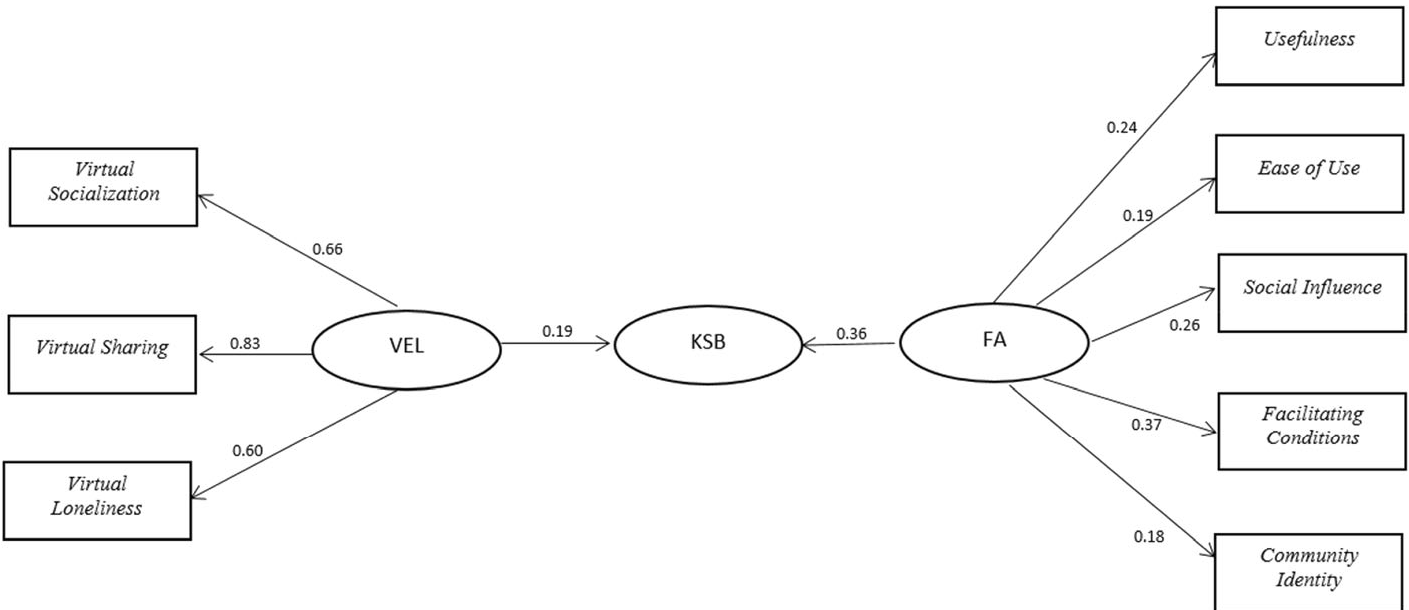 Figure 1: Path analysis model showing the structural relationships between adoption, loneliness, and sharing behavior.
Key Insights: Support Over Social Status
One of the most surprising findings was the role of Facilitating Conditions. While many assume "social influence" or "community identity" drives modern students, this data suggests that having the technical infrastructure and instant support (Facilitating Conditions) was the strongest driver of Facebook Adoption, which in turn fueled KSB.
Results at a Glance:
- Positive Impact: Facebook Adoption is the strongest predictor of KSB ().
- The Loneliness Factor: Lower levels of virtual loneliness significantly improve sharing habits ().
- Critical Sub-Scale: Within the loneliness construct, the ability to engage in "Virtual Sharing" was the most influential factor.
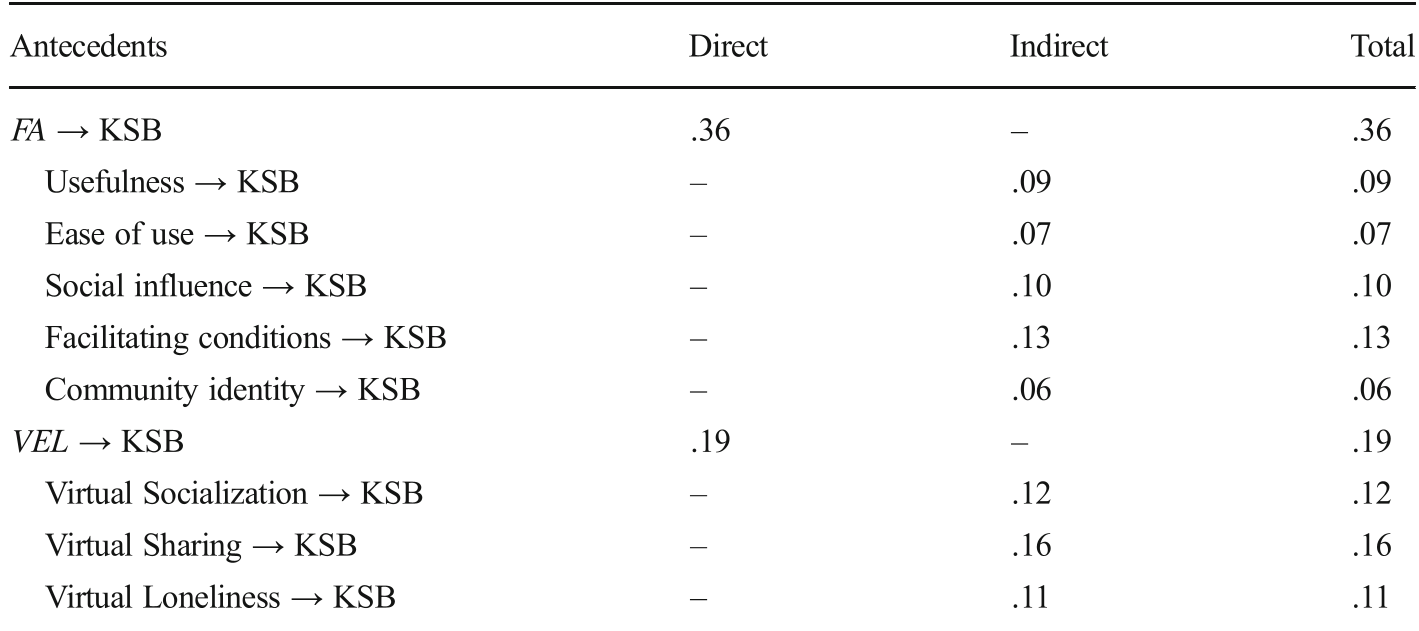 Table 1: Standardized direct and indirect effects of the researched variables on Knowledge Sharing Behaviors.
Critical Analysis & Professional Takeaways
The research highlights a fundamental paradox: while the internet is often blamed for loneliness, a well-structured virtual learning community can actually mitigate these feelings by providing a platform for "Virtual Socialization."
For Educators and Designers:
- Lower the Barrier: Ensure students feel the platform is "useful" and "easy" by providing clear tutorials. Don't assume digital natives don't need help.
- Structure the Interaction: Unstructured groups fail. To combat loneliness and boost KSB, use collaborative tasks and structured discussions (e.g., small groups) to force the first few steps of social bonding.
- Monitor the Psych-Social State: Recognizing that "virtual loneliness" exists is the first step toward building a community that feels safe for vulnerability and knowledge transfer.
Limitations and Future Outlook
While the study provides a robust model, it is limited to the Turkish university context and the Facebook platform. In a world shifting toward TikTok-style micro-learning or decentralized platforms like Discord, future research must examine if these same psychological predictors (Loneliness and Adoption) hold true when the "identity" of the platform changes from a social wall to a stream-based or chat-based medium.