
Facebook: Transforming Social Networking into a Cost-Effective E-Learning Powerhouse
Facebook – Education with Social Networking Websites for Teaching and Learning
This paper explores the feasibility of using Facebook as a cost-effective alternative to traditional electronic learning (e-learning) platforms. The authors propose a pedagogical framework leveraging Facebook's native features such as Groups, Pages, and Photo Albums to facilitate course material distribution and real-time student-teacher interaction.
TL;DR
In an era where expensive Learning Management Systems (LMS) dominate academia, this paper investigates a provocative alternative: Facebook. By repurposing social features—specifically Photo Albums for lecture slides and the Commenting system for feedback—the authors demonstrate how to build a high-engagement, mobile-friendly educational environment at zero cost.
Background Positioning: The Shift from IM to Social Education
This work sits at the intersection of Social Computing and Educational Technology. It argues that education follows the evolution of digital communication—moving from the offline mode of Email to the real-time interaction of Instant Messaging (ICQ/MSN), and finally to the organized, multi-modal interaction of Social Networking Sites (SNS).
Problem & Motivation: Why Ditch Traditional LMS?
The authors identify three critical pain points in the then-current (circa 2010) e-learning landscape:
- Cost: Traditional platforms require heavy licensing fees.
- Compatibility: Formats like PowerPoint (.ppt) often break on mobile devices.
- Engagement Phobia: Students are often too intimidated to speak in physical classrooms or formal forums.
The Insight here is simple: Students are already on Facebook. By bringing the classroom to their "digital home," we eliminate the learning curve of new software and tap into their existing notification habits.
Methodology: The "Image-Slide" Strategy
The most unique contribution is the authors' method for handling teaching materials. Rather than uploading files for download, they propose:
- Visual-First Lectures: Converting slides into images and uploading them as Facebook Photo Albums. This ensures they render perfectly on any mobile browser (from iPhone to LG netbooks).
- Granular Discussion: By making each slide an image, students can "Comment" on a specific slide. This creates a threaded, context-aware Q&A session that is impossible with a single static PDF download.
- Notification Loops: Leveraging Facebook’s automated email and push notifications to keep students informed of new materials or replies to their questions.
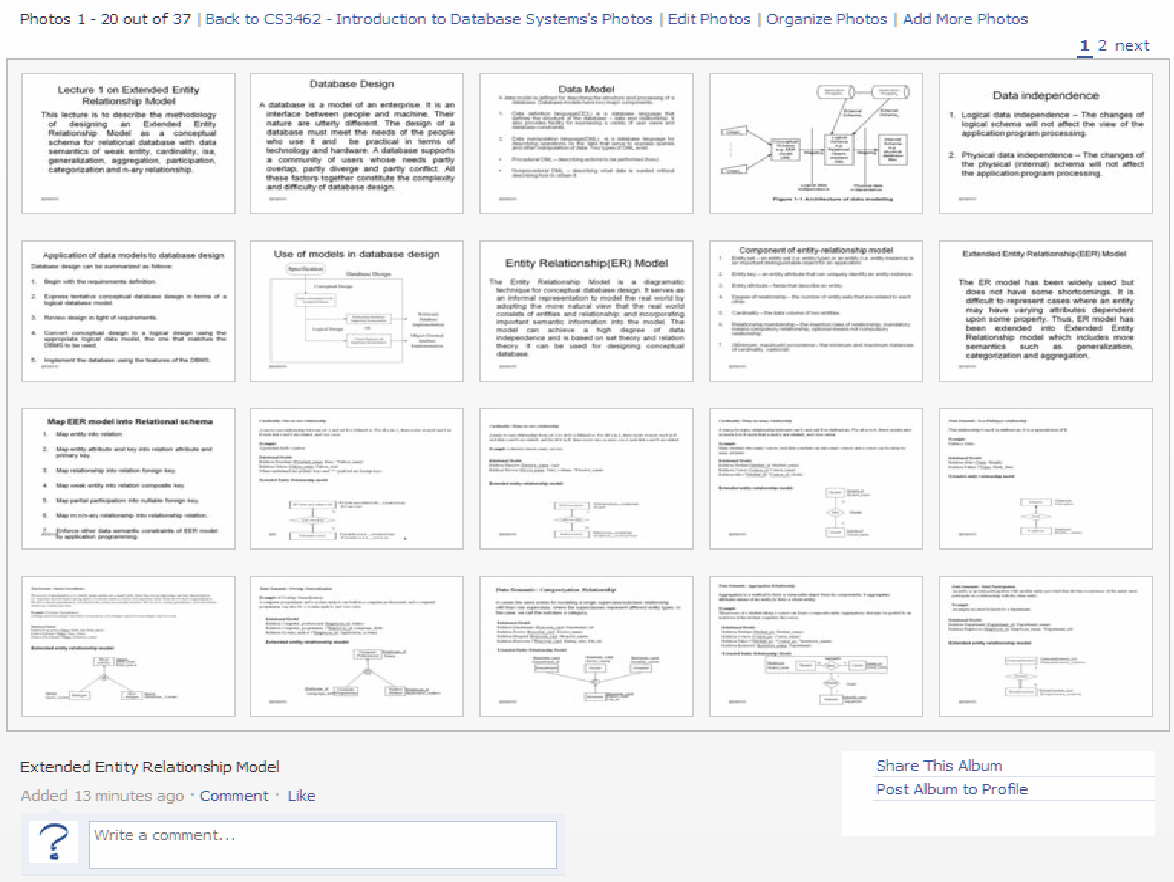 Fig 4: Organizing lecture slides as Facebook Photo Albums to facilitate slide-specific discussions.
Experiments & Results: The Case of CS3462
Using a "Database Systems" course as a case study, the authors mapped Facebook features to pedagogical needs:
- Facebook Pages: Used as the course homepage for news and links.
- Quiz Creator API: Integrated third-party apps to conduct assessments within the social interface.
- Mobile Synergy: Testing on devices like the Apple iPhone showed that students could zoom into images and participate in discussions during transit.
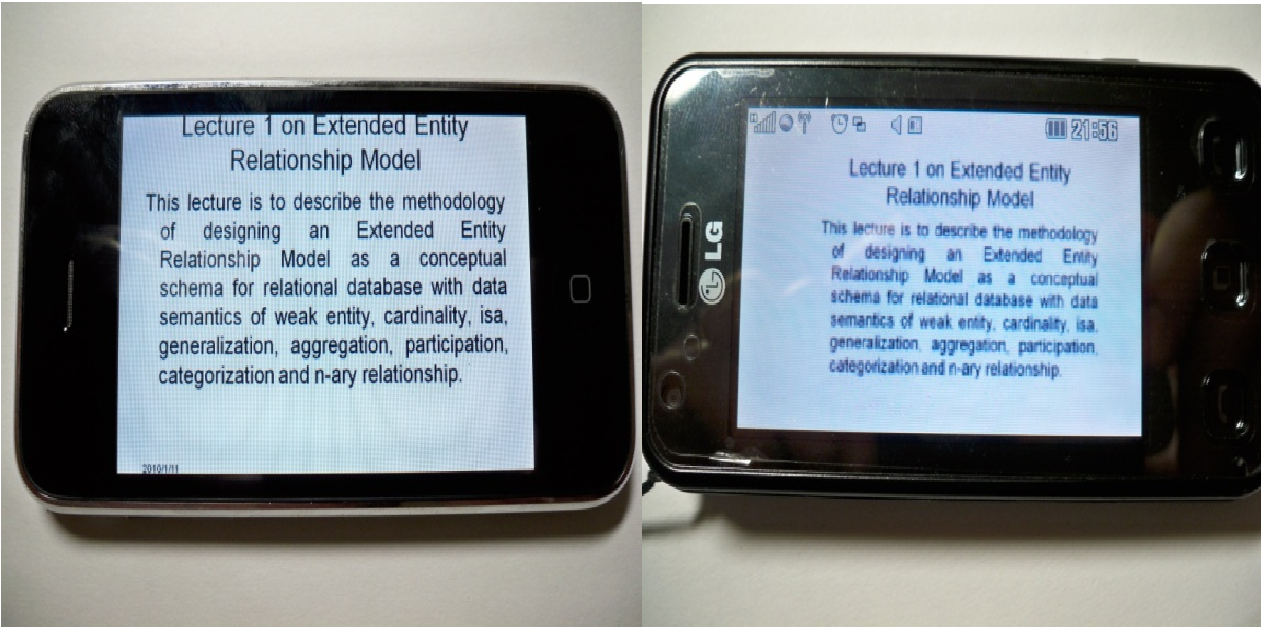 Fig 6: Slide readability and interaction on various mobile devices (iPhone vs LG).
The results suggested that the "informal" nature of Facebook motivated peer-to-peer learning and significantly increased participation from typically passive students.
Critical Analysis & Conclusion
Takeaway
The paper successfully proves that ubiquity outweighs complexity. An suboptimal social tool that everyone uses is often more effective for education than an optimal academic tool that no one wants to open.
Limitations
- Privacy Blur: The authors suggest using university emails to create separate Facebook accounts, but in practice, students often find managing two profiles cumbersome.
- Platform Lock-in: Relying on a third-party corporate entity (Meta/Facebook) for core educational infrastructure poses significant data sovereignty and longevity risks.
- The "Distraction" Factor: This paper focuses on engagement but does not deeply address the potential for distraction inherent in a social feed.
Future Outlook
While Facebook's popularity among younger demographics has shifted toward platforms like Discord or Instagram, the methodology—using image-based slides and granular commenting—remains a gold standard for digital-first pedagogy. The future likely lies in "Social-LMS" hybrids that mimic these social triggers while maintaining strict academic privacy.