
Facebook in the Classroom: Navigating the Ethical Frontier of Elementary Informatics
The role of Facebook in elementary school education
This paper explores the integration of Facebook and social media literacy into the Croatian elementary school curriculum. It evaluates the shift from optional informatics in higher grades to mandatory instruction starting in the first grade, emphasizing the ethical, legal, and instructional challenges of teaching digital safety to students aged 7-12.
TL;DR
As global curricula push for earlier digital literacy, a paradox emerges: how do we teach seven-year-olds to use social networks when the platforms themselves forbid users under thirteen? This paper analyzes the Croatian educational shift toward mandatory informatics in early grades and advocates for a proactive "preparatory" approach to social media safety, bridging the gap between curriculum requirements and platform age restrictions.
The "Curriculum-Reality" Gap
The Croatian National Curriculum Framework (2011) introduced a bold directive: integrate social networks into the first cycle of elementary education (grades 1–4). However, the author identifies a glaring contradiction. Platforms like Facebook, Google+, and MySpace strictly enforce a minimum age of 13.
The motivation behind this research is rooted in the "Inductive Bias" of current educational materials—or rather, the lack thereof. Existing textbooks are largely silent on social network security, leaving a vacuum where students are technically savvy but ethically and defensively vulnerable.
Methodology: Insights from the "Digital Natives"
To understand the stakes, the author conducted an anonymous survey of 97 students in grades 6 through 8. This group represents the cohort that "graduated" into the age where Facebook usage becomes prevalent.
The Supervision Paradox
The study highlights a critical lack of oversight. A significant number of students have computers in their private rooms, isolating their digital lives from parental guidance. This absence of a "Human-in-the-Loop" for digital safety increases the risk of:
- Phishing & Hacking: Students reported account breaches despite believing their privacy settings were secure.
- Cyberbullying: A non-negligible percentage had received or sent threatening messages.
- Identity Theft: Public profiles and oversharing of personal data were common behaviors.
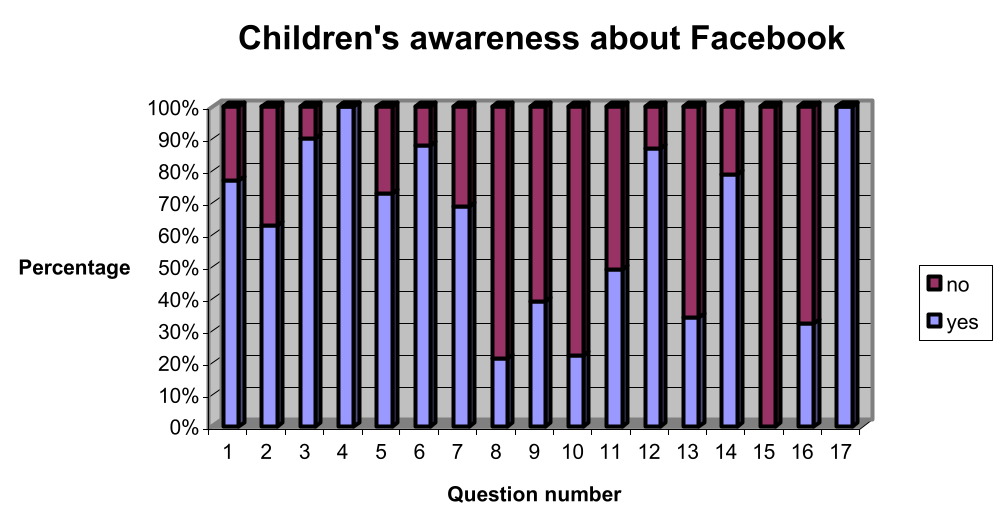 Figure 1: Visualizes the survey findings regarding child awareness and social media usage habits.
Addressing the Teacher-Student Dynamic
One of the paper's core contributions is the proposal for a "School-Specific Facebook Profile." To maintain professional boundaries (avoiding the ethical gray area of personal friend requests), the author suggests teachers use dedicated school profiles for:
- Distributing homework and projects.
- Answering student queries in a documented, transparent environment.
- Teaching "Netiquette" (Internet Etiquette) through active participation.
Experimental Analysis: Knowledge vs. Behavior
The survey results (as shown in Figure 1) demonstrate a mismatch between perceived knowledge and actual security. While students are familiar with "Chat" and "Facebook," their ability to manage privacy settings is often superficial. This proves that merely using a tool does not equate to mastering its safe operation.
| Metric | Finding | Implication |
|---|---|---|
| Parent Literacy | Often lower than children's | Parents cannot provide effective oversight. |
| Textbook Content | Lacks social media safety | Curriculum needs urgent "feature updates." |
| Legal Framework | Weak on ID theft | Education must serve as the primary defense. |
Critical Insights & Future Outlook
The author concludes that we cannot ignore social media simply because of age limits—to do so is to leave children "defenseless in a digital playground."
Limitations
The study focuses primarily on Facebook, which, while dominant in Croatia at the time of writing, is now one of many platforms (TikTok, Instagram, Discord) used by children. The rapid evolution of these apps means educational content must be platform-agnostic, focusing on universal principles of privacy, verification, and digital footprint management.
The Bottom Line
The role of Facebook in elementary school isn't just about "using an app"; it's about building the cognitive framework for lifelong digital citizenship. Educators must move from being "gatekeepers" to "guides," ensuring that before a child ever clicks "Sign Up," they understand the weight of their digital presence.