
Just Untag It: The Psychology of Managing Your Digital Reputation
Just untag it: Exploring the management of undesirable Facebook photos
This study investigates how Facebook users manage undesirable photos uploaded and tagged by others to protect their digital self-presentation. Using a mixed-method approach (focus groups and questionnaires), it identifies "Untagging" as the primary SOTA psychological defense mechanism, while highlighting the role of personality traits like Agreeableness in choosing direct management methods.
TL;DR
In the digital "front stage" of Facebook, our reputation is often in the hands of others. This study explores the diverse arsenal of tactics users employ to handle undesirable photos—from the surgical precision of Untagging to direct social confrontation. It reveals that while we crave identity control, we increasingly rely on dissociation (untagging) rather than deletion to survive the "death of privacy."
The Friction: When "Friends" Sabotage Your Brand
The core conflict of modern social media is that while we use platforms to curate an idealized self, our "friends" (or team members, in Goffman's terms) often act as accidental saboteurs. They upload photos that capture us in compromising or unflattering ways, violating the implicit social norm that one should only post content that enhances a peer's reputation.
The authors argue that previous research was too narrow, missing the creative ways users pivot between different communication channels (text, email, face-to-face) to reclaim their image.
Methodology: Beyond the "Untag" Button
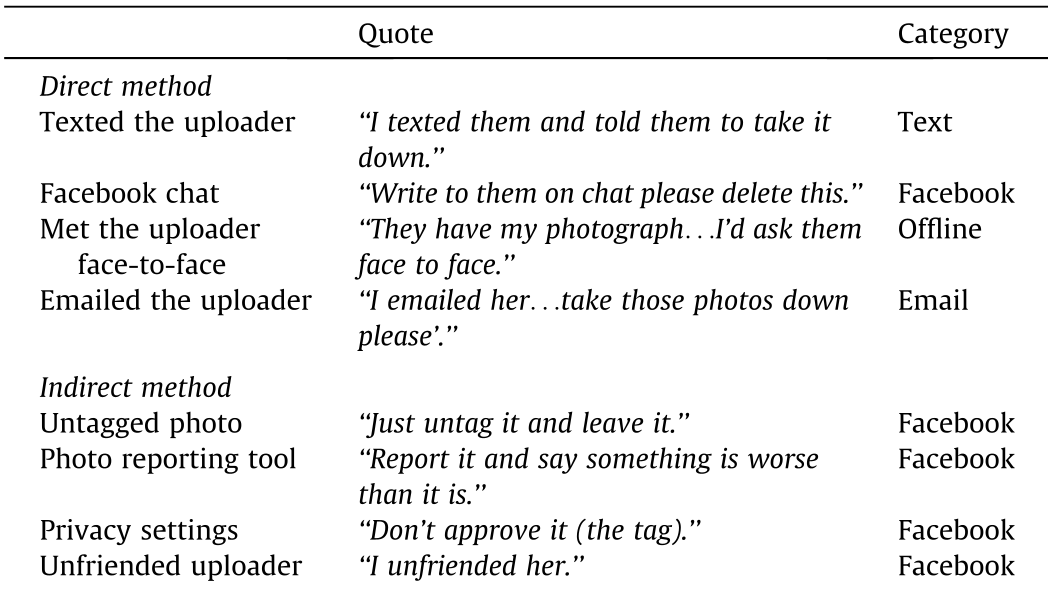
The researchers used focus groups to build an exhaustive list of management strategies, categorizing them into:
- Direct Methods: Reaching out to the uploader (Text, FB Chat, Face-to-Face).
- Indirect Methods: Unilateral actions (Untagging, Reporting, Privacy Settings).
- Preemptive Methods: Stopping the photo before it hits the web.
Deep Dive: Personality and Age Influence
The study’s most intriguing insights come from the correlation between the Big Five personality traits and management style:
- The Agreeable Negotiator: Users scoring high in Agreeableness are significantly more likely to use direct methods. They are willing to negotiate and rely on their social capital to ask for removals.
- The Conscientious Avoider: There is a trend suggesting conscientious individuals prefer discreet, independent actions (Indirect) to avoid the social messiness of direct confrontation.
- The Generational Gap: Younger users (18-24) are the "Untagging Natives." They are far more likely to scrub their profiles of unwanted tags than older demographics, likely due to higher technical literacy and a more acute "audience awareness."
Critical Insight: Survival through Dissociation
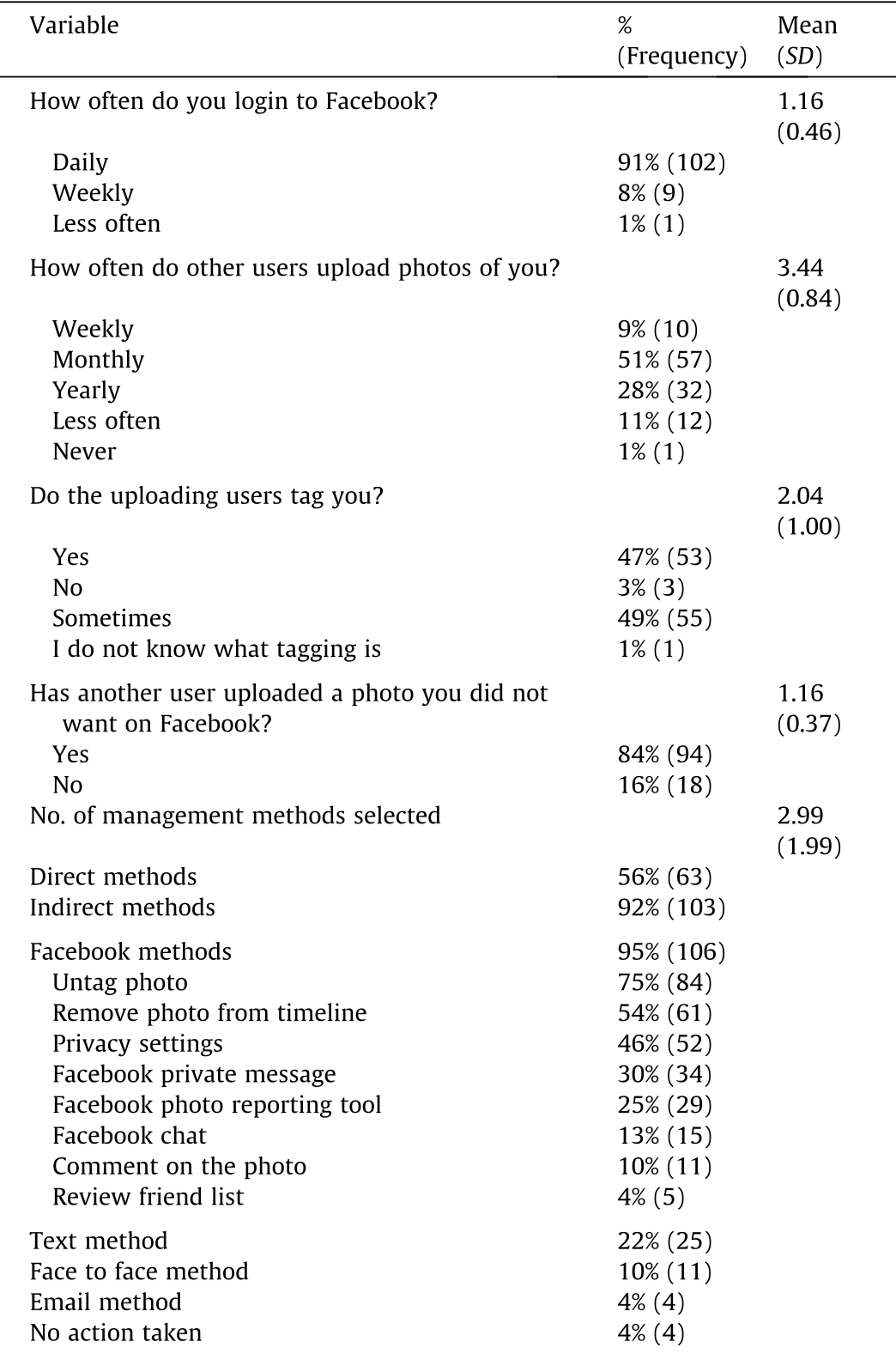
The study highlights a shift in the social norm of privacy. Mark Zuckerberg once famously claimed privacy is no longer a "social norm." This paper suggests that users haven't given up on privacy; they've simply shifted to management through dissociation.
By untagging, the photo still exists on the uploader's wall, but it is no longer tethered to the subject's digital identity. This "out of sight, out of mind" approach allows users to maintain the performance of their "ideal self" while pragmatically accepting that they cannot control the entire internet.
Conclusion & Future Look
The paper concludes that managing self-image in a collaborative environment is a constant "trade-off." While "untagging" remains the SOTA defense, the rise of "Dark Social" (Snapchat/WhatsApp) creates new challenges where content vanishes but screenshots are forever.
Takeaway for the Industry: UX designers should focus on "discreet" privacy tools. Users favor actions that allow them to fix their reputation without triggering a social conflict—minimizing the "cost of management" is as important as the privacy itself.