
The Digital Mirror: How Your Facebook Profile May Predict Cyberbullying Risk
Presentation on Facebook and risk of cyberbullying victimisation
This study investigates how specific self-presentation behaviors on Facebook correlate with the risk of cyberbullying victimisation among adolescents (aged 15–24). By directly coding 147 Facebook profile pages, the researchers identified that high friend counts, frequent active posting, and the display of negative affect significantly predict victimisation risk.
TL;DR
Is your online persona making you a target? This study shifts the focus from environment to behavior, revealing that how adolescents present themselves on Facebook—from the size of their friend list to the emotional tone of their posts—is significantly linked to their risk of being cyberbullied. Key findings show that having a high number of friends and posting negative content are the strongest behavioral predictors of online victimisation.
Contextual Framework: Beyond "Common Sense"
In the academic coordination system, this paper moves away from simple prevalence surveys toward a theoretical behavioral analysis. By applying the Victim Precipitation Model, the researchers suggest that while perpetrators are responsible for their actions, certain victim behaviors (even unintentional ones) can provide the "precipitant" for an aggressive response. This is a critical pivot for education and prevention programs.
The Problem: The Bias of Self-Reporting
Most cyberbullying research asks users to describe their online behavior. This study identifies two major flaws in that approach:
- Memory Bias: Users forget the frequency and nature of their interactions.
- Self-Presentation Bias: People want to appear more "pro-social" than they actually are. By using direct researcher coding of profile pages, this study establishes a more objective baseline for digital behavior analysis.
Methodology: Coding the Digital Identity
The researchers analyzed 147 Facebook profiles of individuals aged 15–24. Unlike previous work that only looked at "Public vs. Private" settings, this team coded:
- Profile Features: Relationship status, city of residence, and contact info.
- Activity Metrics: Frequency of posts and "Following" behavior.
- Content Valence: The emotional tone (Positive, Negative, Neutral) of the 10 most recent wall posts.
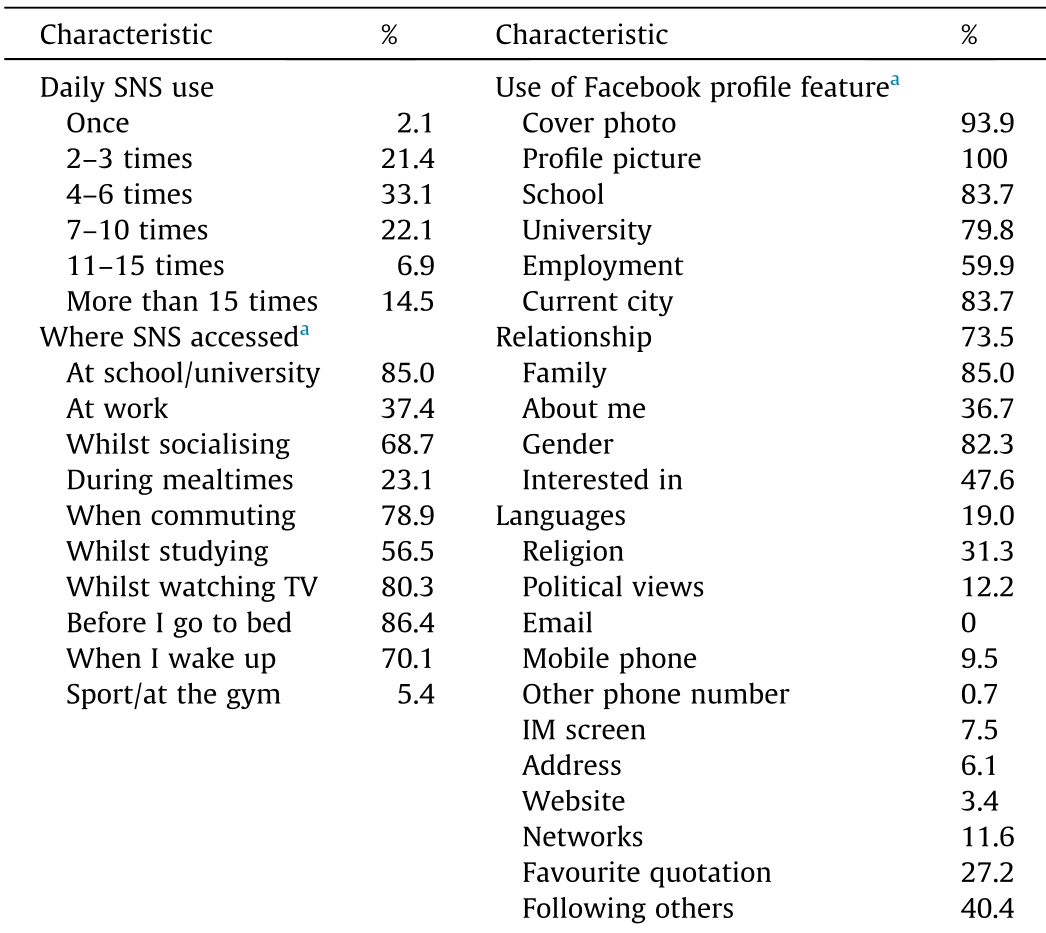 Table 1: Frequency of Facebook profile feature usage among the study participants.
Key Insights: What Actually Increases Risk?
The results provide a sobering look at how "active" use differs from "passive" browsing.
1. The Paradox of Popularity
The number of Facebook friends was the strongest predictor in the final model. Every standard deviation increase in friend count nearly doubled (1.96x) the risk of cyberbullying. More "friends" often means a wider pool of potential perpetrators and a higher likelihood of context collapse, where different social circles collide.
2. The Weight of Negativity
The study found a significant positive correlation (r = .30) between negative wall posts and victimisation. Constant "venting" or posting negative affect content can trigger hostile reactions or comments that the user then experiences as victimisation—a classic example of behavioral precipitation.
3. The "Offline-Online" Pipeline
The study confirmed that the digital world is not an island. Traditional bullying victimisation was associated with an 11% increase in cyberbullying risk.
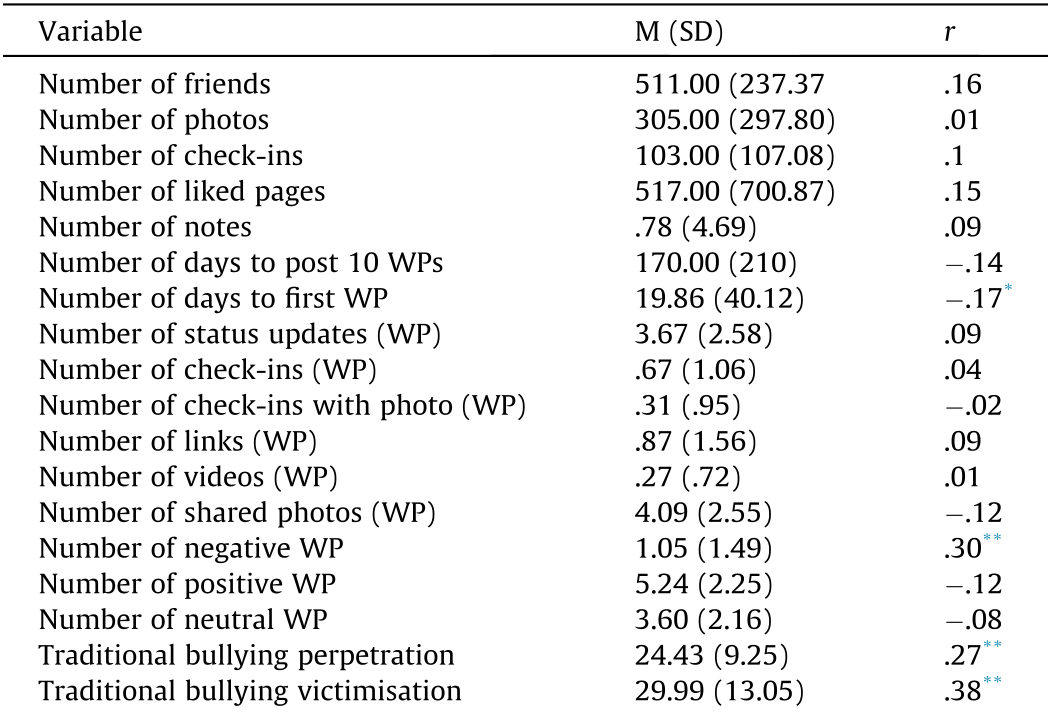 Table 3: Correlations between continuous Facebook features and total cyberbullying victimisation scores.
Critical Analysis & Future Directions
Strengths
The transition from "What happened?" to "How did the profile look?" is a major methodological leap. The use of independent raters with high inter-rater reliability (0.90+) ensures the data is robust.
Limitations
- Gender Imbalance: 81% of the participants were female, which may skew the types of victimisation behaviors reported.
- Restricted Range: Most participants reported low levels of victimisation, making it difficult to generalize the findings to "chronic" or severe cyberbullying cases.
- Temporal Relevance: As the study was conducted during the peak of Facebook's dominance (2014), future research must explore if these patterns hold on ephemeral platforms like Snapchat or algorithm-driven ones like TikTok.
Conclusion: A New Directive for Online Safety
The core takeaway is clear: Prevention is more than just privacy settings. To truly reduce risk, adolescents need to understand that the vibe and volume of their digital presence matter. Educators should focus on "Digital Hygiene"—managing friend lists and being mindful of the emotional footprint of their public posts—as much as they focus on blocking strangers.